
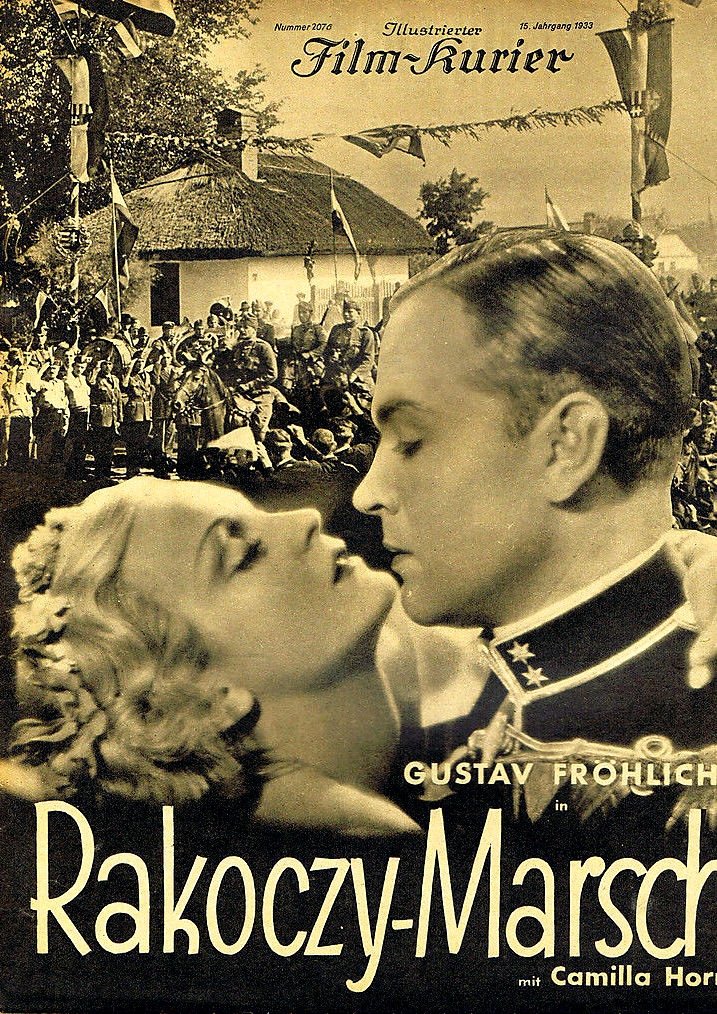
Racoczy-Marsch
Hungary, 1925. A young lieutenant of the Hungarian army Fröhlich falls in love with his captain's sister, Vilma Horn. While his superior agrees to the marriage, the girl's father has other plans, as the family estate is essentially bankrupt and can only be saved by Vilma's marriage to a rich American of Hungarian origin. So the father asks the young lieutenant to break off the engagement, which the young man dutifully does. But Vilma's brother has no idea about the state of affairs and challenges the young lieutenant to a duel for seemingly betraying his sister...
Insights
Plot Summary
The film follows a talented but impoverished composer who finds himself entangled in a love triangle and the intrigues of the Viennese aristocracy. His musical genius becomes both his salvation and a source of conflict as he navigates societal expectations and his own desires.
Critical Reception
A relatively obscure German-language film, 'Racoczy-Marsch' received mixed to positive reviews upon its release, with particular praise for its acting and period detail, though some critics found its narrative somewhat conventional for the time. It is often remembered for its atmospheric portrayal of pre-war Vienna.
What Reviewers Say
- Praised for its strong performances, especially from the lead actors.
- Noted for its authentic depiction of Viennese society and culture.
- Some found the plot to be predictable, lacking significant dramatic tension.
Google audience: Information on Google user reviews is not readily available for this historical film.
Fun Fact
The film's title refers to the Rákóczi March, a famous Hungarian patriotic song that is featured in the movie.
AI-generated overview · Verify ratings on official sources