Movie spotlight
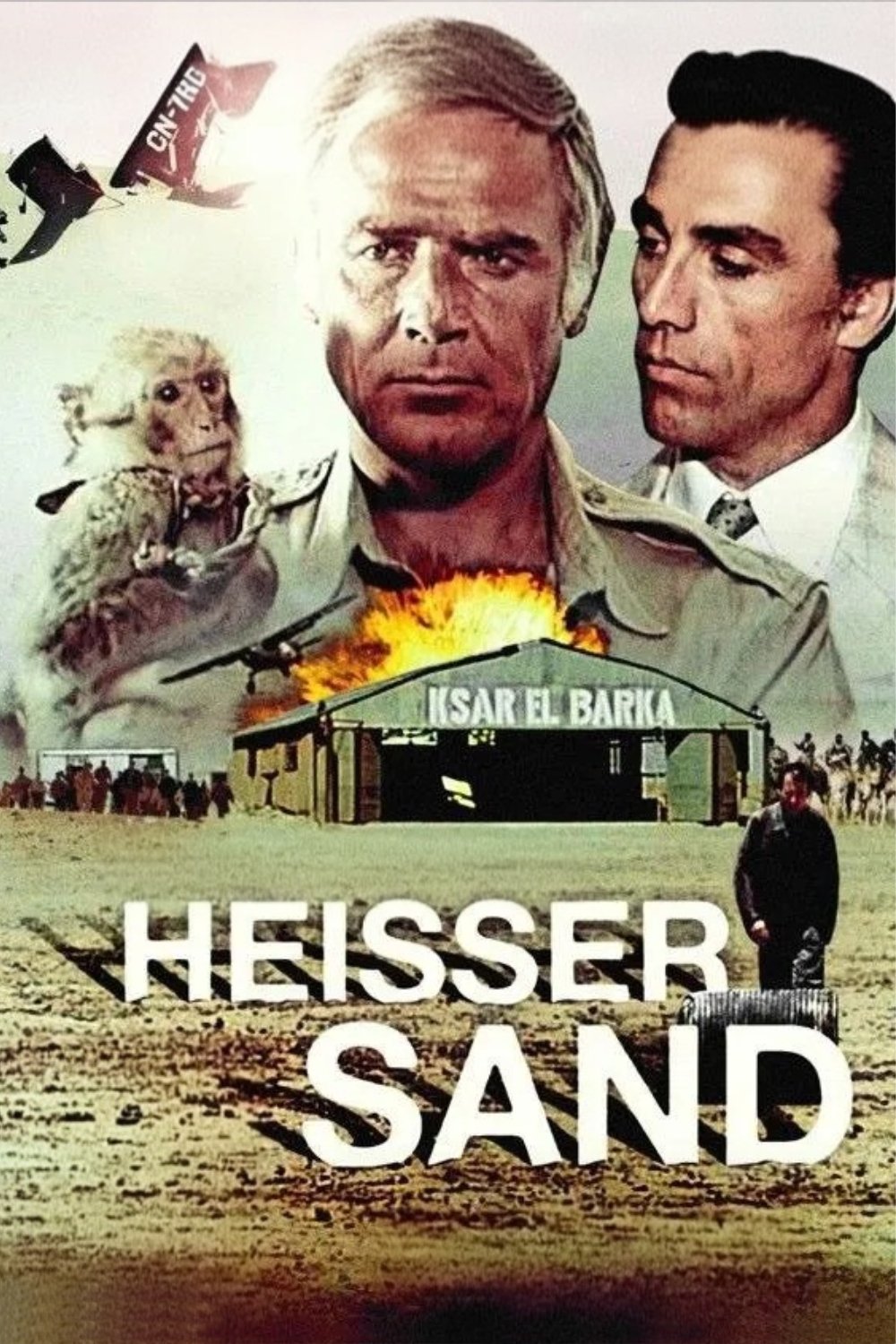
Heißer Sand
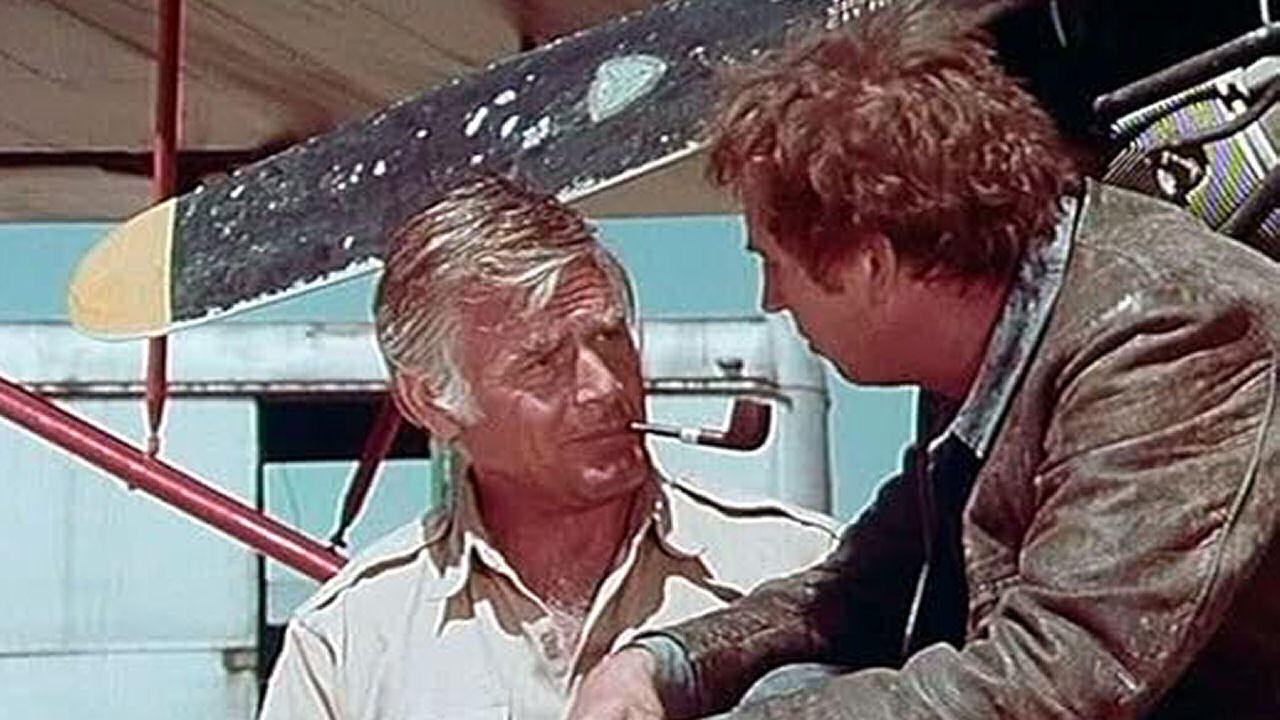
Captain Jeff Barlow is a pilot with heart and soul. On behalf of a French company, he dares to conduct an experiment that is not without danger: dry ice is to be shot into clouds over the Sahara to make them rain down. The aim is to put an end to the water shortage. However, the artificial rain project is anything but harmless. But Captain Barlow is far too passionate an aviator to be deterred by the danger. And so what has to happen, happens. A sandstorm is Barlow's undoing and he crashes his plane. Lost in the vastness of the Sahara, there is no trace of him. A search operation is launched but is unsuccessful. A race against time begins for Barlow, as his water supplies are running low...
Insights
Plot Summary
During World War II, a group of German soldiers is stranded in the North African desert after their tank is disabled. Facing extreme heat, dwindling supplies, and constant attacks from Allied forces, they must battle their own inner demons and the harsh environment to survive. The film explores the psychological toll of war and the fragility of human bonds under immense pressure.
Critical Reception
Heißer Sand received mixed reviews upon its release. While some critics praised its gritty portrayal of desert warfare and the performances of its cast, others found the plot somewhat predictable and the pacing uneven. The film is noted for its attempt to depict the grim realities faced by ordinary soldiers, rather than focusing on heroic narratives.
What Reviewers Say
Praised for its stark portrayal of survival in a hostile environment.
Criticized for a predictable narrative arc and some pacing issues.
Appreciated for its focus on the psychological impact of war on soldiers.
Google audience: Audience reception information for "Heißer Sand" is not readily available.
Fun Fact
The film was shot on location in the Spanish desert, providing a visually authentic backdrop for the North African setting, despite being a German production.
AI-generated overview · Verify ratings on official sources