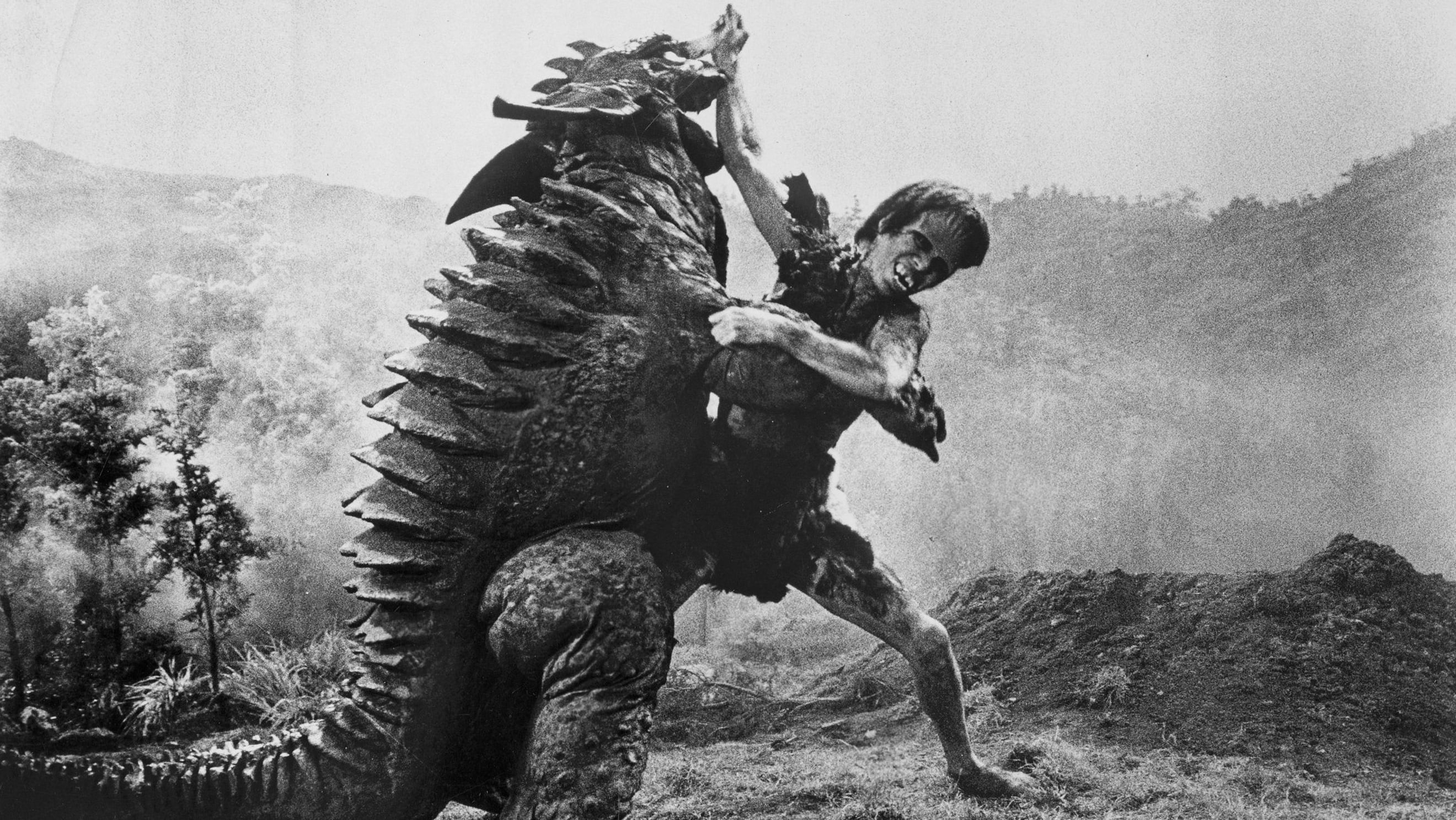

Movie spotlight
Frankenstein Conquers the World
During WWII, Germans obtain the immortal heart of Frankenstein's monster and transport it to Japan to prevent it being seized by the Allies. Kept in a Hiroshima laboratory, it is seeming lost when the United States destroys the city with the atomic bomb. Years later a wild boy is discovered wandering the streets of the city alone, born of the immortal heart.
Insights
Plot Summary
In 1945, a U.S. Army tank accidentally unearths the heart of Frankenstein's monster in a European battlefield. The heart is transported to a laboratory in Japan for study, but it soon regenerates and grows into a giant monster. This new behemoth, driven by primal rage and a desire for revenge, begins a destructive rampage across Japan, culminating in a battle with a dinosaur. The story explores themes of scientific hubris and the monstrous consequences of unchecked experimentation.
Critical Reception
Frankenstein Conquers the World is a cult classic within the kaiju genre, appreciated for its unique premise and its place in the Toho Studios' monster filmography. While not considered a masterpiece, it is often praised for its creative departure from traditional Frankenstein lore and its inclusion of campy, B-movie charm. It holds a notable place among fans of giant monster cinema.
What Reviewers Say
Praised for its inventive take on the Frankenstein mythos by transplanting it to the kaiju genre.
Appreciated for its campy B-movie elements and creature design.
Seen as an enjoyable, if somewhat outlandish, addition to Toho's monster movie output.
Google audience: Information on Google user reviews specifically for this film is not readily available, but it is generally regarded as a cult favorite among fans of classic Japanese monster movies.
Fun Fact
The film's monster was originally intended to be the Frankenstein monster, but Toho Studios changed it to a giant human-like creature due to copyright concerns and to better fit their kaiju universe.
AI-generated overview · Verify ratings on official sources