
Movie spotlight
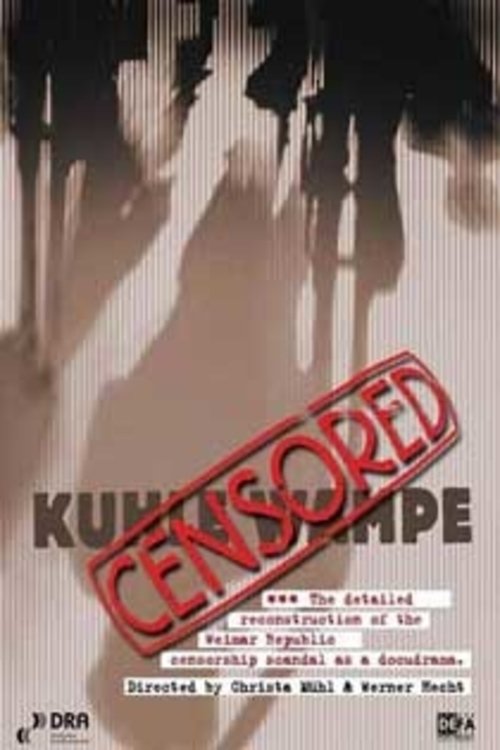
Censored: Kuhle Wampe
A detailed reconstruction of the censorship case against the landmark Weimar-era communist film, Kuhle Wampe, or Who Owns the World? (1932). Directed by Slatan Dudow, the crew and cast included left-wing luminaries, such as playwright Bertolt Brecht, composer Hanns Eisler and balladeer Ernst Busch. The film was the subject of vehement disputes and was banned twice for revolutionary and communist tendencies that were perceived to threaten the state. About 230 meters of the original film fell victim to the censor’s shears. This historic censorship case was argued over the course of three sessions. Censored: Kuhle Wampe re-enacts the censorship hearings, based on original minutes and documents, as well as personal records of the case. In addition to footage from the original film, this docudrama includes original clips of Berlin in the 1920s and '30s and short testimonies, filmed in the 1970s, with some of the actors involved in the original Kuhle Wampe film production.
Insights
Plot Summary
The film follows the struggles of a working-class family in Berlin during the Weimar Republic. When the family can no longer afford their rent, they are forced to move to a "Kuhle Wampe," a makeshift camp on the outskirts of the city. The narrative explores themes of poverty, social inequality, and the burgeoning political tensions of the era.
Critical Reception
Originally intended as a critique of social conditions and a call for political awareness, 'Kuhle Wampe' faced significant censorship and controversy upon its release. Its groundbreaking depiction of working-class life and its critical stance on societal issues led to its suppression in many regions. Despite this, it is now recognized as a significant work of politically engaged cinema.
What Reviewers Say
Praised for its unflinching portrayal of poverty and social injustice.
Recognized for its innovative use of cinematic techniques to convey a political message.
Noted for its historical significance as a film that challenged censorship.
Google audience: Information regarding Google user reviews is not readily available for this historical film.
Awards & Accolades
None notable due to its controversial release and subsequent censorship, though it is considered a seminal work in political cinema.
Fun Fact
The film's script was co-written by Bertolt Brecht, one of the most influential playwrights of the 20th century, and its themes and style reflect his significant influence.
AI-generated overview · Verify ratings on official sources