
Movie spotlight
Arangetram
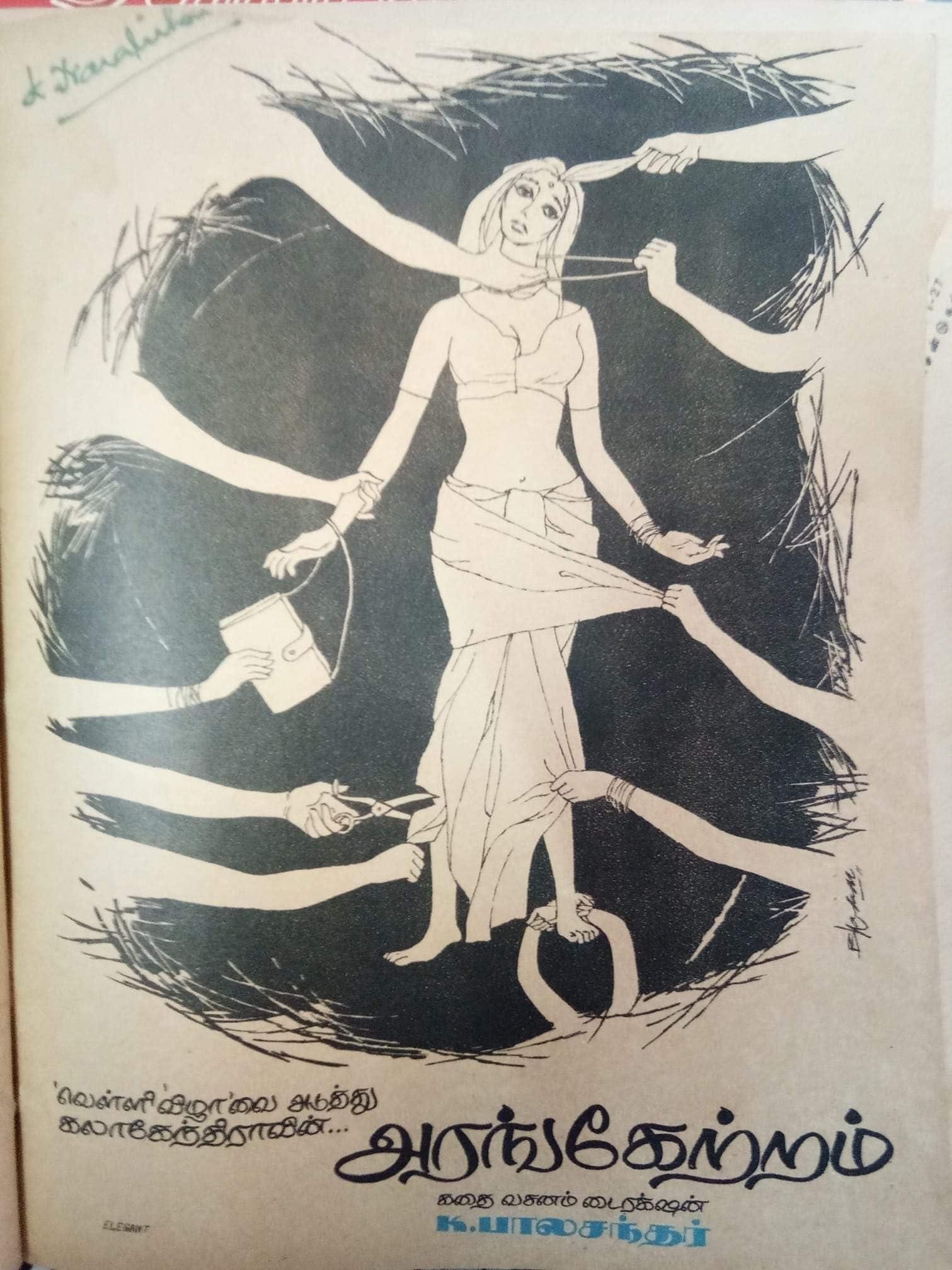
Lalitha is the eldest daughter of a pious and conservative Brahmin family. She has eight siblings and poverty rules reign. She decides to take up the family mantle and goes to work. Due to family needs and ill fate, she ends up as a prostitute but manages to settle all her brothers and sisters. Her family ditches her when they come to know about her dark side. Thangavelu, a man who was once rejected by her marries her. She loses her sanity in the end.
Insights
Plot Summary
The film tells the story of Sangili, a young woman from a poverty-stricken background who is forced into prostitution to support her family. Despite societal judgment and her own internal struggles, she navigates the harsh realities of her life while trying to maintain her dignity and care for her loved ones. The narrative explores themes of sacrifice, societal hypocrisy, and the complex moral choices individuals face when driven by desperation.
Critical Reception
Arangetram was a significant film for its time, lauded for its bold and unconventional portrayal of a taboo subject. K. Balachander's direction was praised for its realism and sensitive handling of the protagonist's plight. The film sparked considerable discussion and debate, solidifying its place as a thought-provoking piece of Indian cinema, though its subject matter was controversial for mainstream audiences.
What Reviewers Say
Praised for its daring exploration of societal issues and exploitation.
Applauded for its realistic and sensitive portrayal of a difficult subject.
Recognized for K. Balachander's directorial prowess in handling controversial themes.
Google audience: Information on Google user reviews for this specific film from 1973 is not readily available.
Fun Fact
Arangetram was groundbreaking for its time, tackling the sensitive subject of prostitution and its societal implications at a time when such topics were rarely explored openly in Indian cinema.
AI-generated overview · Verify ratings on official sources