
Movie spotlight
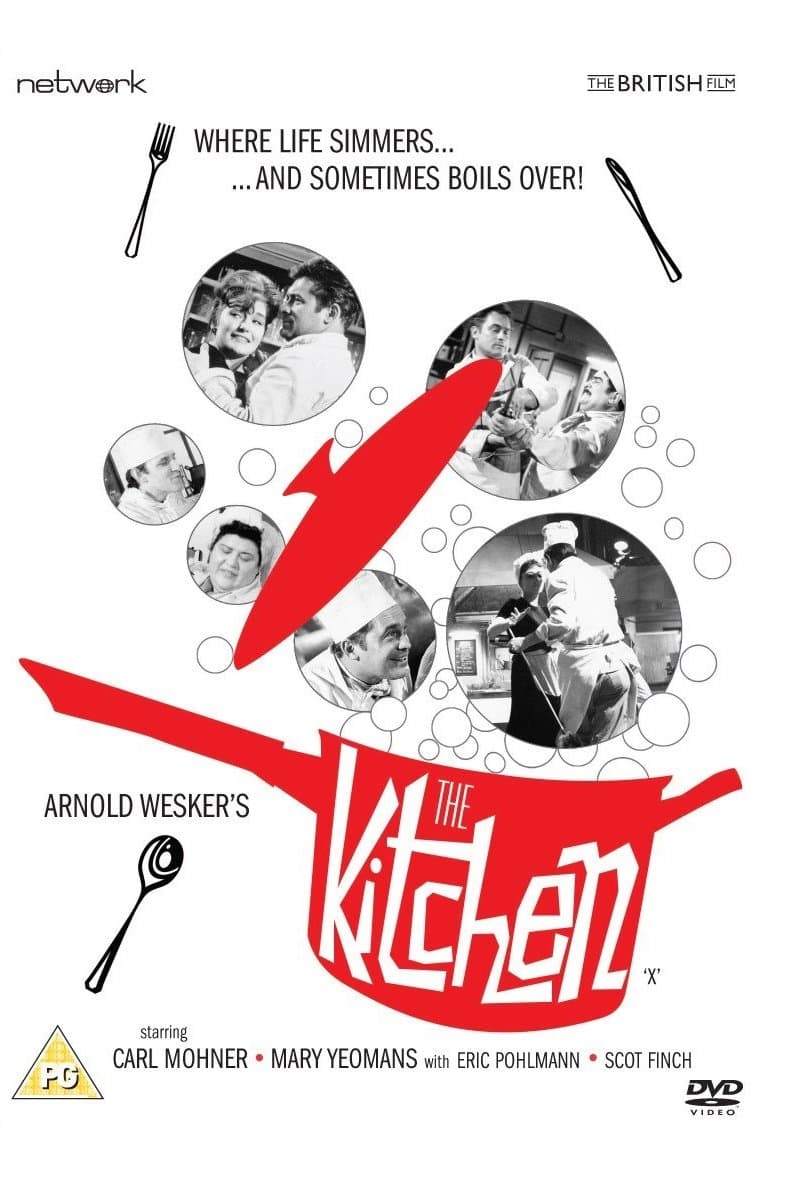
The Kitchen
In the business end of a kitchen, a polyglot staff strives to cope with a superhuman task. A microcosm of the world, the kitchen looms around and encloses its workers; they include Peter, the German cook, who is in love with waitress Monica, and constantly asks her to leave her husband. The pressure of the day becomes unendurable, and when Peter realises that Monica does not mean to divorce her husband his grief and pain cause him to run berserk!
Insights
Plot Summary
In this adaptation of Arnold Wesker's play, a group of kitchen staff in a large London restaurant are depicted during a busy day. Their lives, relationships, and frustrations unfold amidst the high-pressure environment of professional cooking. The film explores themes of class, work, and personal aspirations against the backdrop of the bustling culinary world.
Critical Reception
The film adaptation of 'The Kitchen' received mixed to positive reviews, with many critics acknowledging its powerful portrayal of working-class life and the pressures of the restaurant industry. Some found the film's realism and social commentary compelling, while others noted its theatrical origins and a certain lack of cinematic dynamism. The performances, particularly those of the ensemble cast, were generally praised for their authenticity.
What Reviewers Say
Praised for its stark realism and authentic depiction of kitchen life.
Applauded for its strong ensemble performances and social commentary.
Some critics found it overly theatrical and lacking in cinematic flair.
Google audience: Audience reception information for 'The Kitchen (1961)' is not widely available through Google user reviews, making it difficult to summarize specific likes or dislikes.
Fun Fact
The film is an adaptation of Arnold Wesker's 1959 play of the same name, which was a significant work in the British kitchen sink drama movement.
AI-generated overview · Verify ratings on official sources