
Movie spotlight
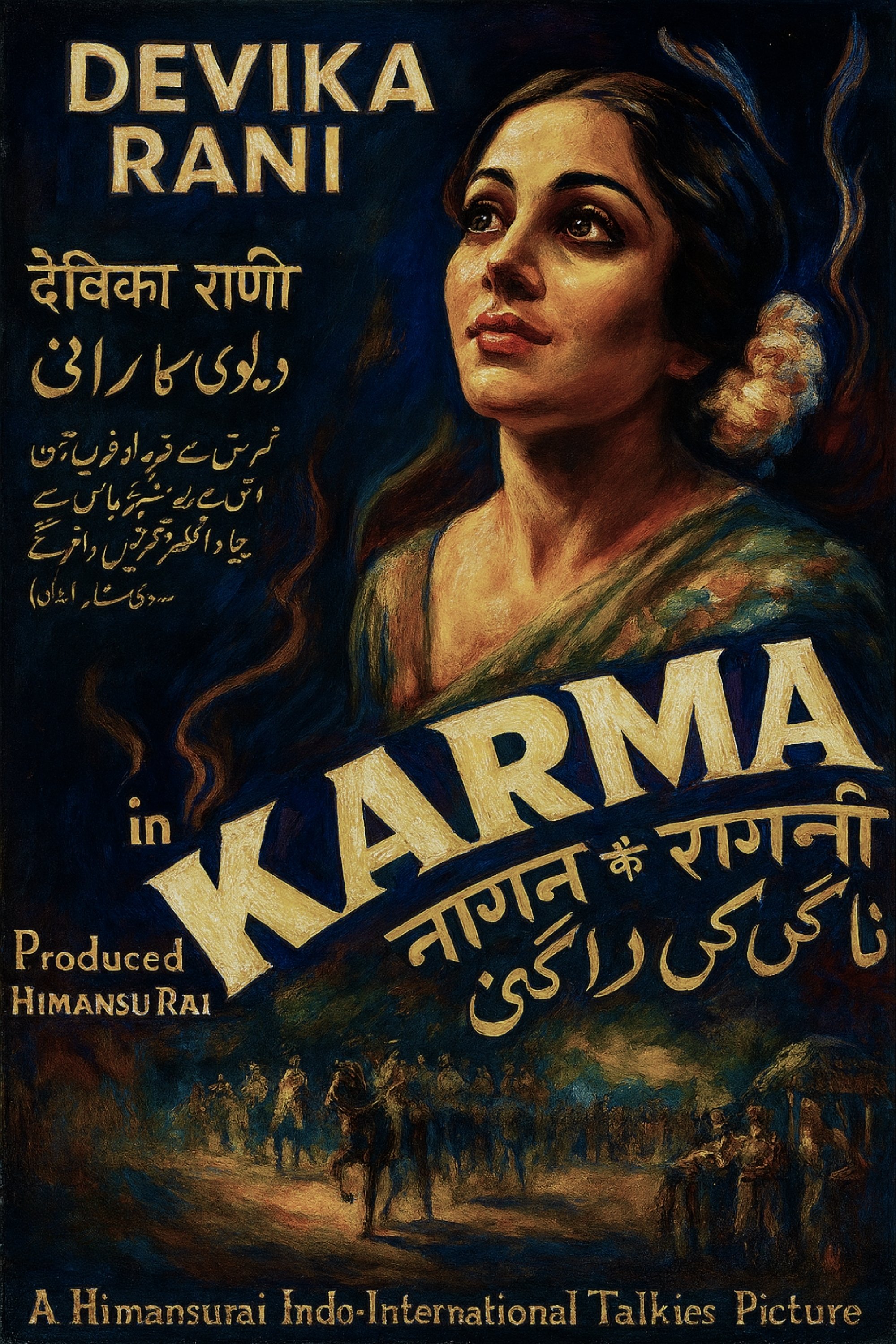
Karma
The simple plot has the maharani (Devika Rani) fall in love with the neighbouring prince (Rai) despite her father's disapproval. It is presented as an Orientalist fantasy with a, by Indian standards, scandalously prolonged kiss. It was described as 'a sort of American romance done against an Indian background'.
Insights
Plot Summary
A wealthy young man, driven by a desire for revenge against his uncle who wronged his family, embarks on a journey of self-discovery. He experiences the hardships of poverty and the complexities of life, leading him to re-evaluate his priorities and seek redemption. The film explores themes of fate, karma, and the consequences of one's actions.
Critical Reception
Karma (1933) is a pioneering Indian film that marked a significant step in the country's cinematic history, being one of the earliest talkies. While specific critical reviews from its release are scarce, it is recognized for its ambitious production and thematic depth, resonating with audiences for its moralistic narrative. Its technical achievements for the era were noteworthy.
What Reviewers Say
Praised for its early introduction of sound in Indian cinema.
Noted for its philosophical themes and moral storytelling.
Considered a landmark in early Indian filmmaking.
Google audience: As an early talkie from 1933, direct user reviews are not readily available. However, the film is historically significant and appreciated for its narrative and thematic content.
Fun Fact
Karma (1933) is notable for being one of the first Indian films to incorporate synchronized sound, a groundbreaking achievement for its time.
AI-generated overview · Verify ratings on official sources