
Movie spotlight
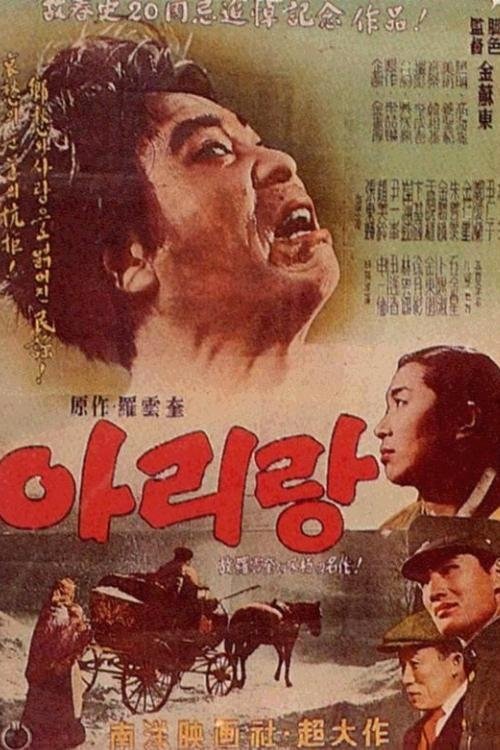
Arirang
The film concerns a student, Ch'oe Yeongjin, who has become mentally ill after being imprisoned and tortured by the Japanese for his involvement in the March 1, 1919 protest against the Japanese colonial rule.
Insights
Plot Summary
Set against the backdrop of Japanese colonial rule in Korea, 'Arirang' tells the tragic story of a young Korean man driven to madness and violence after his family is destroyed by a corrupt landlord and his cronies. The film follows his descent into despair and eventual act of retribution. It explores themes of patriotism, suffering, and the enduring spirit of the Korean people under oppression.
Critical Reception
As a silent film from 1926, contemporary critical reception is not available in the modern sense. However, 'Arirang' is widely regarded as a seminal work in Korean cinema history, celebrated for its powerful storytelling and its reflection of national sentiment during a difficult historical period. It was immensely popular with Korean audiences.
What Reviewers Say
Praised for its poignant portrayal of Korean suffering under colonial rule.
Lauded as a significant nationalistic film that resonated deeply with audiences.
Considered a masterpiece of early Korean cinema for its emotional impact and storytelling.
Google audience: Information on Google user reviews for this specific historical film is not available.
Awards & Accolades
None notable (due to its era and lack of modern award structures for early Korean cinema)
Fun Fact
Although the film is titled after the famous Korean folk song 'Arirang,' the song itself is not featured prominently within the narrative of the 1926 film, but rather its spirit and themes are evoked.
AI-generated overview · Verify ratings on official sources