
Movie spotlight
Orphée aux Enfers
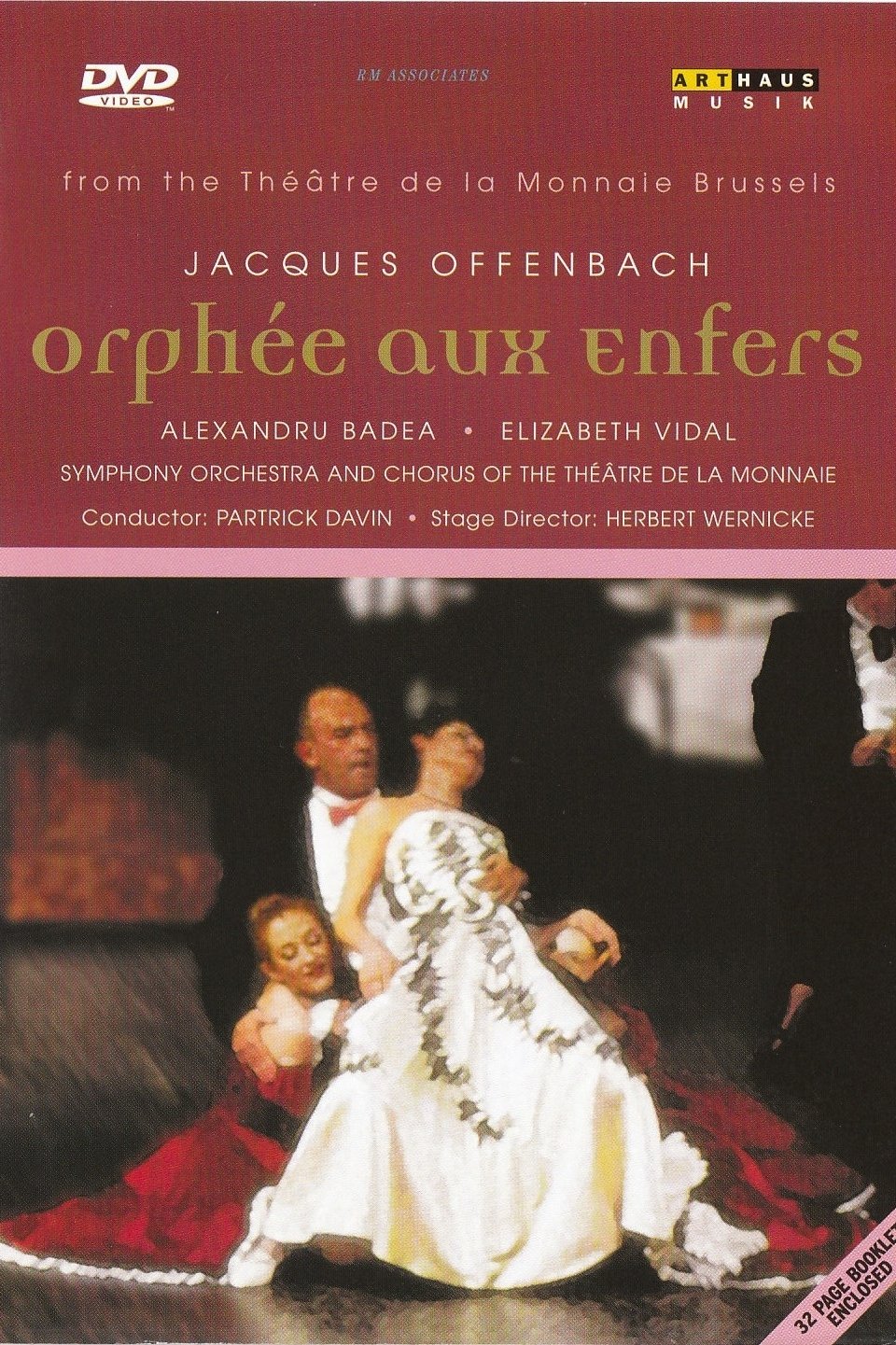
Orphée aux Enfers, Offenbach's riotous parody of the dissipations of French life in the Second Empire, fairly gallops past in this 1997 Herbert Wernicke production staged at the Theatre de la Monnaie in Brussels. Based on Offenbach's meatier second version (1874) of the Orpheus legend, it features nicely judged performances across the board and some stunning special effects, notably the explosive locomotive crash signalling the breach of the divide between Heaven and Hell. Satire reigns, not least in the reactionary figure of Public Opinion, a pinny-clad bossy boots with a hint of Dame Edna Everage about her. Olympus is a moribund salon full of bored Gods, sick of the Ambrosian diet.
Insights
Plot Summary
This adaptation of Jacques Offenbach's comic operetta follows the mythological figures of Orpheus and Eurydice on a journey through the underworld. Disenchanted with married life, Eurydice elopes with the shepherd Aristeus, who is revealed to be Pluto, the god of the underworld. Orpheus, a mere violinist, is compelled to follow her, facing trials and tribulations orchestrated by the gods.
Critical Reception
This operetta film adaptation received a mixed to positive reception, particularly noted for its vibrant performances and faithful rendition of Offenbach's classic score. While some critics found the pacing slightly uneven, the production was generally praised for its humor, satire, and energetic musical numbers, capturing the spirit of the original work.
What Reviewers Say
Praised for its lively and spirited musical numbers.
Appreciated for its satirical take on mythology and society.
Some found the plot and pacing to be a bit dated or slow in parts.
Google audience: Audience reception data for this specific 1997 film adaptation is not readily available through Google user reviews.
Fun Fact
The original opera 'Orphée aux Enfers' premiered in 1858 and is famous for introducing the 'Can-can' dance, though its inclusion in this film adaptation's specific staging may vary.
AI-generated overview · Verify ratings on official sources