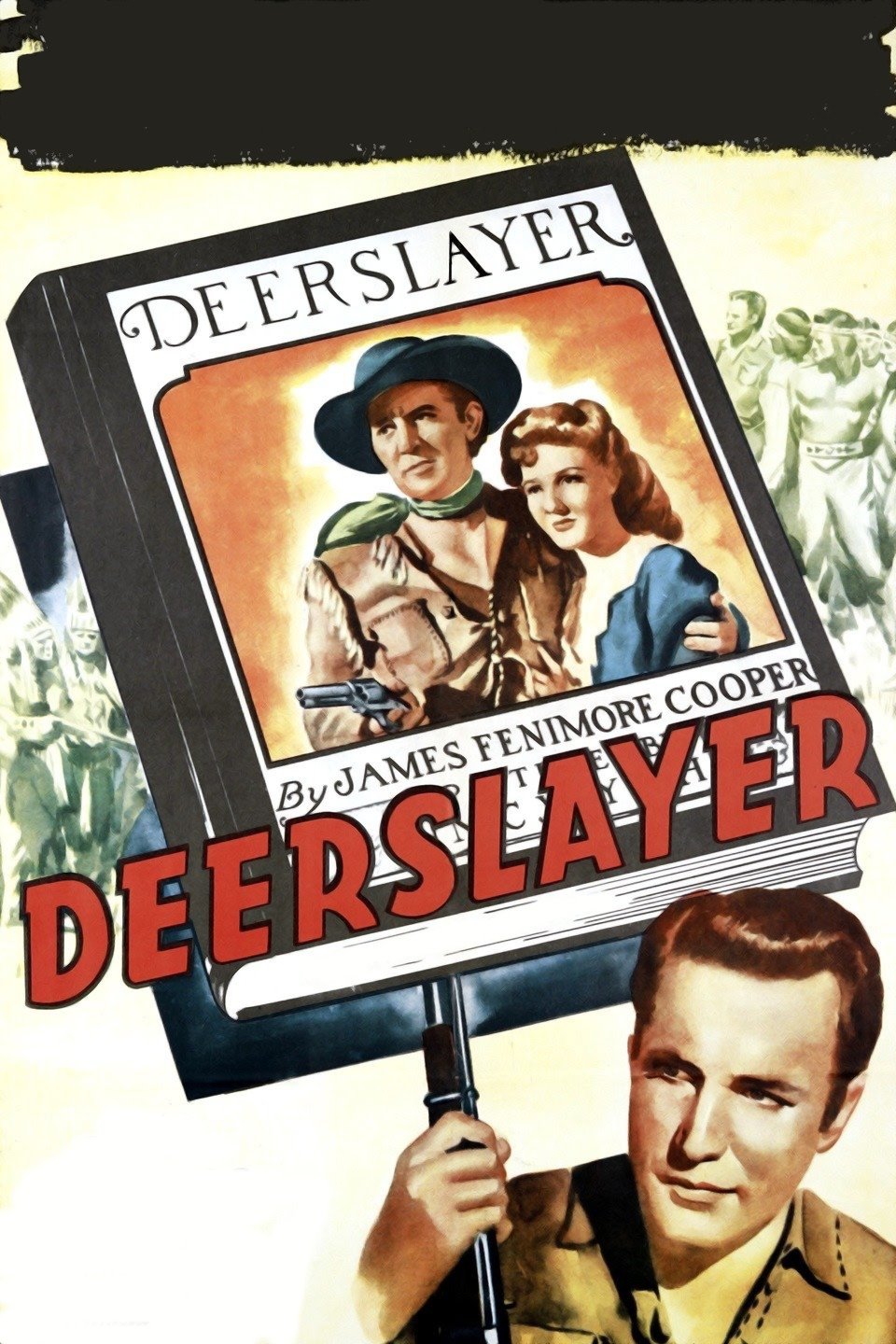
The Deerslayer
The Deerslayer

The Deerslayer

1943Movie67 minEnglish

Deerslayer, a white man who was brought up by the Mohicans, helps his old tribe when the Hurons steal Princess Wah Tah, the betrothed of his friend Jingo-Good. His friends, the Hutters, are a white family living on an ark in the middle of a lake. The Hurons attack them and Deerslayer enlists the aid of scout Harry March, who is escorting sixty-five brides to the near-by settlement. Deerslayer and Harry are both in love with Judith Hutter, who is secretly in love with Harry. The Hurons succeed in capturing her father and Harry, where-upon Judith's sister Hetty, playing on an Indian superstition never to harm an insane person, feigns madness and makes an escape. Hutter, Judith, Hetty and Princess Wah-Tah return to the ark, where they ate attacked by the waiting Hurons and Hetty is killed. Deerslayer, Harry and the settlement men arrive to time to drive the Hurons away.

Read Reviews

Insights

IMDb5.8/10
Director: Irving CummingsGenres: Adventure, Western

Plot Summary

In the late 18th century, frontiersman Natty Bumppo, known as the Deerslayer, navigates the treacherous wilderness between white settlements and Native American territories. He forms a bond with the beautiful Judith Hutter, the daughter of a demanding frontiersman who has captured two Native Americans. As tensions escalate between settlers and the Delaware tribe, the Deerslayer finds himself caught in the middle, attempting to maintain peace and protect those he cares about.

Critical Reception

The Deerslayer (1943) is a moderately received adventure film that capitalizes on its historical setting and action sequences. While not considered a major cinematic achievement, it offered audiences a straightforward tale of frontier life and conflict. Its reception was generally lukewarm, with critics noting its predictable plot but appreciating its earnest attempts at historical drama and adventure.

What Reviewers Say

  • Praised for its adventurous spirit and frontier setting.
  • Noted for its straightforward, if somewhat predictable, narrative.
  • Seen as a typical example of historical adventure filmmaking of its era.

Google audience: Audience reception data for this specific film is not widely available.

Fun Fact

The film is based on James Fenimore Cooper's 1841 novel of the same name, which was the first of his Leatherstocking Tales to be written, though it is set chronologically last in the series.

AI-generated overview · Verify ratings on official sources

My Review