
Movie spotlight
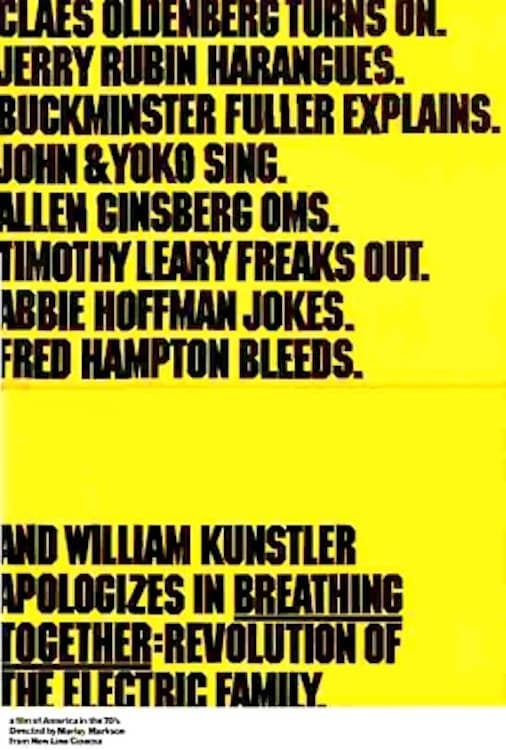
Breathing Together: Revolution of the Electric Family
The title of this Canadian documentary may have some relation to Canadian Marshall McLuhan's theories. It combines interview with famous U.S. militants of the '60s, such as Jerry Rubin and Abbie Hoffman, with reenactments of their Chicago trials (i.e., the "Chicago Eight," etc.). Other figures of cultural interest from the time, including Alan Ginsberg and Buckminster Fuller, are interviewed or featured. The filmmaker indicates his belief that powerful forces in the U.S. government worked together to suppress American radicals. This view, widely disbelieved at the time, has since been confirmed.
Insights
Plot Summary
This documentary captures the essence of the early 1970s counterculture and music scene, focusing on the communal living and artistic expression of 'The Family' (also known as the Merry Pranksters). It features live performances, communal activities, and interviews, offering a raw and unfiltered look into their alternative lifestyle and the psychedelic music that defined their era. The film serves as a time capsule of a generation seeking freedom and new forms of expression through music and communal living.
Critical Reception
As a niche documentary from its time, 'Breathing Together: Revolution of the Electric Family' received limited mainstream critical attention upon its release. However, it has since become a cult favorite among enthusiasts of psychedelic culture and music documentaries for its authentic portrayal of the era. Critics who have reviewed it generally praise its unvarnished look at the counterculture and its vibrant musical performances, while some note its experimental and sometimes meandering structure.
What Reviewers Say
Praised for its authentic, unpolished glimpse into the 1970s counterculture.
Appreciated for its raw depiction of communal living and psychedelic music.
Seen as a valuable historical document for fans of the era's music and social movements.
Google audience: Information on specific Google user reviews and their consensus for this film is not readily available due to its niche status and release era.
Fun Fact
The film was produced by members of 'The Family' themselves, reflecting the DIY ethos of the counterculture movement it documents.
AI-generated overview · Verify ratings on official sources