
Movie spotlight
Louise
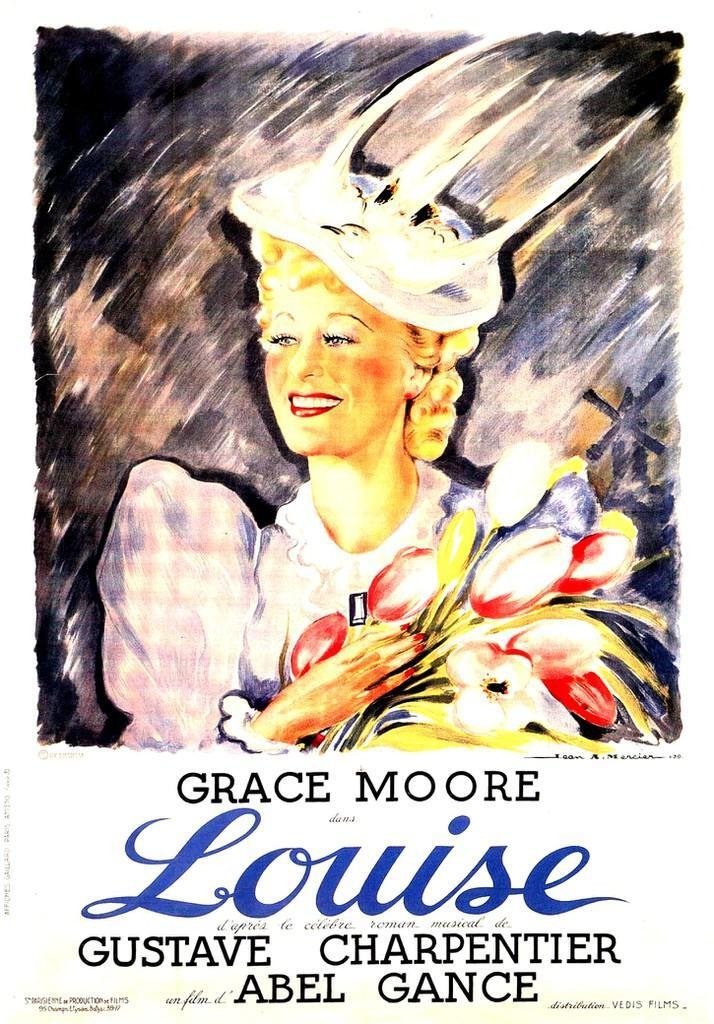
What was it about opera diva Grace Moore that attracted the attention of filmdom's top directors? Moore's 1937 American movie vehicle When You're in Love had been directed by Josef Von Sternberg; two years later, her French starrer Louise was helmed by no less than Abel Gance, who a decade earlier had revolutionized the "historical epic" genre with the awesome Napoleon. There was, however, little that was revolutionary in this cinemadaption of Gustave Charpentier's opera. Moore plays Louise, a poor seamstress who is led astray by the rakish Julien (Georges Thill). After falling from grace (no pun intended), our heroine is rescued by her understanding father (Andre Pernet), who demonstrates his forgiveness by singing to her (it is, after all, an opera). Though it played to enthusiastic crowds in both London and Paris, Louise turned out to be Grace Moore's final film; conversely, Abel Gance continued to make commercial potboilers well into the 1970s.
Insights
Plot Summary
A young woman named Louise is a skilled seamstress working in a tailor shop. She falls in love with a man who is already married, leading to a tumultuous relationship. The film explores the emotional toll and social consequences of their forbidden romance.
Critical Reception
Upon its release, 'Louise' was a modest success, appreciated for its earnest portrayal of a woman's struggles with love and societal expectations. While not a critical sensation, it resonated with audiences for its emotional depth and romantic narrative. Modern assessments acknowledge its place as a significant melodrama of its era.
What Reviewers Say
Praised for its sensitive depiction of Louise's emotional journey.
Noted for its effective portrayal of societal pressures on women in relationships.
Some found the melodrama to be overwrought, but generally effective for its time.
Google audience: Audience reviews from the era would likely have focused on the film's emotional impact and the tragic aspects of Louise's love life. It was seen as a tearjerker that explored relatable romantic dilemmas.
Fun Fact
The film was based on the novel of the same name by H.G. Antonius.
AI-generated overview · Verify ratings on official sources