
Movie spotlight
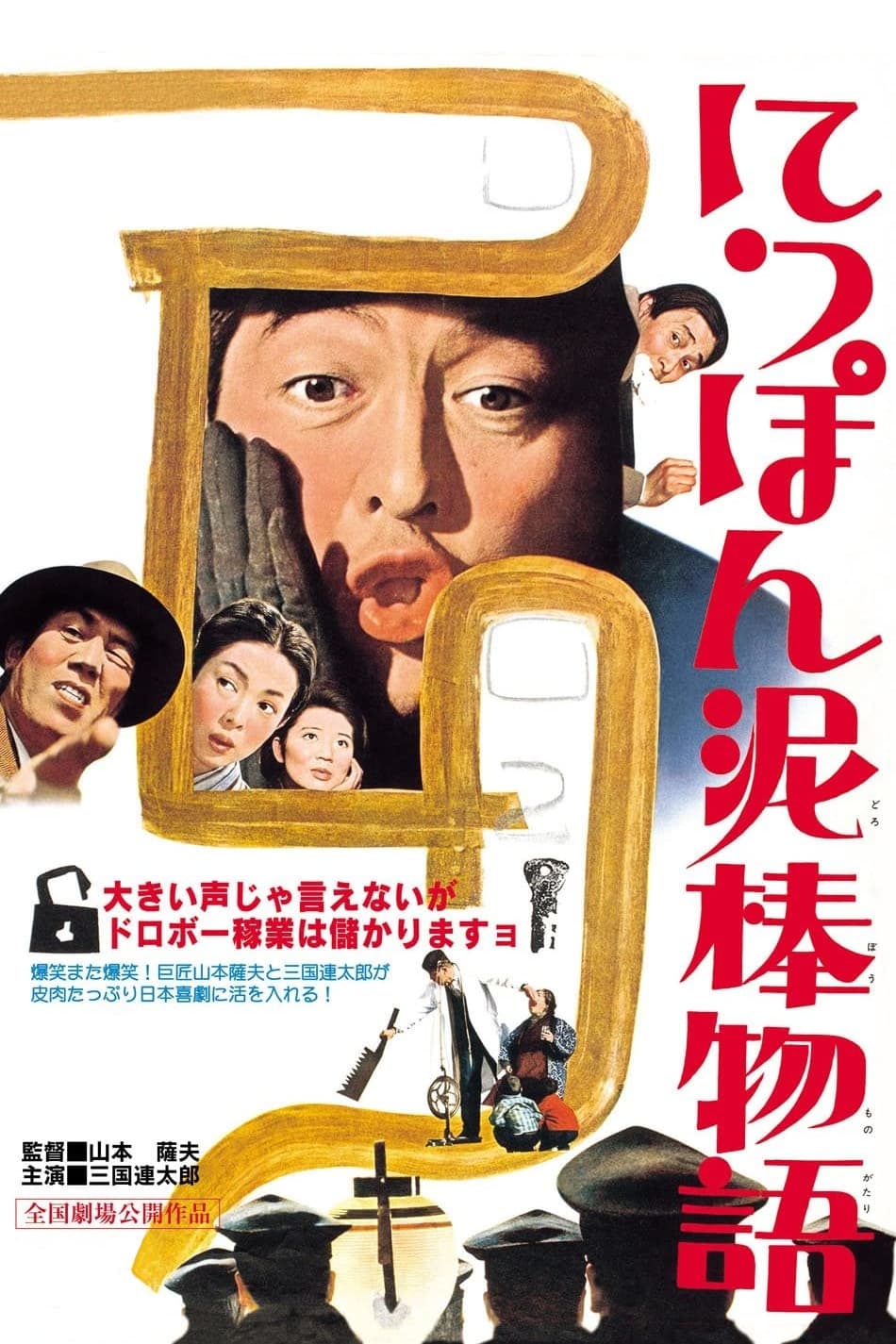
Tale of Japanese Burglars
Gisuke Hayashida is an illegal dentist during the day and a burglar by night. One night during a burglary he witnesses a train derailment. Some communists are found guilty of causing the incident, but he knows it wasn't them. He can save innocent people but for that he must confess his own crime.
Insights
Plot Summary
This documentary delves into the lives and motivations of young thieves in post-war Japan. It offers a raw and unflinching look at their struggles, societal pressures, and the circumstances that led them to a life of crime. The film uses interviews and observational footage to present a nuanced perspective on juvenile delinquency.
Critical Reception
As a documentary from 1965, "Tale of Japanese Burglars" is often cited for its early, direct approach to social issues in Japanese cinema. While specific widespread critical reviews are scarce due to its age and niche genre, its historical significance lies in its candid portrayal of marginalized youth and its contribution to the landscape of Japanese documentary filmmaking.
What Reviewers Say
Praised for its direct and empathetic portrayal of juvenile delinquents.
Noted for its historical insight into post-war Japanese society.
Recognized for its contribution to early Japanese documentary filmmaking.
Google audience: Information on Google user reviews for this specific film is not readily available due to its age and documentary nature.
Fun Fact
Noriaki Tsuchimoto, the director, was a prominent figure in Japanese documentary, often focusing on social issues and worker's rights.
AI-generated overview · Verify ratings on official sources