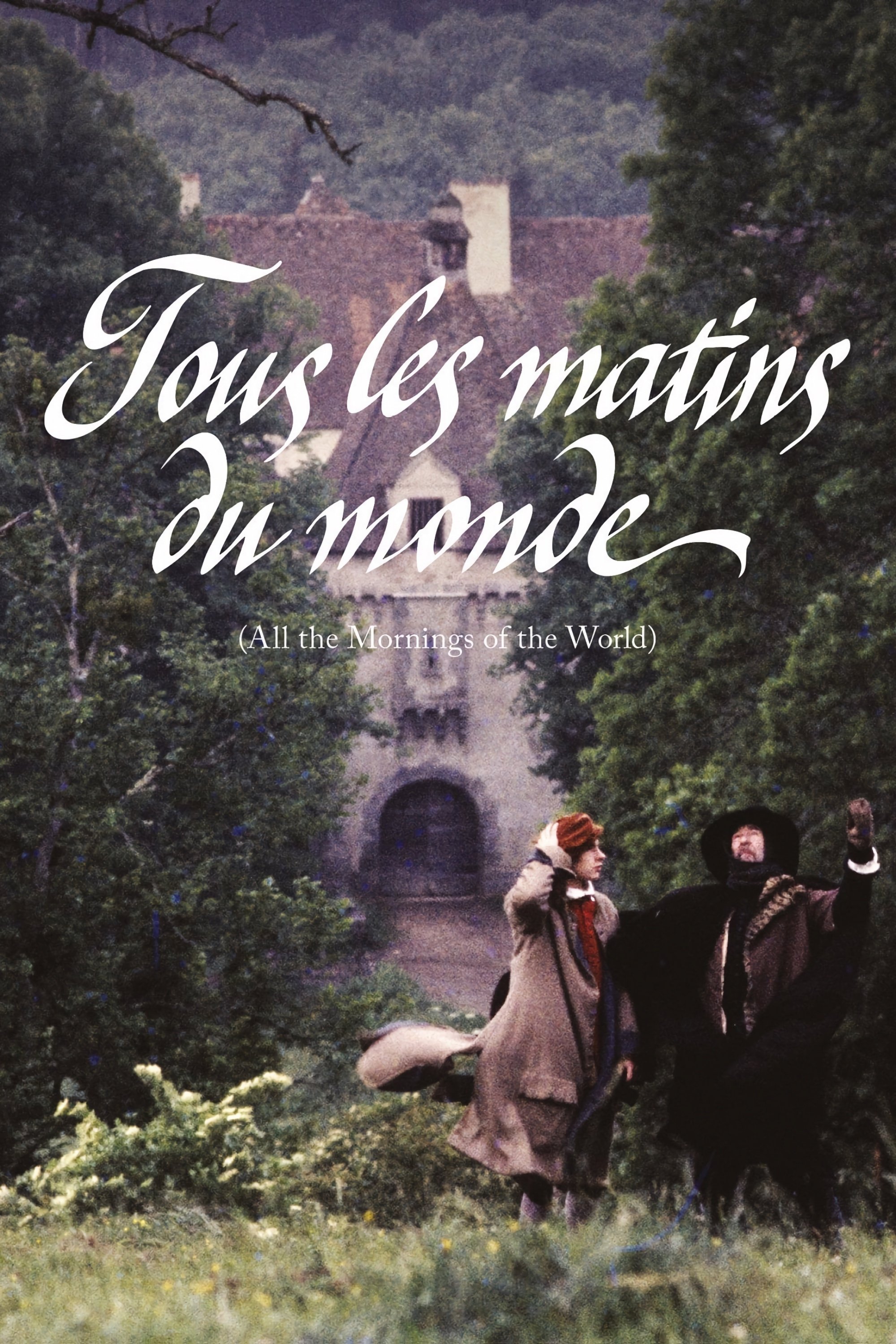

All the Mornings of the World
Following the death of his wife, a renowned musician ostracises himself from the outer world and dedicates his life to music. However, his life changes when a young man approaches him to learn music.
Insights
Plot Summary
The film chronicles the life of Marin Marais, a talented musician and viol player in 17th century France. After joining the prestigious court of Louis XIV, Marais grapples with his ambition, his love for his mentor's daughter Madeleine, and the complex social dynamics of the royal court. It's a story of artistic dedication, unrequited love, and the pursuit of mastery in a world of rigid etiquette and hidden desires.
Critical Reception
All the Mornings of the World was widely acclaimed by critics for its exquisite cinematography, masterful performances, and evocative score. It was particularly praised for its sensitive portrayal of 17th-century French court life and its exploration of artistic passion. Audiences also responded warmly to its historical richness and emotional depth.
What Reviewers Say
- Praised for its beautiful and atmospheric depiction of 17th-century France.
- Lauded for the superb performances, particularly Gérard Depardieu's.
- Hailed as a deeply moving and contemplative film about music, love, and ambition.
Google audience: Information not available.
Awards & Accolades
Won 7 César Awards in 1992, including Best Film, Best Director, Best Actor (Claude Rich, for his narration), Best Costume Design, Best Sound, Best Cinematography, and Best Original Score. It was also nominated for the Golden Lion at the Venice Film Festival.
Fun Fact
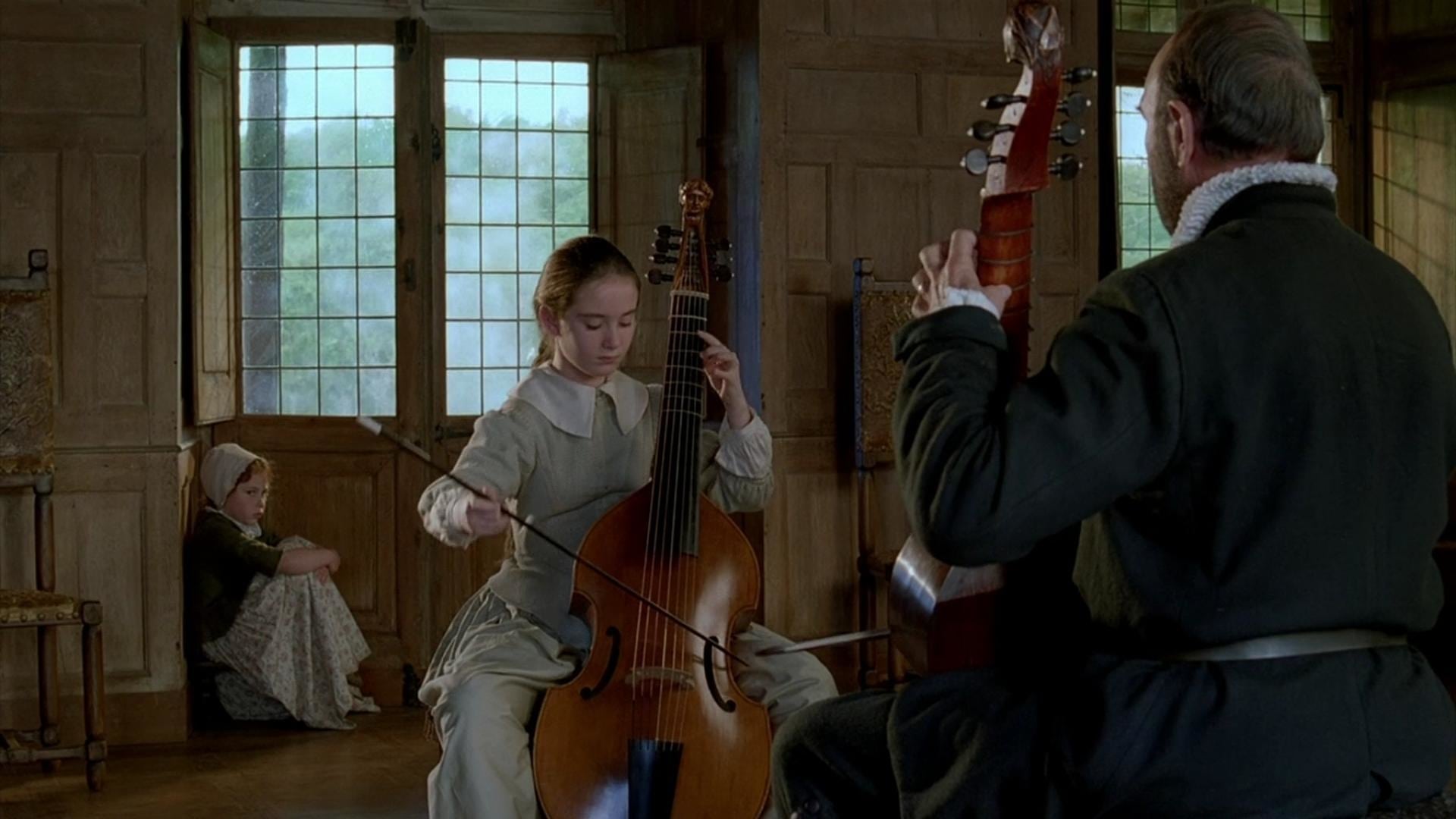
The film's score features original compositions and period-accurate performances on the viola da gamba, with acclaimed musician Jordi Savall contributing significantly to its authentic sound.
AI-generated overview · Verify ratings on official sources