
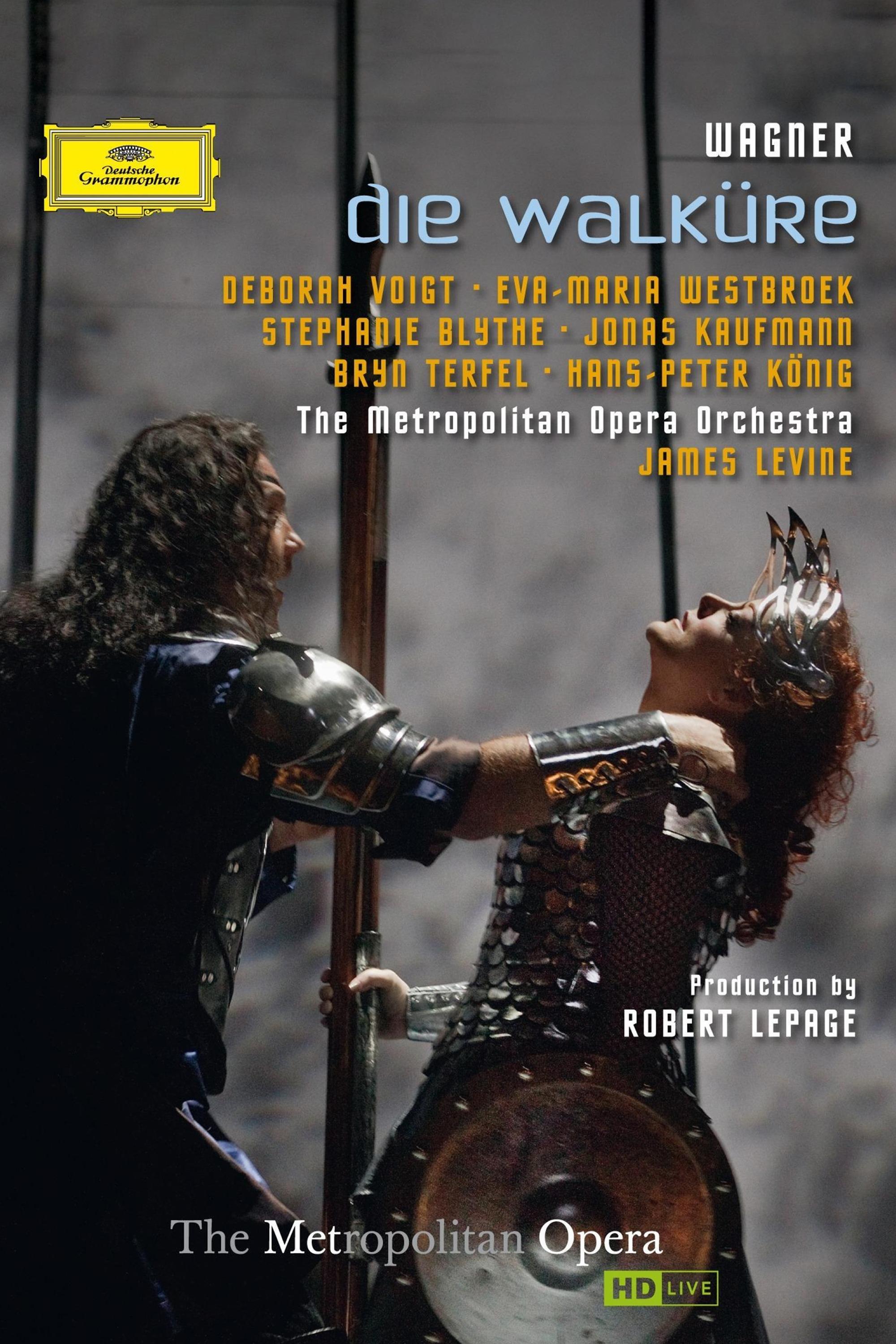
The Metropolitan Opera: Die Walküre
Robert Lepage’s landmark staging of Wagner’s Der Ring des Nibelungen, unveiled over the course of the 2010–11 and 2011–12 seasons, was the first new Met production of the complete cycle in more than 20 years. Combining state-of-the-art technology with traditional storytelling, it brings Wagner’s vision into the 21st century. With Die Walküre, the story of the Ring enters the world of human beings. Jonas Kaufmann and Eva-Maria Westbroek are Siegmund and Sieglinde, the twin children of Wotan, sung by Bryn Terfel. Deborah Voigt stars in the title role of the Valkyrie Brünnhilde, Wotan’s favorite daughter. James Levine conducts.
Insights
Plot Summary
The second installment of Richard Wagner's epic 'Der Ring des Nibelungen' cycle, 'Die Walküre' (The Valkyrie) tells the story of the forbidden love between Siegmund and Sieglinde, twins separated at birth and unaware of their true lineage. Their union is opposed by the gods, leading to a dramatic confrontation between Wotan, the king of the gods, and his defiant daughter, the warrior maiden Brünnhilde. The opera explores themes of love, fate, and the clash between divine authority and human passion.
Critical Reception
The Metropolitan Opera's 2011 production of 'Die Walküre' was met with a mixture of awe for its groundbreaking stage technology and discussion regarding the overall dramatic coherence of Robert Lepage's ambitious staging. While the vocal performances were often lauded, the visual spectacle sometimes overshadowed the intimate human drama for some critics.
What Reviewers Say
- Praised for its innovative and technologically advanced set design, particularly the monumental 'tree' structure.
- Vocal performances, especially those of the lead Valkyrie and the twin lovers, were generally highlighted as strong.
- Some critics found the visual spectacle overwhelming, at times detracting from the emotional depth of the narrative.
Google audience: Audience reactions to this production were often focused on the sheer scale and technological marvel of the staging, with many expressing amazement at the visual ambition. Opinions were divided on whether the innovative set design enhanced or detracted from the traditional operatic experience.
Awards & Accolades
None notable for this specific production, though the 'Ring Cycle' as a whole has received numerous awards and nominations over the years.
Fun Fact
The enormous, technologically complex set for this production was designed to resemble a massive, shifting tree, a central visual motif representing the interconnectedness of the story's themes and the characters' destinies.
AI-generated overview · Verify ratings on official sources