Movie spotlight
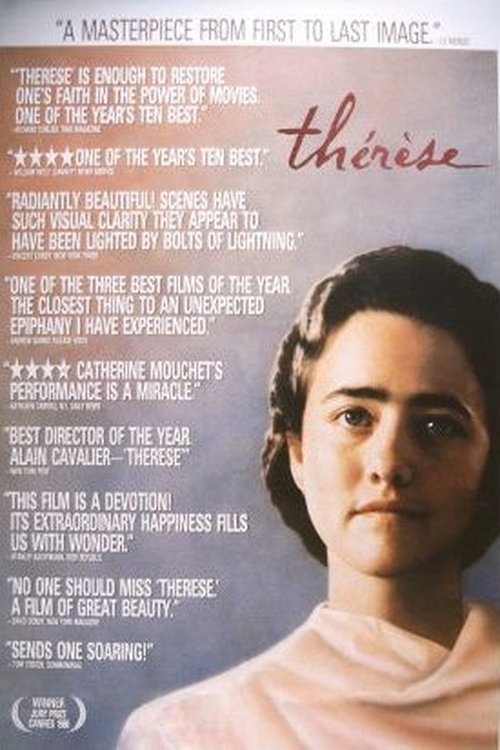
Thérèse
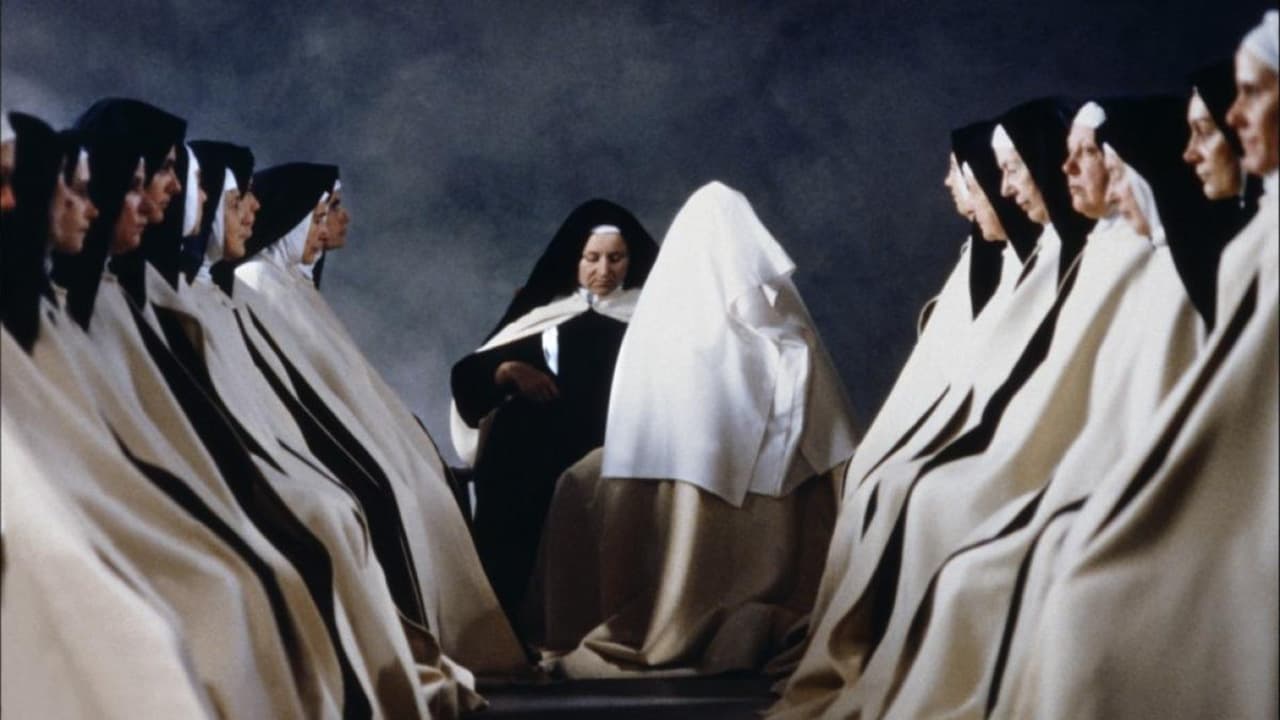
The life of little St. Therese of Lisieux, depicted in minimalist vignettes. Therese and her sisters are all nuns in a Carmelite convent. Her devotion to Jesus and her concept of "the little way" to God are shown clearly, using plain modern language. A sense of angelic simplicity comes across without fancy lights, choirs, or showy miracles.
Insights
Plot Summary
This film recounts the life of Thérèse Martin, later known as Saint Thérèse of Lisieux. It focuses on her deep spiritual devotion and her journey towards becoming a Carmelite nun, exploring her inner world and her profound faith. The narrative emphasizes her personal struggle and her unique path to sainthood. The film offers an intimate look at a young woman's intense relationship with God.
Critical Reception
Thérèse was critically acclaimed for its profound simplicity and its sensitive portrayal of faith. Critics lauded Alain Cavalier's minimalist approach, which allowed the audience to connect deeply with the subject's inner life. The film was praised for its artistic merit and its thoughtful exploration of religious devotion. It was seen as a departure from conventional biopics, offering a more introspective and spiritual experience.
What Reviewers Say
Praised for its quiet intensity and spiritual depth.
Lauded for its minimalist aesthetic and focus on inner life.
Cited as a unique and moving portrayal of faith.
Google audience: Information regarding specific Google user reviews for 'Thérèse (1986)' is not readily available.
Awards & Accolades
Won the Grand Prix Spécial du Jury at the 1986 Cannes Film Festival. Nominated for Best Foreign Language Film at the Golden Globes.
Fun Fact
Director Alain Cavalier famously decided to shoot the film in black and white to emphasize the spiritual and austere nature of Thérèse's life, a decision that significantly contributed to the film's unique visual style and atmosphere.
AI-generated overview · Verify ratings on official sources