
Movie spotlight
Television
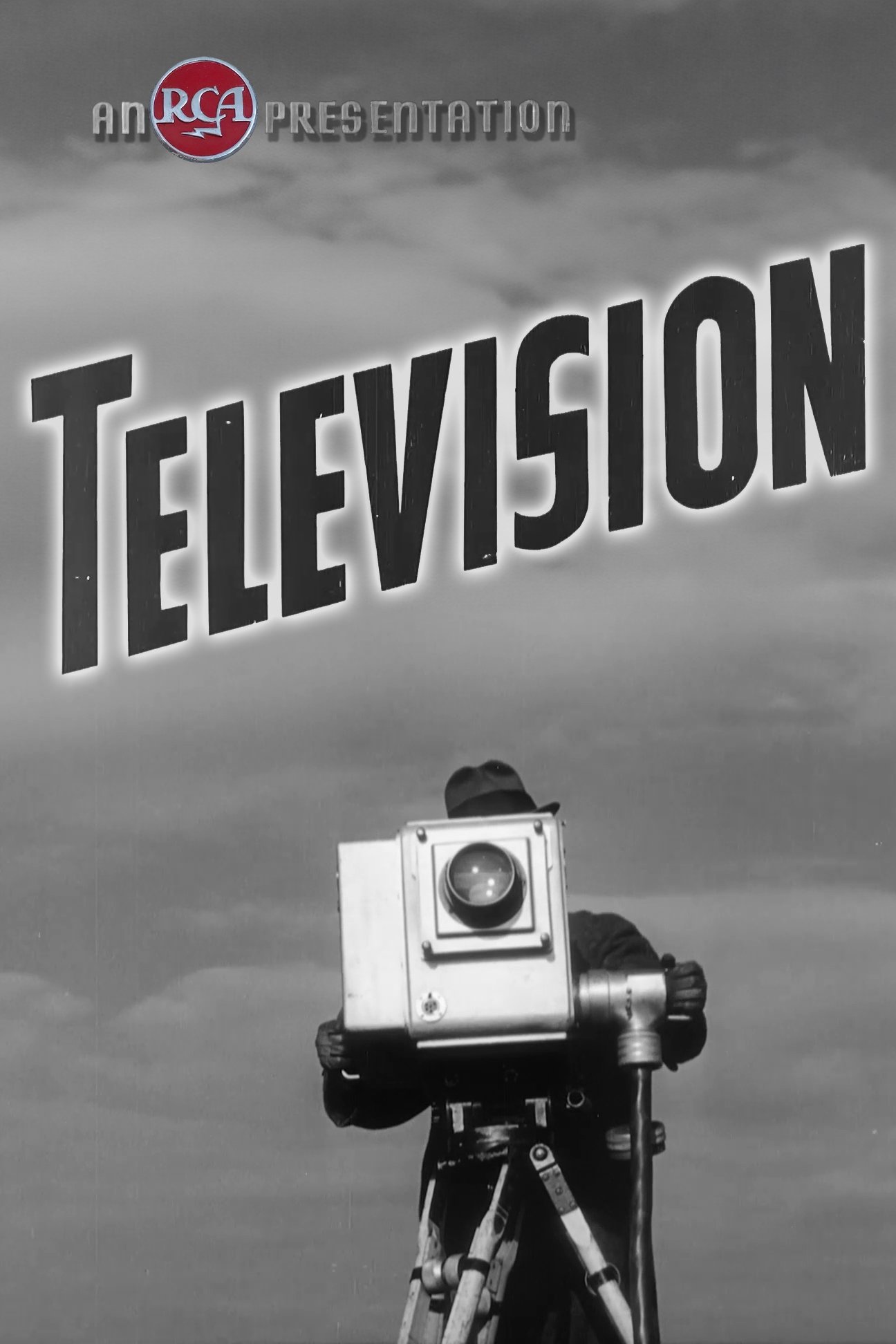
Promotes television sets and the broadcast of New York's first regularly scheduled programs by providing a clinical look at the inner workings of television, including the manufacture of the tubes, lab experiments, and an actual telecast. Shows RCA's production studios in Rockefeller Center, television demonstrations at the 1939–40 New York World's Fair, RCA's Empire State Building transmitter, and remote mobile broadcast units. One of a variety of "Reelisms" shorts produced by Frederic Ullman Jr. and Frank Donovan for RKO in the late 1930s.
Insights
Plot Summary
This seminal documentary captures the dawn of television broadcasting in the United States, coinciding with the 1939 New York World's Fair. It showcases the nascent technology and its potential, featuring President Franklin D. Roosevelt's historic address which marked the first presidential televised speech. The film highlights the visionary efforts of individuals like David Sarnoff and the groundbreaking demonstrations that ushered in a new era of mass communication.
Critical Reception
As a historical document rather than a narrative film, 'Television (1939)' is primarily evaluated for its documentary value and historical significance. It is universally acknowledged as a crucial record of a pivotal moment in technological and media history, capturing the excitement and uncertainty surrounding the introduction of television to the public.
What Reviewers Say
An invaluable historical artifact.
Captures the early optimism for television's potential.
Essential viewing for understanding media evolution.
Google audience: N/A
Fun Fact
The broadcast of President Franklin D. Roosevelt's speech at the 1939 New York World's Fair is considered the official public debut of television in the United States.
AI-generated overview · Verify ratings on official sources