Movie spotlight
Love Meetings
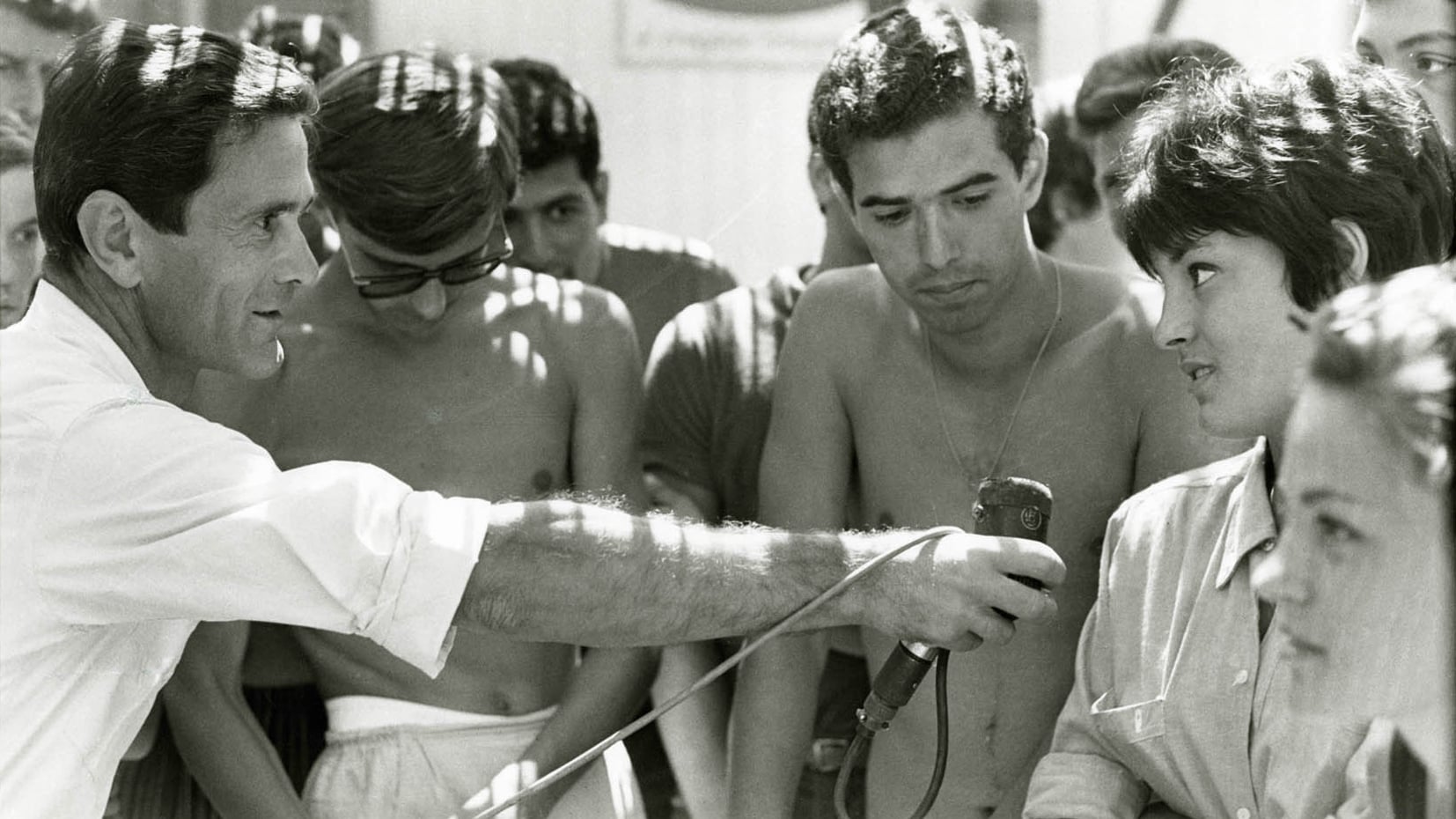
Pier Paolo Pasolini sets out to interview Italians about sex, apparently their least favorite thing to talk about in public: he asks children if they know where babies come from; asks old and young women if they support gender equality; asks both sexes if a woman's virginity still matters, what do they think of homosexuality, if divorce should be legal, or if they support the recent abolition of brothels. He interviews blue-collar workers, intellectuals, college students, rural farmers, the bourgeoisie, and every other kind of people, painting a vivid portrait of a rapidly-industrializing Italy, hanging between modernity and tradition — toward both of which Pasolini shows equal distrust.
Insights
Plot Summary
Pier Paolo Pasolini travels across Italy, interviewing people about their views on love, sexuality, and relationships. The film captures a snapshot of societal attitudes and personal philosophies during a time of significant social change in Italy. Through these candid conversations, Pasolini explores themes of desire, repression, and the complexities of human connection.
Critical Reception
Love Meetings is a fascinating and provocative documentary that offers a raw and unfiltered look into Italian society's perspectives on love and sexuality in the mid-1960s. While its experimental nature and direct interviews were groundbreaking for its time, its frank discussions and Pasolini's confrontational approach have been noted for their historical significance and challenging nature.
What Reviewers Say
A bold and revealing exploration of Italian attitudes towards love and sexuality.
Pasolini's direct interviewing style captures candid and often controversial opinions.
A significant document of its time, reflecting social and personal dialogues.
Google audience: Audience reception is not readily available for this experimental documentary.
Fun Fact
The film was initially met with controversy and censorship due to its explicit discussions of sexuality and homosexuality, reflecting the conservative climate of the era.
AI-generated overview · Verify ratings on official sources