Movie spotlight
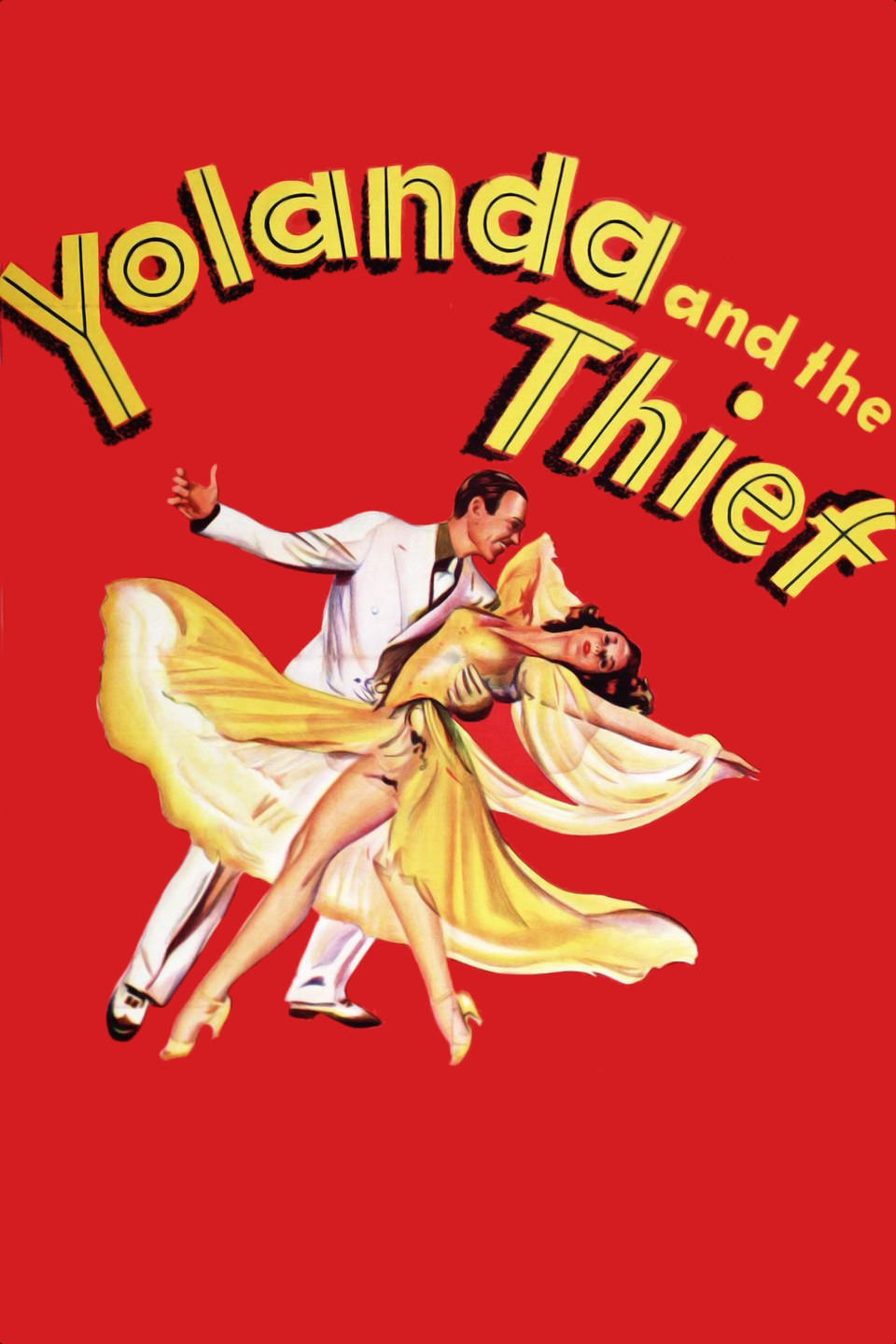
Yolanda and the Thief
Johnny Riggs, a con man on the lam, finds himself in a Latin-American country named Patria. There, he overhears a convent-bred rich girl praying to her guardian angel for help in managing her tangled business affairs. Riggs decides to materialize as the girl's "angel", gains her unquestioning confidence, and helps himself to the deluded girl's millions. Just as he and his partner are about to flee Patria with their booty, Riggs realizes he has fallen in love with the girl and returns the money, together with a note that is part confession and part love letter. But the larcenous duo's escape from Patria turns out to be more difficult than they could ever have imagined.
Insights
Plot Summary
In 1935, three American "angels" (a con man and his two associates) arrive in the fictional South American country of Huerta to swindle a naive duchess. Their plan is to convince her that one of them is her long-lost guardian angel, thereby gaining control of her fortune. However, their scheme takes a romantic turn when the duchess, Yolanda, falls for the main con man, Johnny. Their budding romance is complicated by the country's impending revolution and the moral dilemma faced by Johnny.
Critical Reception
Yolanda and the Thief was a critical and commercial failure upon its release, largely due to its perceived pretentiousness, dated themes, and a lack of audience connection. Despite praise for Fred Astaire's performance and the elaborate Technicolor production, the film was seen as a misstep for both Astaire and MGM.
What Reviewers Say
Praised for Fred Astaire's graceful dancing and the vibrant Technicolor cinematography.
Criticized for a weak and convoluted plot that struggled to engage audiences.
Considered overly ambitious and somewhat pretentious in its themes and presentation.
Google audience: Audience reviews are mixed, with some appreciating the classic Hollywood musical elements and Astaire's performance, while others found the story unconvincing and the humor lacking.
Fun Fact
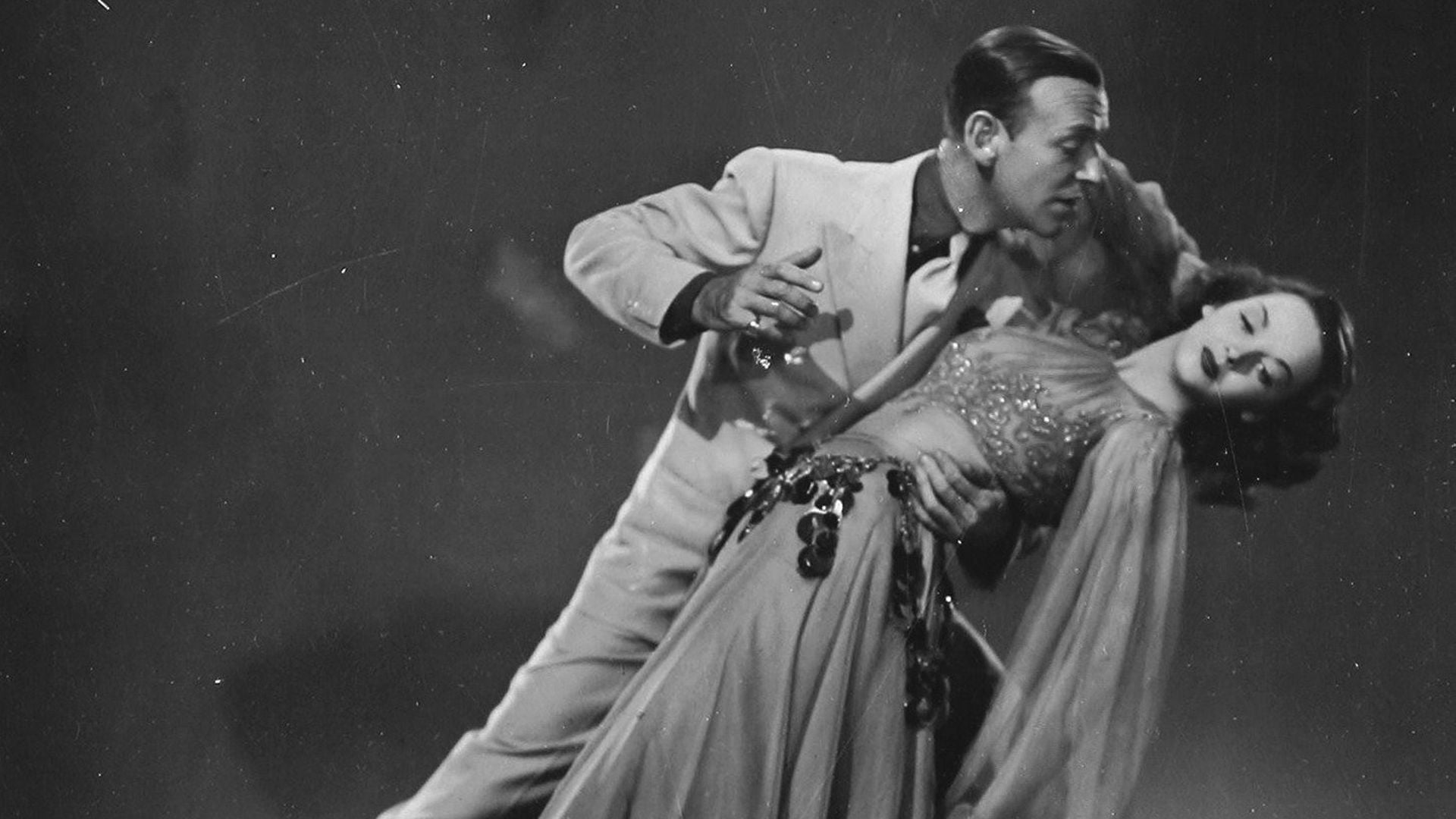
The film's elaborate dream ballet sequence, depicting Johnny's internal conflict and Yolanda's spiritual awakening, was heavily influenced by surrealist art and marked a departure from typical Hollywood musical numbers.
AI-generated overview · Verify ratings on official sources