Movie spotlight
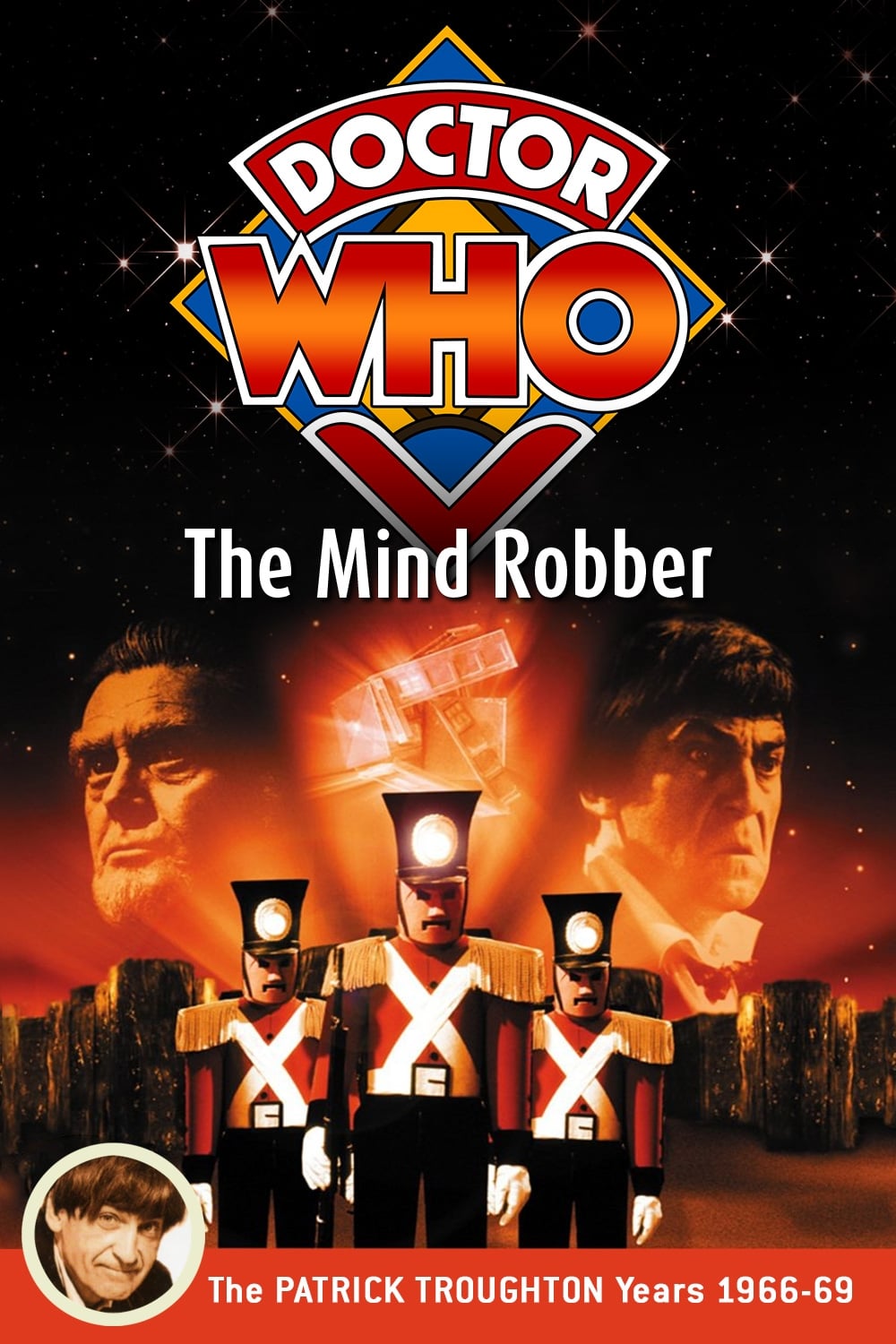
Doctor Who: The Mind Robber
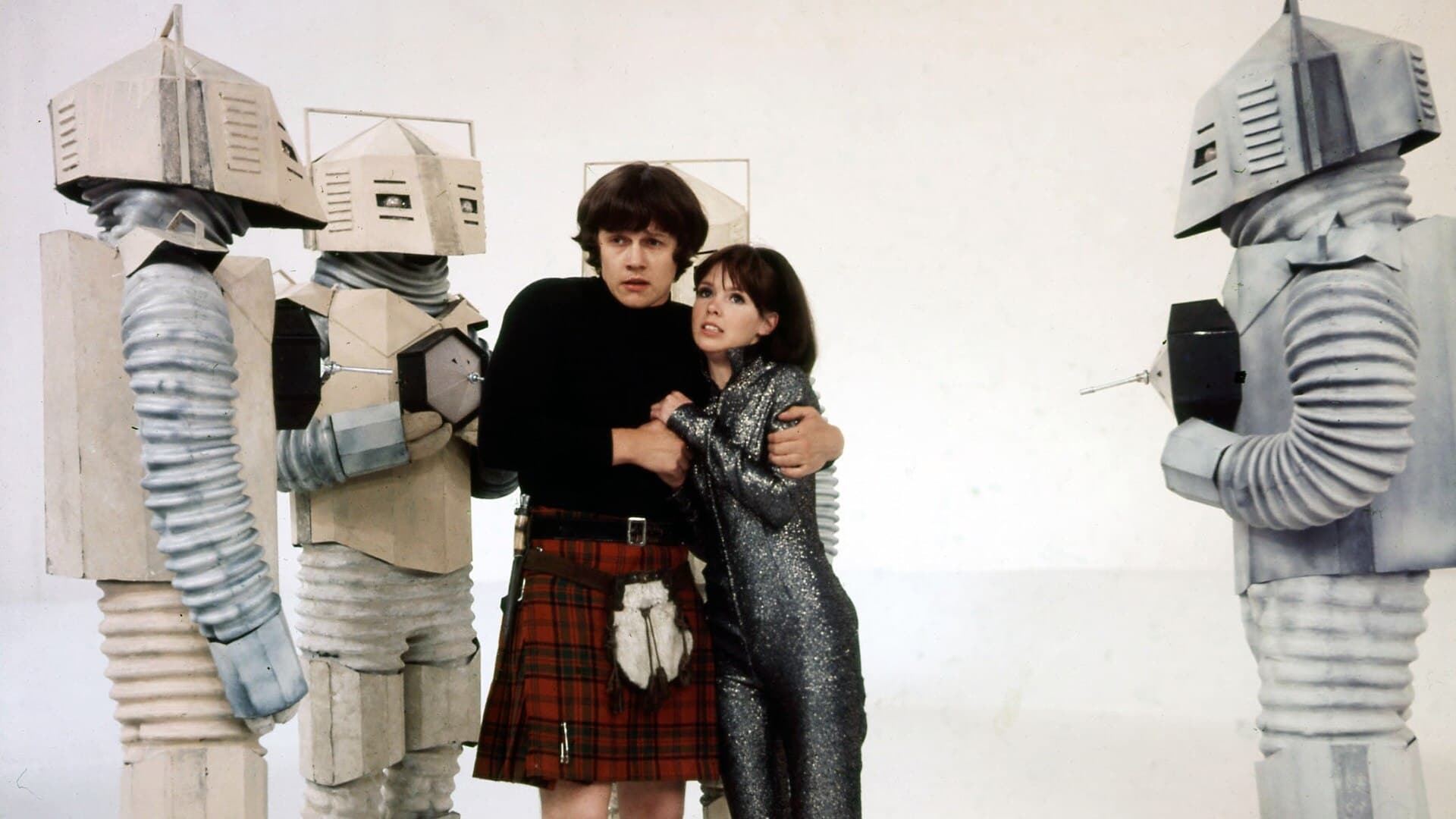
To escape from the volcanic eruption on Dulkis, the Second Doctor uses an emergency unit. It moves the TARDIS out of normal time and space. The travellers find themselves in an endless void where they are menaced by white robots. Having regained the safety of the TARDIS, they believe they have escaped — until the ship explodes. They find themselves in a land of fiction, where they are hunted by life-size clockwork soldiers and encounter characters like Rapunzel, the Karkus, and Swift's Lemuel Gulliver.
Insights
Plot Summary
The TARDIS dematerializes and rematerializes in a void, with the Doctor, Jamie, and Zoe finding themselves in an unfamiliar, featureless landscape. They encounter figures from fiction and history, including the Lemmings, a Greek mythological giant, and an automaton based on a toy soldier. The travelers soon realize they are trapped in a vast, surreal mental landscape created by an alien intelligence known as the "Master" who feeds on imagination, threatening to consume their very identities.
Critical Reception
The Mind Robber is widely regarded as one of the most ambitious and conceptually daring stories of Doctor Who's classic era. It is praised for its surrealism, meta-commentary on storytelling, and the innovative use of its premise to explore the nature of reality and imagination. While some find its abstract nature occasionally confusing, it is celebrated for its creativity and the strong performances of the cast, particularly Patrick Troughton's.
What Reviewers Say
Praised for its highly imaginative and surreal narrative.
Commended for its meta-fictional exploration of storytelling and reality.
Applauded for Patrick Troughton's compelling performance as the Doctor.
Google audience: Audience reception for this specific classic serial is not readily available in aggregated Google user reviews, but fan discussions often highlight its unique and thought-provoking nature.
Awards & Accolades
None notable.
Fun Fact
The script for "The Mind Robber" was heavily influenced by the surrealist works of artists like Salvador Dalí and René Magritte, and literary figures such as Lewis Carroll, contributing to its dreamlike and often bizarre atmosphere.
AI-generated overview · Verify ratings on official sources