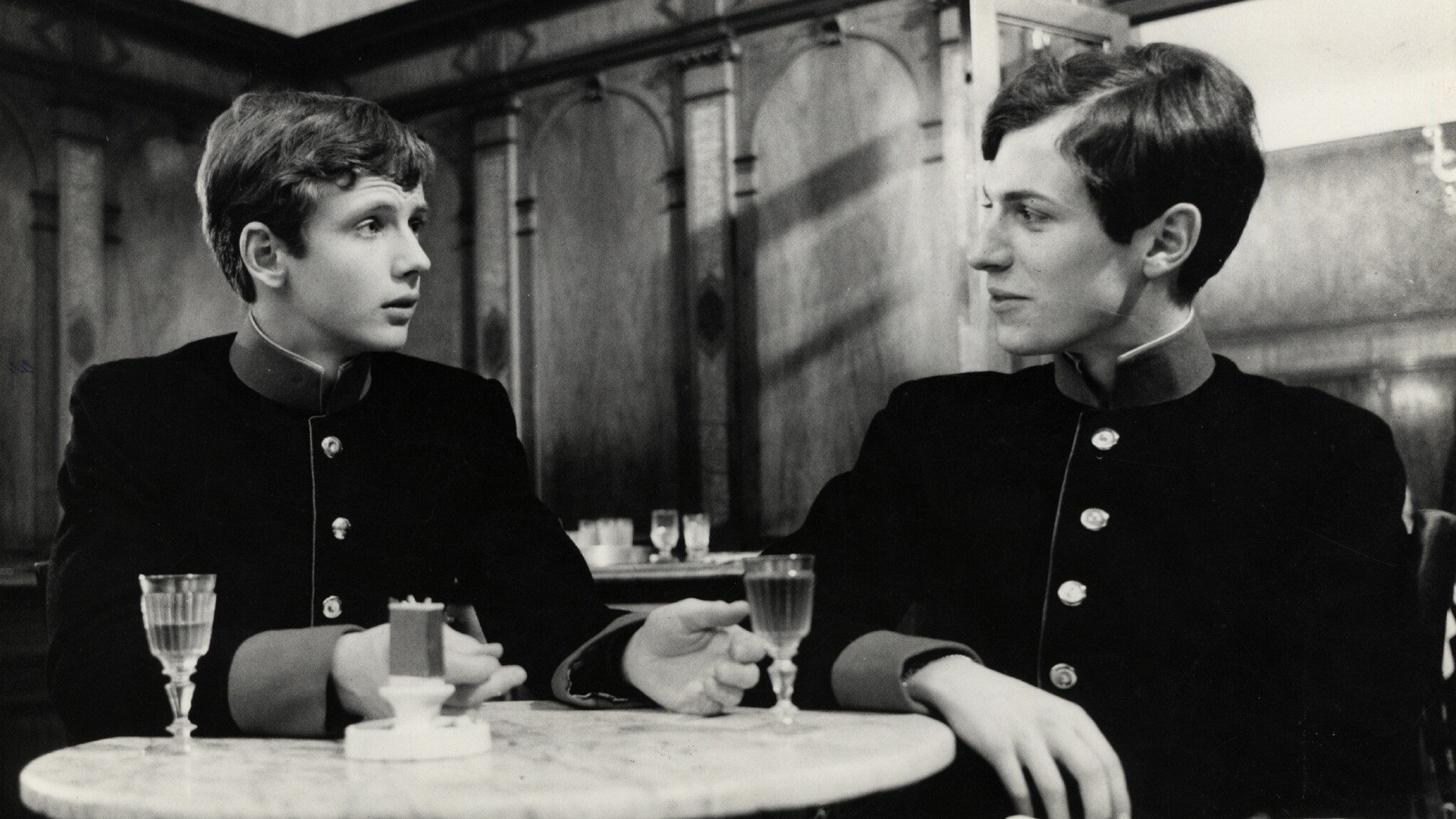

Movie spotlight
Young Törless
At an Austrian boys' boarding school in the early 1900s, shy, intelligent Törless observes the sadistic behavior of his fellow students, doing nothing to help a victimized classmate—until the torture goes too far. Adapted from Robert Musil's acclaimed novel, Young Törless launched the New German Cinema movement and garnered the 1966 Cannes Film Festival International Critics' Prize for first-time director Volker Schlöndorff.
Insights
Plot Summary
Set in a German boarding school shortly before World War I, the film follows the sensitive and introspective Törless as he navigates the harsh realities of institutional life. When his friend Beineberg is caught stealing, Törless is drawn into a dark world of manipulation, sexual exploitation, and bullying, forcing him to confront uncomfortable truths about himself and the society around him.
Critical Reception
Young Törless was widely praised by critics for its unflinching exploration of adolescent sexuality, power dynamics, and the corrupting influence of institutions. It was recognized for its mature handling of complex themes and its stark, atmospheric cinematography.
What Reviewers Say
Praised for its daring and mature exploration of adolescent themes.
Recognized for its atmospheric direction and unsettling portrayal of power dynamics.
Commended for its raw and unflinching look at the darker side of human nature.
Google audience: Audience reception data for this film on Google is not readily available.
Awards & Accolades
Won the FIPRESCI Prize at the Venice Film Festival in 1966.
Fun Fact
The film was based on Robert Musil's 1906 novel 'The Man Without Qualities,' which was a seminal work in Austrian literature.
AI-generated overview · Verify ratings on official sources