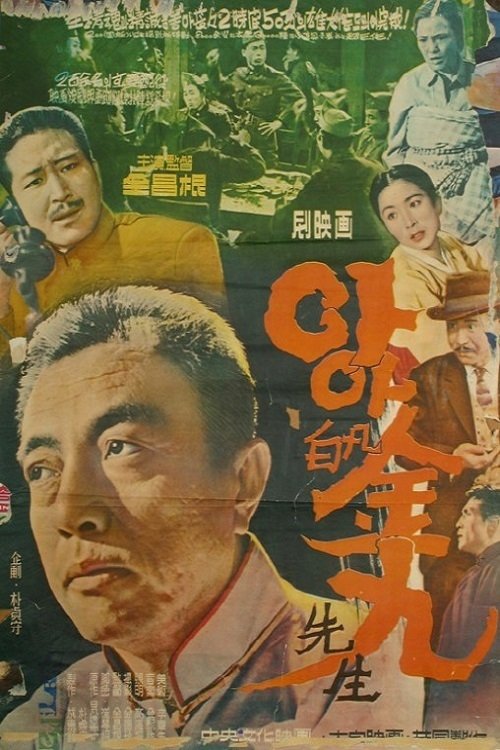
Ah! Baekbeom Kim Ku
Ah! Baekbeom Kim Ku

Ah! Baekbeom Kim Ku

1960Movie140 minKorean

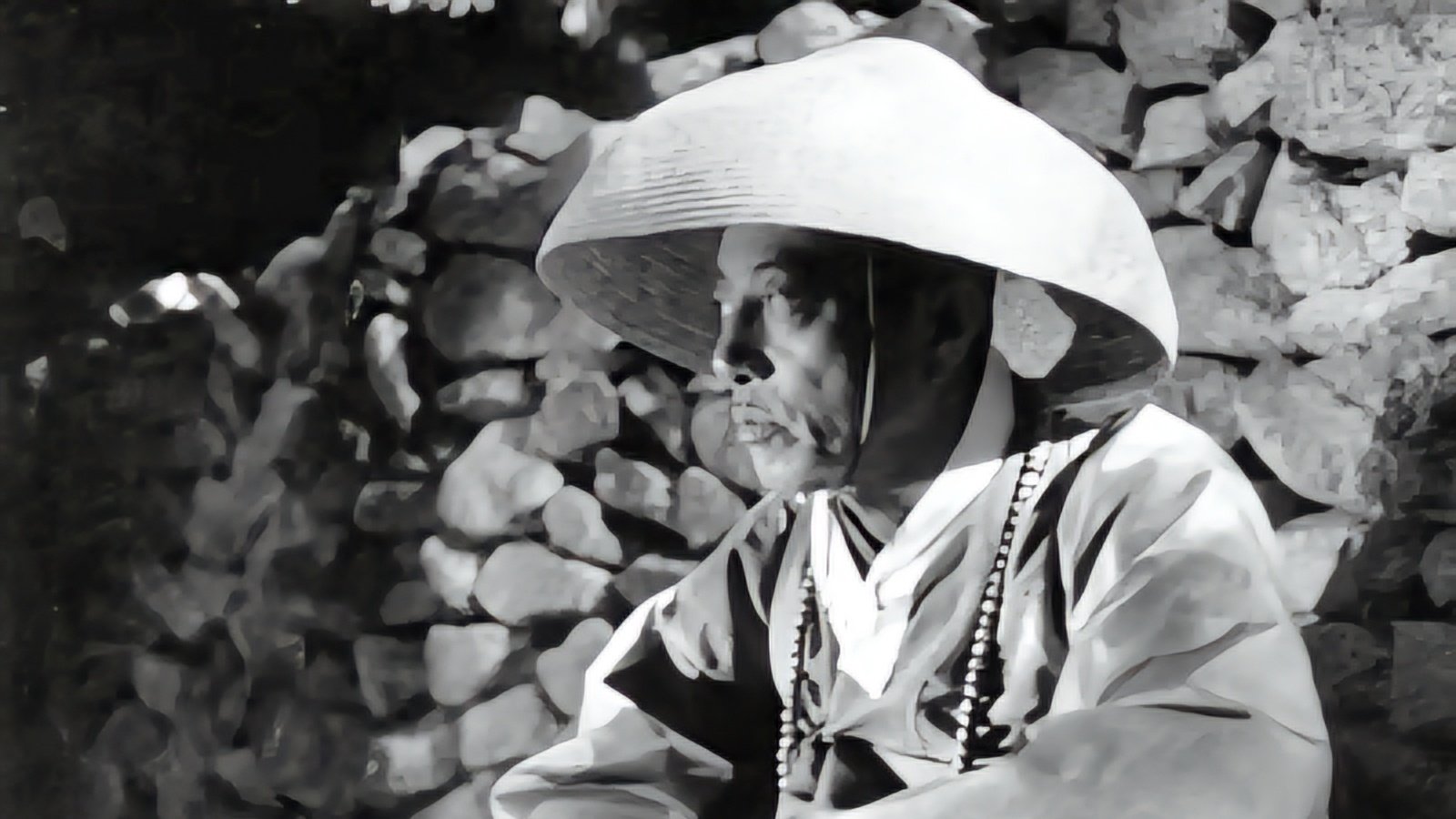
Kim Chang-su, who participated in the Donghak Movement, escapes to Manchuria after being chased by the Japanese army, finally making his way home. Angered by the assassination of Empress Myeong-seong, he murders a Japanese lieutenant and is sent to jail. He escapes from prison turns his focus on the democratic movement by teaching civilians and organizing Sinminheo (a democratic organization), even changing his name to 'Kim Gu.' After he is imprisoned again, he gets out on parole and goes to China, where he participates in establishing a provisional government from which he can direct the anti-Japanese struggle. Kim Gu goes on to play a part in Yun Bong-gil's deeds in Shanghai, the events at Hongkou Park, the encounter with Jiang Jish, and the establishment of the Korean National Army, and leads the struggle for Korea's independence with warm fraternal love and clear national spirit. When Korea is liberated in August 15, 1945, he returns back to his native land.

Read Reviews

Insights

Director: Im Kwon-taekGenres: Biography, Drama, History

Plot Summary

This film chronicles the life of Kim Ku, a prominent Korean independence activist and leader. It follows his journey from his early life and involvement in the Donghak Peasant Revolution to his dedicated efforts in the Korean independence movement during the Japanese colonial period. The narrative highlights his unwavering commitment to restoring Korea's sovereignty and his significant role in shaping the nation's history.

Critical Reception

As a historical biopic from 1960, specific detailed critical reception is difficult to ascertain with modern metrics. However, films of this nature in South Korea during that era were generally produced to foster national pride and educate the public about historical figures. It is understood to have been a significant film for its time, contributing to the national narrative of independence and heroism.

What Reviewers Say

  • A poignant portrayal of a national hero's struggle.
  • Captures the spirit of Korean resistance against colonial rule.
  • Serves as an important historical document of the independence movement.

Google audience: Audience reception for this film from 1960 is not widely documented in a way that can be summarized for Google reviews. However, it is a film that resonates with those interested in Korean history and the fight for independence.

Fun Fact

This film marked an early directorial work for Im Kwon-taek, who would go on to become one of South Korea's most celebrated filmmakers, known for his extensive body of work exploring Korean culture and history.

AI-generated overview · Verify ratings on official sources

My Review