
Movie spotlight
Queen Louise
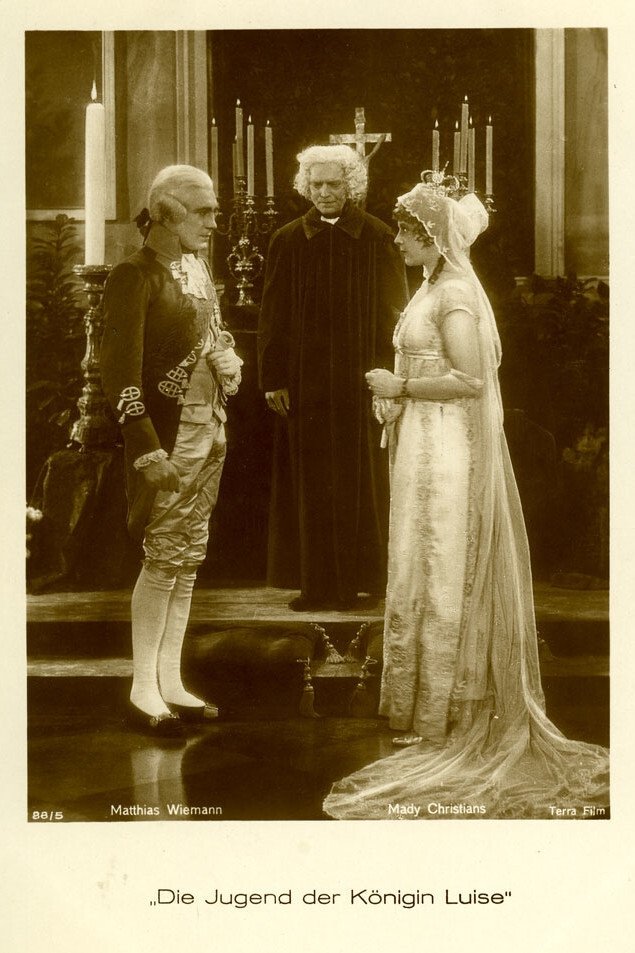
The young Crown Princess Luise of Mecklenburg-Strelitz grows up sheltered in the North German countryside in the late 18th century and develops into a bit of a rebel. She struggles to come to terms with the rules of etiquette at court; her actions are often spontaneous and driven by emotion. Thus, she resists accepting her father’s mistress and future wife. During a ball, she snubs her future stepmother and even has the audacity to ask the orchestra to play a waltz—a dance considered deeply improper at the time.
Insights
Plot Summary
The film chronicles the life of Queen Louise of Prussia, focusing on her early life, marriage to King Frederick William III, and her resilience during the Napoleonic Wars. It highlights her efforts to rally the Prussian people and her personal sacrifices for her country. The narrative culminates with her death in 1810, remembered as a national heroine.
Critical Reception
As a historical epic from early German cinema, "Queen Louise" was likely intended as a patriotic and biographical piece. While specific contemporary critical reviews are scarce, the film is recognized for its grand scale and performances, aiming to evoke national pride during a period of rebuilding for Germany. Its reception today is primarily as a historical artifact of Weimar cinema.
What Reviewers Say
Praised for its historical scope and lavish production values for its era.
Noted for its portrayal of a strong female historical figure as a symbol of national resilience.
Seen as a significant example of German historical filmmaking in the silent era.
Google audience: Information on Google user reviews for this early silent film is not readily available. However, its historical subject matter and patriotic themes likely resonated with audiences of its time.
Fun Fact
The film was made during a period when historical epics were popular in German cinema, often used to explore national identity and past glories.
AI-generated overview · Verify ratings on official sources