
Movie spotlight
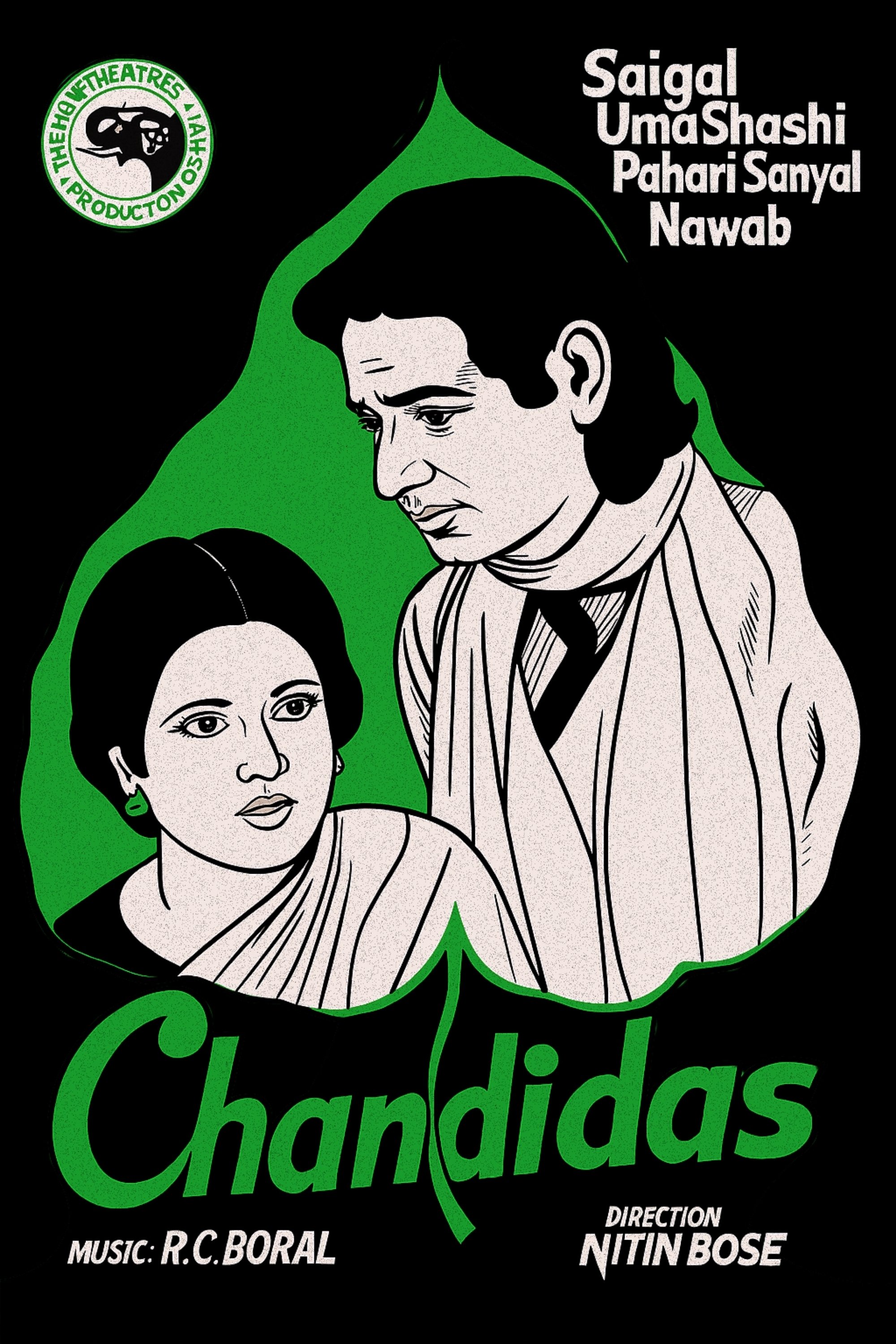
Chandidas
The story revolves around the 15th century poet-saint Chandidas who acts out against the deep-rooted bigotry against caste, untouchability and the hypocrisy of society, as he falls in love with a washer woman.
Insights
Plot Summary
The film tells the story of the medieval Bengali poet Chandidas, a Vaishnavite devotee known for his lyrical poems dedicated to Radha. It explores his profound love and spiritual devotion towards the washerwoman Rami, a love that transcends social barriers of the time. The narrative focuses on the conflicts and societal pressures they face due to their unconventional relationship and Chandidas's intense spiritual journey.
Critical Reception
Chandidas (1934) is considered a landmark in early Indian cinema, particularly for its pioneering use of sound and its sensitive portrayal of a historical and devotional theme. Directed by Debaki Bose, it was one of the first Indian talkies to achieve widespread critical acclaim and commercial success, setting a benchmark for future musical and historical dramas.
What Reviewers Say
Praised for its early sound technology and musical numbers.
Commended for its sensitive handling of a historical and spiritual romance.
Recognized as a significant achievement in early Indian talkies.
Google audience: Information on specific Google user reviews for this film from 1934 is not available.
Fun Fact
Chandidas (1934) was one of the first Indian films to successfully integrate sound and music, marking a significant technological advancement for the Indian film industry at the time.
AI-generated overview · Verify ratings on official sources