
Movie spotlight
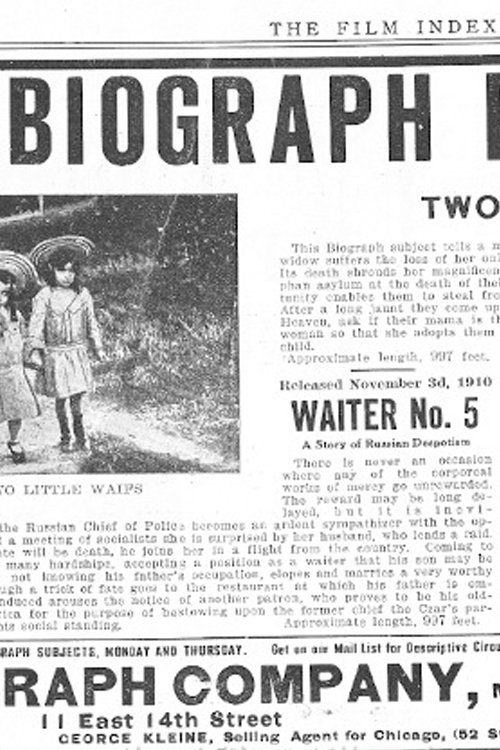
Waiter No. 5
After conducting a raid on a Rebel camp, a Czarist officer discovers that his wife has joined the revolutionaries. Out of loyalty to his wife, the officer resigns his commission and escapes with her to America. Several years later, the ex-officer is gainfully employed as a waiter in a Russian restaurant. For the sake of his grown son, who is engaged to marry a wealthy socialite, our hero pretends to be a man of great wealth and prestige. The truth is revealed in the final scene, but "Waiter Number 5" is saved from disgrace by the timely arrival of his former superior officer.
Insights
Plot Summary
A down-on-his-luck waiter is falsely accused of theft by a wealthy patron. Facing disgrace and imprisonment, he desperately tries to clear his name. The story culminates in a dramatic confrontation that reveals the true culprit and restores the waiter's honor.
Critical Reception
As one of D.W. Griffith's early one-reelers, 'Waiter No. 5' is recognized for its emotional storytelling and nascent cinematic techniques. While specific contemporary reviews are scarce, it is seen as a demonstration of Griffith's developing skill in directing actors and building dramatic tension within a short format.
What Reviewers Say
Demonstrates early Griffith's skill in dramatic short films.
Notable for its emotional impact and narrative clarity for the era.
A precursor to more complex storytelling in American cinema.
Google audience: Audience reviews are limited due to the film's age, but it is appreciated as an early example of narrative filmmaking.
Fun Fact
This film is considered one of D.W. Griffith's earliest surviving works, showcasing his foundational directorial approaches before his more famous epics.
AI-generated overview · Verify ratings on official sources