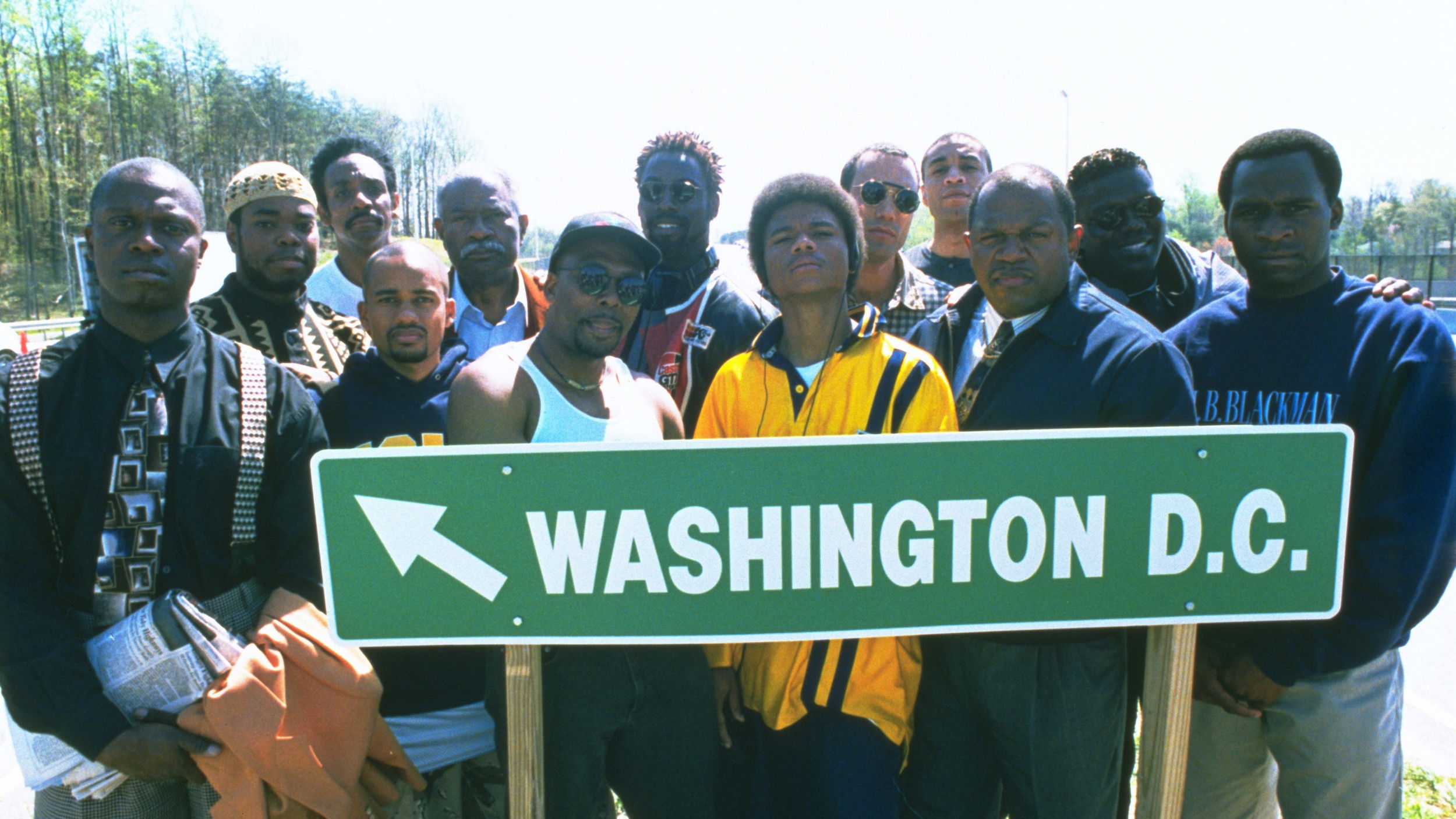

Get on the Bus
Fifteen Black men gather in South Central LA to take a cross-country bus trip to attend the Million Man March in Washington, DC in October 1995. Among the attendees are an eclectic set of characters, including a laid-off aircraft worker, a man whose at-risk son is handcuffed to him, a Black Republican, a former gangsta, a Hollywood actor, a cop of mixed racial background, and a white bus driver. All make the trek discussing issues surrounding the March, including manhood, religion, politics, sexuality, and race.
Insights
Plot Summary
A diverse group of African American men from Los Angeles board a bus to travel to the Million Man March in Washington, D.C. Along the journey, they confront their personal struggles, differing viewpoints, and the complexities of Black manhood in America. Through conversations and shared experiences, they forge unexpected bonds and gain a deeper understanding of themselves and each other.
Critical Reception
Get on the Bus received generally positive reviews from critics, who praised its strong performances, relevant themes, and Spike Lee's direction. While some found the narrative occasionally uneven, the film was largely seen as a powerful and thought-provoking exploration of Black identity and community.
What Reviewers Say
- Praised for its authentic portrayal of Black men and their diverse perspectives.
- Lauded for strong ensemble performances, particularly Charles S. Dutton and Andre Braugher.
- Appreciated for its exploration of contemporary Black issues and community building.
Google audience: Audiences largely appreciated the film's authentic representation of Black men and the important social commentary it offered. Many found the performances compelling and the journey of the characters relatable and moving.
Fun Fact
The film was shot entirely on a bus traveling across the country, allowing the cast and crew to experience the journey alongside the characters they portrayed.
AI-generated overview · Verify ratings on official sources