
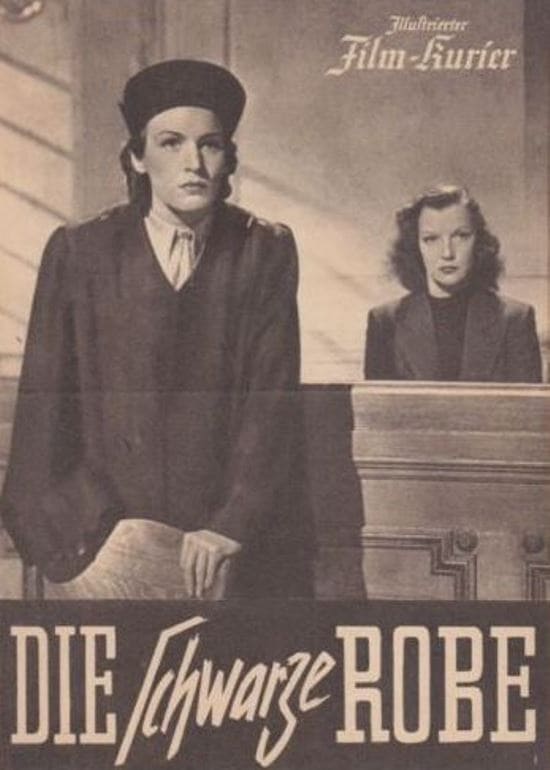
Insights
Plot Summary
In Nazi Germany during World War II, a young woman finds herself caught between her loyalty to her family and her burgeoning feelings for a man involved in clandestine resistance activities. As the war intensifies and surveillance grows, she must make difficult choices that could endanger herself and those she loves.
Critical Reception
As a German production from the wartime era, "Die schwarze Robe" was produced under significant ideological constraints. Contemporary reviews within Germany likely focused on its adherence to National Socialist principles, while post-war assessments would consider its propaganda value and artistic merit within the context of its time. Information on its reception outside of Germany is scarce.
What Reviewers Say
The film reflects the period's dramatic conventions and thematic concerns.
Its narrative likely served to reinforce societal expectations and wartime morale.
Artistic and thematic interpretations are heavily influenced by its historical context.
Google audience: Audience reception data for this film is not readily available. As a historical artifact, its primary significance lies in its reflection of German cinema during the Nazi regime.
Fun Fact
The film was produced by Tobis Filmkunst, a major German film studio during the Third Reich, and its release coincided with a period of intense propaganda efforts by the Nazi regime.
AI-generated overview · Verify ratings on official sources