
Movie spotlight
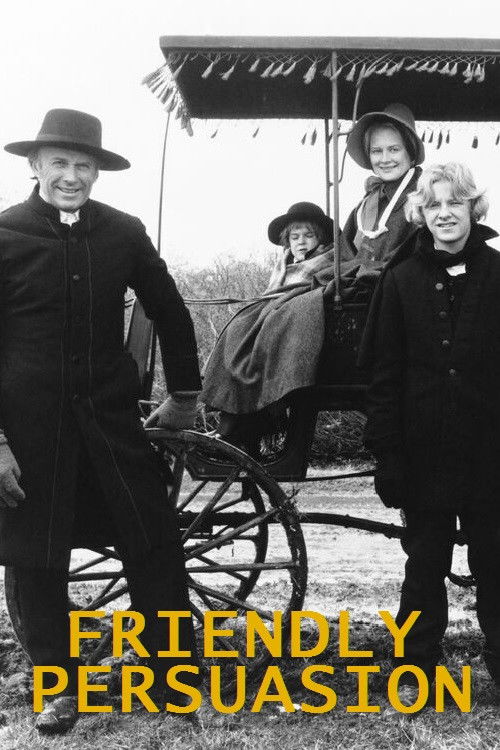
Friendly Persuasion
During the Civil War, a Quaker couple risks their lives by helping runaway slaves.
Insights
Plot Summary
In the 1850s, a Quaker family in rural Indiana faces internal conflict when the father's pacifist beliefs are challenged by the encroaching Civil War and the need to defend their home. His wife and sons grapple with his non-resistance principles as their community is threatened by violence. The film explores themes of faith, family, and the difficult choices between peace and self-preservation.
Critical Reception
Friendly Persuasion was critically acclaimed upon its release, lauded for its sensitive portrayal of a Quaker family's moral dilemmas and its strong performances, particularly from Gary Cooper. The film earned multiple Academy Award nominations and is considered a classic for its thoughtful examination of pacifism in a time of conflict.
What Reviewers Say
Praised for its nuanced depiction of a pacifist family's struggle.
Gary Cooper's performance as the conflicted patriarch is a highlight.
The film effectively balances dramatic tension with quiet introspection.
Google audience: Audiences generally appreciate the film's gentle pacing and its compelling exploration of faith and family values. Many find the performances touching and the moral questions it raises thought-provoking, although some find the story a bit slow at times.
Awards & Accolades
Nominated for six Academy Awards including Best Picture, Best Director, Best Actor (Gary Cooper), Best Supporting Actor (Anthony Perkins), Best Screenplay, and Best Art Direction. Won the Palme d'Or at the 1957 Cannes Film Festival.
Fun Fact
The film was originally intended to be directed by Stanley Kramer, but he was replaced by William Wyler due to creative differences.
AI-generated overview · Verify ratings on official sources