
Movie spotlight
Gypsy Baron
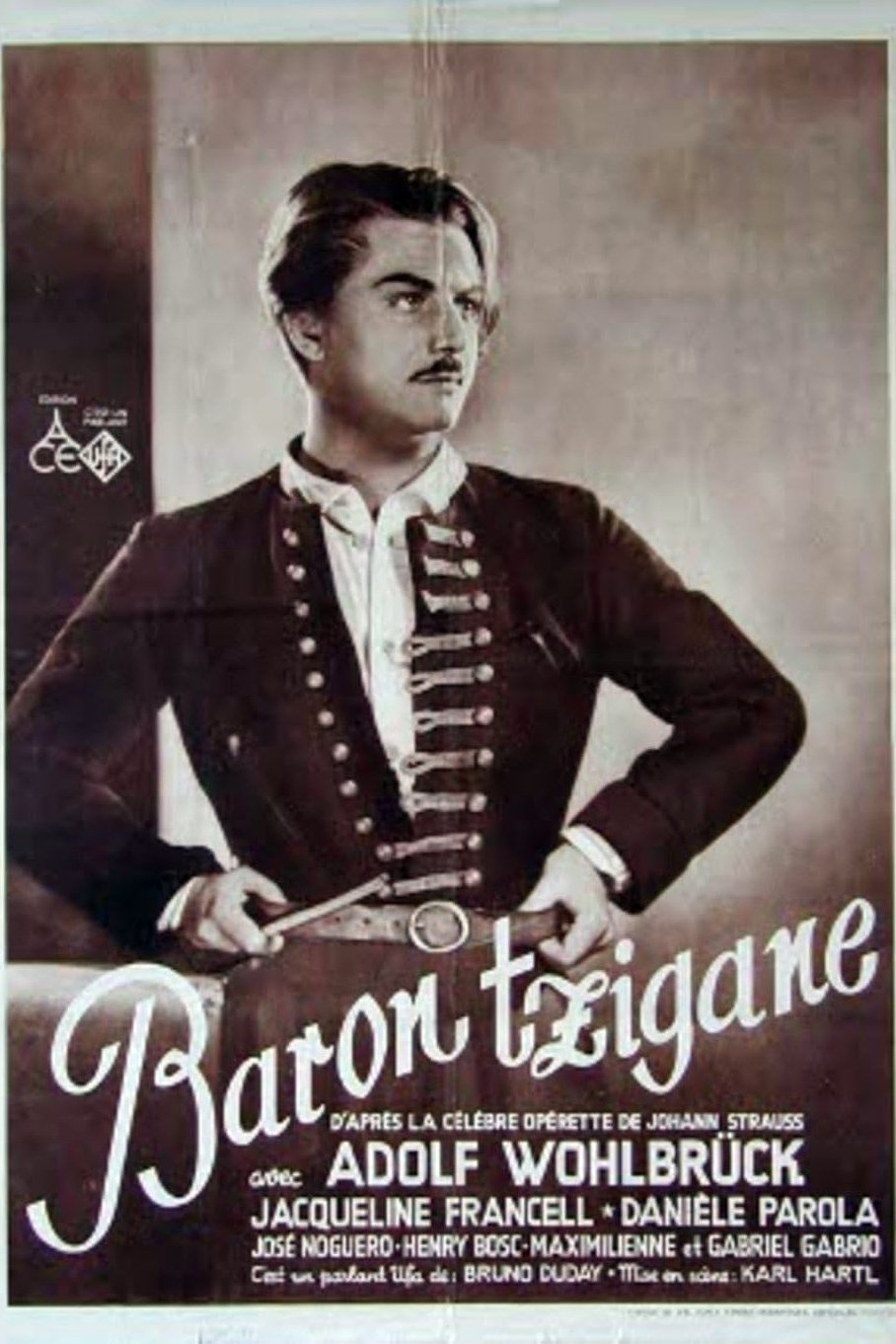
An Hungarian young man hides his real identity as baron Barinkay until he returns to his birthplace and claims the family properties, now occupied by a clumsy pig dealer who has a beautiful daughter. The gypsy girl is not bad looking either, and the gypsies are willing to help him recover his home and fortune. French version of Der Zigeunerbaron based on the Strauss operetta, filmed at the same time with a different cast except for Wohlbrück.
Insights
Plot Summary
A charming rogue, disguised as a wealthy landowner, infiltrates a bohemian household to win the heart of its spirited daughter. As he navigates misunderstandings and social pretenses, he must maintain his elaborate charade while genuine affection begins to blossom. The story unfolds with musical numbers and comedic situations, testing the authenticity of his love against the backdrop of societal expectations.
Critical Reception
Released in 1935, 'Gypsy Baron' was a popular musical comedy in its time, particularly within German-speaking cinema. It was appreciated for its lighthearted entertainment, musical performances, and the comedic talents of its lead actors, especially Hans Moser. While not critically acclaimed by modern standards for its artistic depth, it is remembered as a charming example of pre-war European musical cinema.
What Reviewers Say
Praised for its lighthearted musical numbers and comedic performances.
Enjoyed for its charming and escapist entertainment value.
Seen as a typical example of European musical comedies of the era.
Google audience: Information not available.
Fun Fact
The film is an adaptation of the operetta 'Die Csárdásfürstin' (The Riviera Girl) by Emmerich Kálmán, although it takes significant liberties with the original plot and characters.
AI-generated overview · Verify ratings on official sources