Movie spotlight
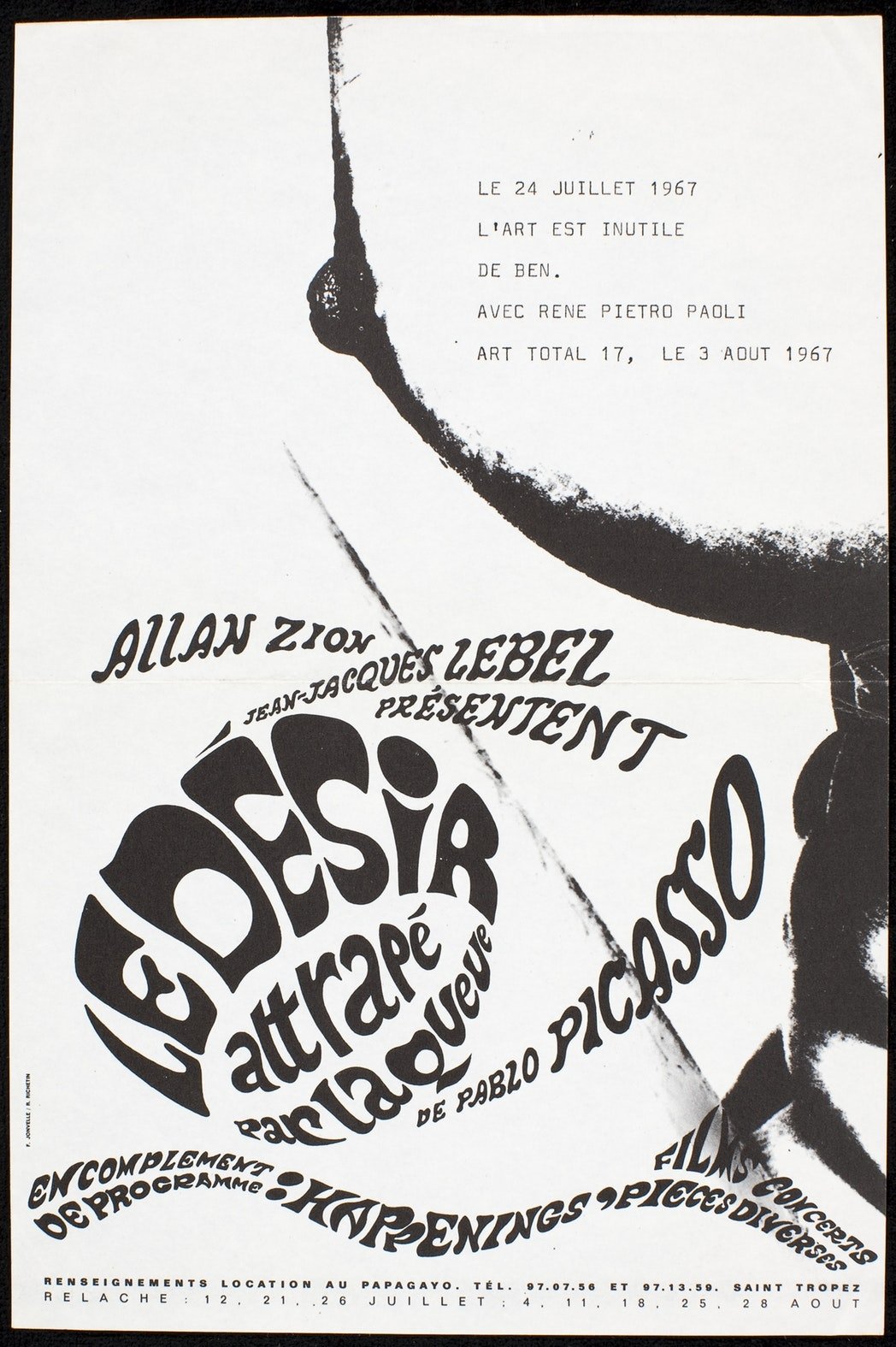
Le Désir attrapé par la queue
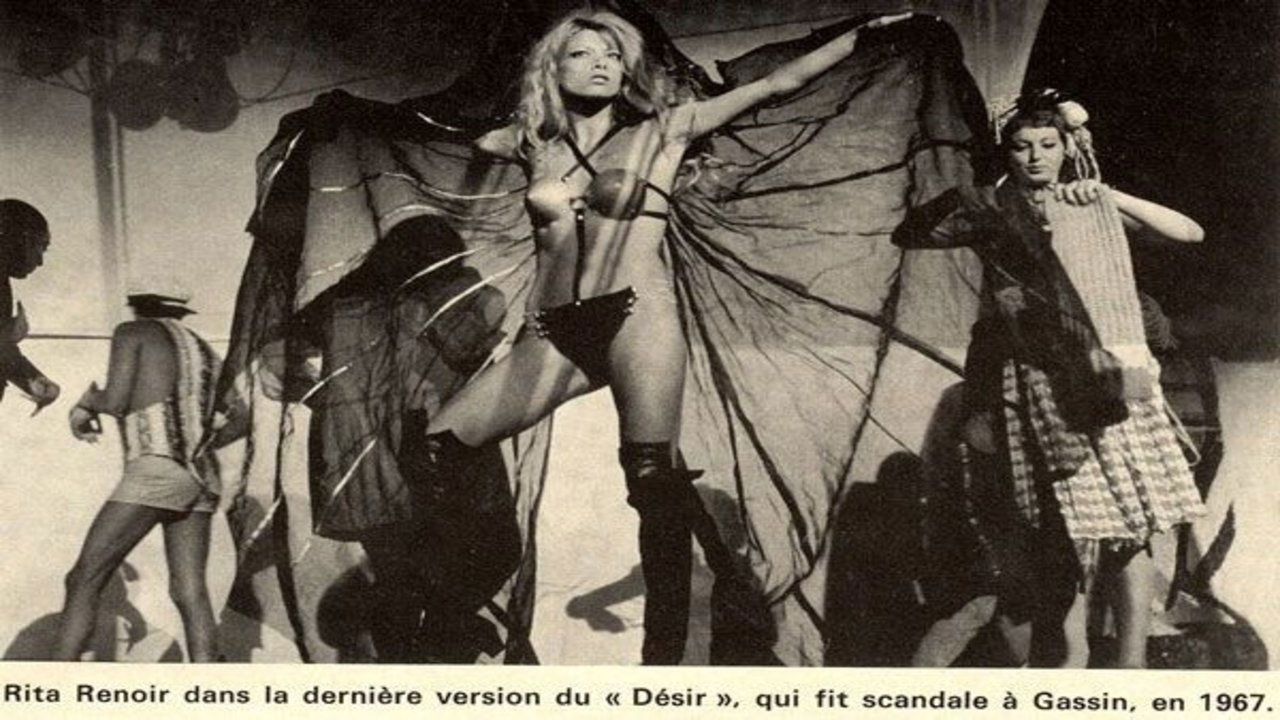
"Desire Caught by the Tail" - Described as surrealistic, absurd, and weird. The narrative is nonlinear and the meaning nearly impossible to decipher, the work has been praised despite, and sometimes for, its lack of message.
Insights
Plot Summary
This avant-garde film, based on a play by Pablo Picasso, explores themes of desire, power, and love through a series of surreal and allegorical scenes. It features characters representing abstract concepts like 'desire,' 'envy,' and 'lie' interacting in a dreamlike world. The narrative is non-linear and relies heavily on symbolic dialogue and visual metaphors.
Critical Reception
As an experimental film by a renowned artist, 'Le Désir attrapé par la queue' received a niche reception, primarily appreciated by those interested in avant-garde cinema and Picasso's multifaceted artistic output. It was noted for its unique conceptual approach and challenging narrative structure, though it was not widely accessible or understood by mainstream audiences.
What Reviewers Say
An ambitious, albeit esoteric, cinematic experiment translating Picasso's artistic vision.
Challenging and abstract, it offers a unique look into the mind of a master artist.
Not for the conventional viewer, this film demands an open mind and an appreciation for surrealism.
Google audience: Information on Google user reviews is not readily available for this highly specialized and older film.
Fun Fact
The film is based on a play written by Pablo Picasso in 1941, which he originally intended to be performed by his friends during a period of confinement.
AI-generated overview · Verify ratings on official sources