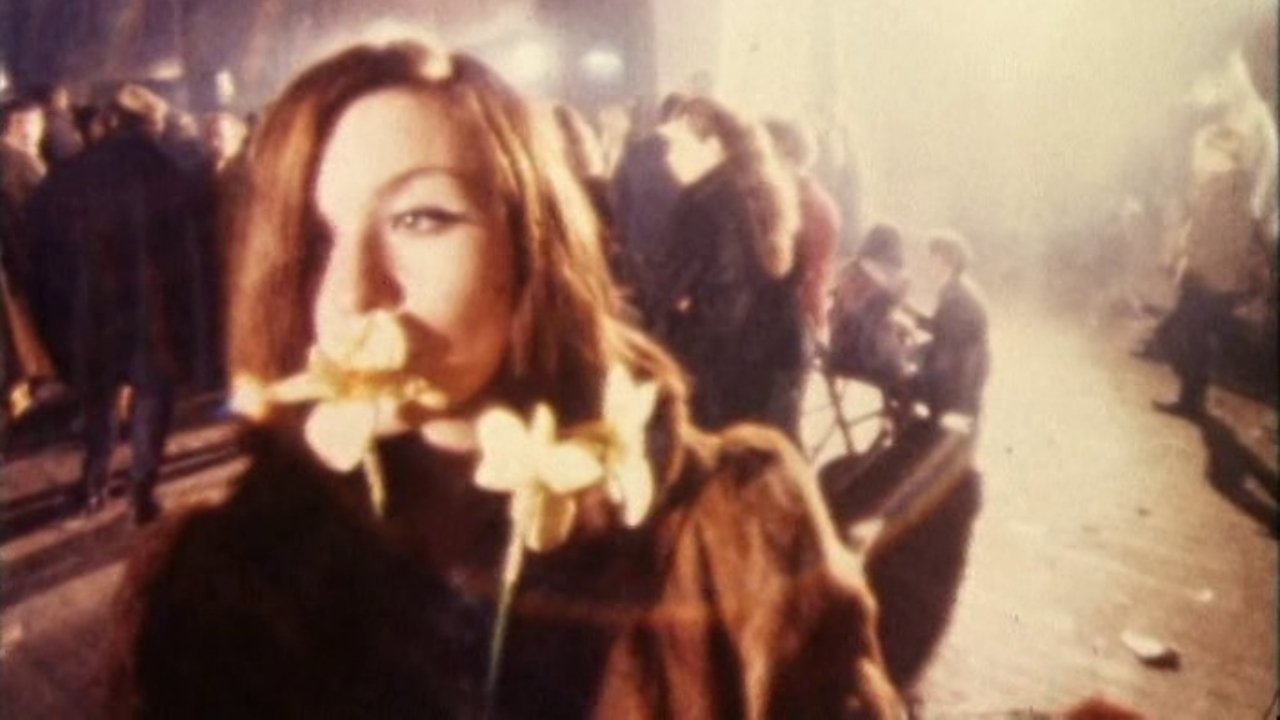

Tonite Let's All Make Love in London
Peter Whitehead’s disjointed Swinging London documentary, subtitled “A Pop Concerto,” comprises a number of different “movements,” each depicting a different theme underscored by music: A early version of Pink Floyd’s “Interstellar Overdrive” plays behind some arty nightclub scenes, while Chris Farlowe’s rendition of the Rolling Stones’ “Out of Time” accompanies a young woman’s description of London nightlife and the vacuousness of her own existence. In another segment, the Marquess of Kensington (Robert Wace) croons the nostalgic “Changing of the Guard” to shots of Buckingham Palace’s changing of the guard, and recording act Vashti are seen at work in the studio. Sandwiched between are clips of Mick Jagger (discussing revolution), Andrew Loog Oldham (discussing his future) – and Julie Christie, Michael Caine, Lee Marvin, and novelist Edna O’Brien (each discussing sex). The best part is footage of the riot that interrupted the Stones’ 1966 Royal Albert Hall concert.
Insights
Plot Summary
This groundbreaking documentary captures the essence of London's swinging 60s scene, focusing on its burgeoning youth culture, artistic movements, and sexual liberation. Through a series of interviews and observational footage, it offers a candid look at the attitudes and lifestyles of the era's trendsetters, musicians, actors, and artists.
Critical Reception
Critically acclaimed for its raw energy and authentic portrayal of a pivotal cultural moment, 'Tonite Let's All Make Love in London' is considered a landmark documentary of its time. While some found its experimental nature challenging, its influence on capturing the spirit of the 1960s is widely recognized.
What Reviewers Say
- Praised for its vibrant and authentic depiction of the Swinging Sixties.
- Seen as a time capsule of London's counter-culture and artistic explosion.
- Noted for its direct, almost cinéma vérité style of filmmaking.
Google audience: Audience reception data is not readily available from Google Reviews for this older documentary.
Fun Fact
The film famously features an uncredited appearance by a young David Hockney, who discusses his art in a brief scene.
AI-generated overview · Verify ratings on official sources