
Insights
Plot Summary
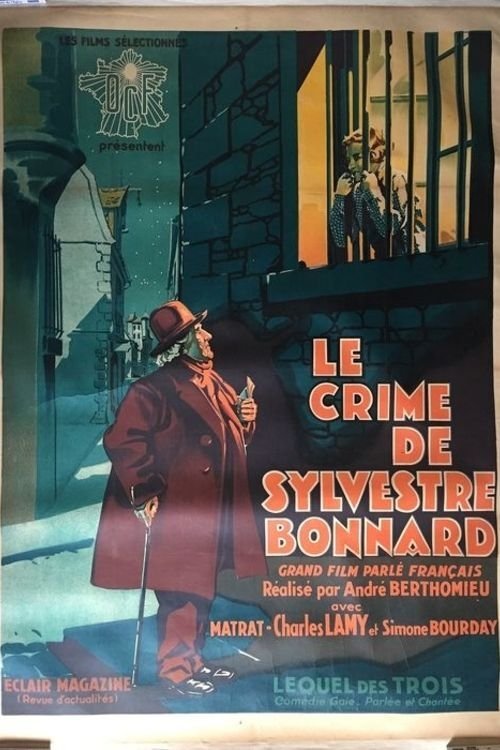
The film tells the story of Sylvestre Bonnard, a learned but eccentric old man who is devoted to his books. His life takes an unexpected turn when he becomes involved in a series of events that lead him into the criminal underworld. Bonnard finds himself entangled in a complex plot, challenging his quiet existence and forcing him to confront darker aspects of society. The narrative explores themes of morality, knowledge, and the unexpected consequences of one's actions.
Critical Reception
As a silent film from 1929, 'The Crime of Sylvestre Bonnard' received attention during its release for adapting Anatole France's renowned novel. Contemporary reviews often praised its fidelity to the source material and the performances of its cast, though some noted the challenges of translating complex literary themes into the silent medium. Its reception today is more historical, appreciated for its place in early French cinema.
What Reviewers Say
Praised for its literary adaptation and atmospheric presentation.
Performances were generally seen as fitting the dramatic tone.
Some critics noted the inherent limitations of silent film in conveying nuanced character.
Considered a notable early French cinematic effort.
Google audience: Information regarding specific audience reception from Google users for this 1929 silent film is not readily available. Contemporary reviews focused more on its literary adaptation and cinematic execution at the time of release.
Fun Fact
This film is an adaptation of the 1881 novel of the same name by French Nobel laureate Anatole France, which won the first Prix Goncourt.
AI-generated overview · Verify ratings on official sources