
Movie spotlight
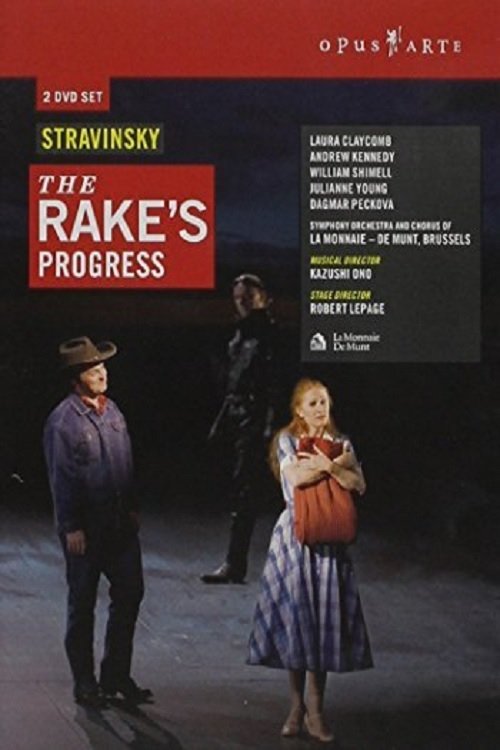
Stravinsky: The Rake's Progress
Stravinsky's masterwork The Rake's Progress, created for La Fenice in Venice in 1951, is based on a libretto by W. H. Auden and Chester Kallman, inspired by a series of 18th century prints by William Hogarth. This amazing production from La Monnaie De Munt jazzifies the setting by replacing Hogarth's sin city, London, with 1950s Las Vegas, turning it into a glittering, cinematic gallery of tableaux vivants inspired by the early days of television. Staged by one of the most visionary theatre directors of our age, the Québécois Robert Lepage, the neo-classical morality tale truly becomes a grand spectacle. Lepage's visual imagination works its magic superbly, while Kazushi Ono's energetic musical direction drives the sparkling ensemble to exhilarating heights. Recorded in High Definition and true surround sound.
Insights
Plot Summary
Based on the opera by Igor Stravinsky, 'The Rake's Progress' tells the story of Tom Rakewell, a young man who inherits a fortune and moves to London. There, he falls prey to the temptations of wealth and a mysterious figure named Nick Shadow, who promises him everything. Tom's choices lead him down a path of moral decay, ultimately resulting in his tragic downfall and descent into madness.
Critical Reception
This production of Stravinsky's 'The Rake's Progress,' conducted by John Eliot Gardiner, was lauded for its musical integrity and compelling performances. Critics praised the clarity of the score, the effectiveness of the staging in conveying the opera's dark themes, and the strong vocal contributions from the cast. It is considered a significant recording of a modern operatic masterpiece.
What Reviewers Say
Praised for its musical precision and faithful rendition of Stravinsky's score.
Noted for strong vocal performances that brought the characters to life.
Appreciated for its effective staging and thematic resonance.
Google audience: Audience reception information for this specific recording is not widely available through public Google reviews.
Fun Fact
The opera's libretto, by W. H. Auden and Chester Kallman, is deliberately written in an 18th-century style, mirroring the visual aesthetic of the original 1735 series of paintings by William Hogarth, which also inspired the opera's title and narrative.
AI-generated overview · Verify ratings on official sources