
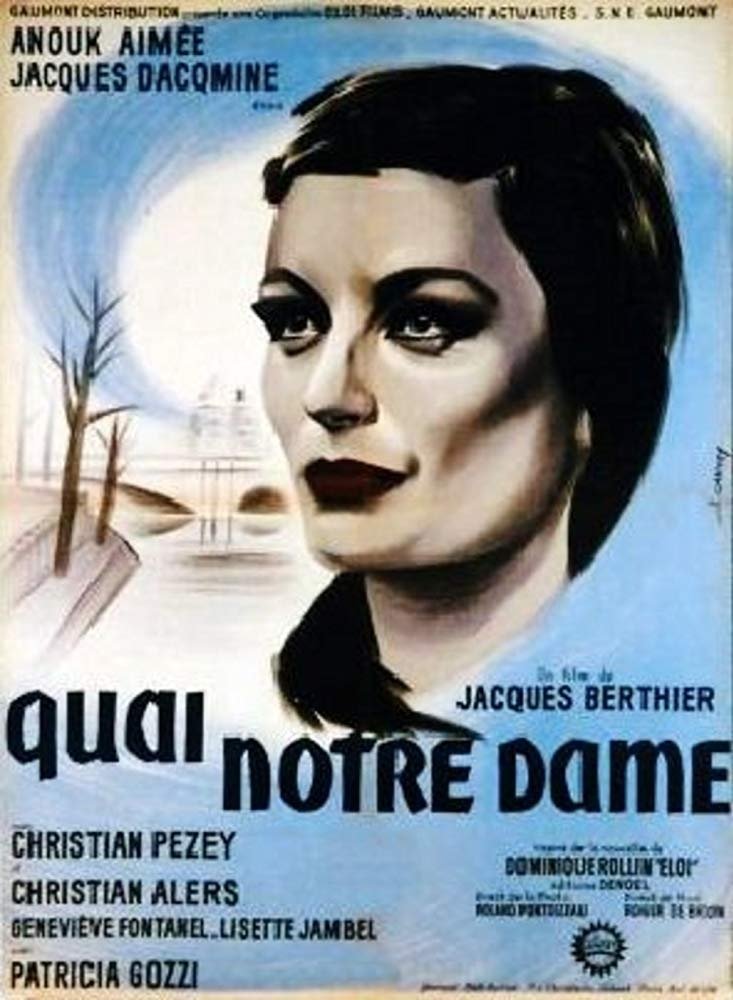
Movie spotlight
Quai Notre-Dame
Eloi is a twenty-year-old secondhand goods dealer who does his job without particular enthusiasm. He has a girlfriend, Nénette, but immature as he is, he feels just as happy in the company of Fortunée, his young sister, whose little girl's games he shares as often as he can. The three of them live with Eloi and Fortunée's grandmother, nicknamed by all the "Queen of the Flea Market". In possession of a mirror of Venice, Eloi decides to present it to Dormoy, an antique dealer who keeps up shop in the fashionable districts of Paris. On that occasion Eloi meets and falls in love at first sight with Dormoy's rich mistress. The latter, half-moved, half-consenting, does not discourage him.
Insights
Plot Summary
A young woman returns to Paris after years away, only to find herself entangled in a murder investigation. She becomes the prime suspect and must navigate a dangerous world of secrets and deception to clear her name. As she delves deeper, she uncovers a complex web of relationships and motives that lead back to her own past.
Critical Reception
Quai Notre-Dame received a mixed reception upon its release. While some critics praised its atmospheric tension and the performance of its lead actors, others found the plot convoluted and predictable. It is generally considered a competent, albeit unremarkable, entry in the French crime genre of the era.
What Reviewers Say
Praised for its suspenseful atmosphere and Parisian setting.
Some noted the performances, particularly from Robert Hossein.
Criticized for a plot that could be overly complicated at times.
Google audience: Audience reception for Quai Notre-Dame is not widely documented, making it difficult to summarize specific user likes or dislikes.
Fun Fact
The film is notable for its atmospheric cinematography, which effectively captures the gritty, post-war Parisian setting.
AI-generated overview · Verify ratings on official sources