
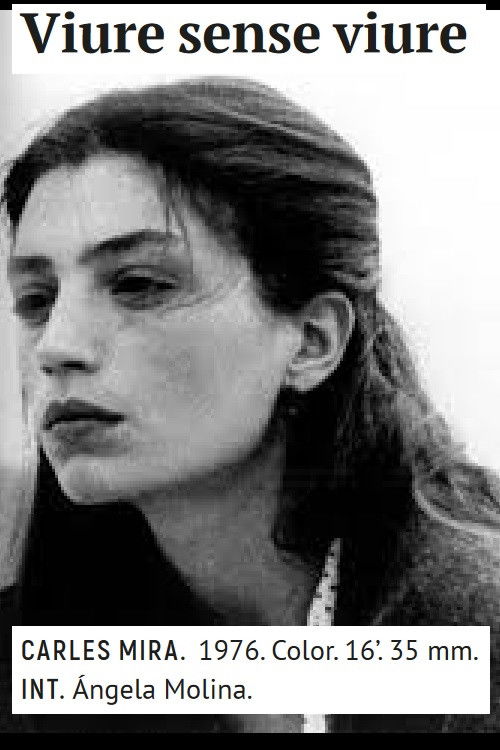
Viure sense Viure
The daily routine of a female worker from the moment she wakes up to the very end of it all.
Insights
Plot Summary
This Catalan film explores themes of alienation and existential doubt in a stark, surreal landscape. It follows a protagonist grappling with the meaning of life and his place in a fragmented society. Through symbolic imagery and an unconventional narrative, the film delves into the psychological struggles of individuals confronting a sense of emptiness. The story unfolds as a visual poem, questioning the nature of reality and personal identity.
Critical Reception
Critically, 'Viure sense Viure' is recognized as a significant work of experimental Catalan cinema, often lauded for its artistic vision and challenging themes. While it may not have garnered widespread commercial success, it is appreciated by cinephiles for its unique approach and Portabella's distinctive directorial style. Audience reception is often divided due to its abstract nature, but it holds a respected place in film history for its artistic integrity.
What Reviewers Say
- Praised for its avant-garde aesthetic and thought-provoking exploration of existential themes.
- Noted for its challenging narrative structure and symbolic visual language.
- Appreciated for its contribution to experimental Catalan cinema.
Google audience: Information on Google user reviews for this specific film is not readily available. However, films of this nature often elicit a range of responses due to their unconventional style, with some viewers appreciating the artistic depth and others finding the abstract nature difficult to engage with.
Awards & Accolades
None notable.
Fun Fact
Pere Portabella was a key figure in the avant-garde and political cinema movements in Catalonia during the Franco dictatorship, often using allegory and symbolic language to critique the regime.
AI-generated overview · Verify ratings on official sources