
Movie spotlight
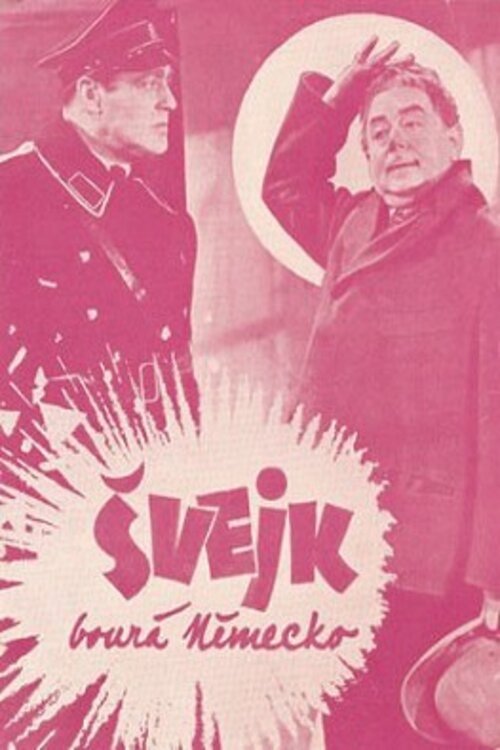
Svejk Wrecks Germany
KAREL LAMAČ (1987-1952), who worked in Germany for a long time, was forced to leave for France and then Great Britain before Hitler's fascism, where he continued to direct films. His film Švejk is Destroying Germany from 1943 was created under the influence of wartime circumstances and was intended mainly for a British audience. Perhaps this is also why the tone of the original Czech hero of Hašek's humorous original deviates from his traditional way of portraying him. He transfers him to the wartime reality of the time and, through a series of coincidences, makes him a military servant of the Gestapo commander, which gives Švejk the opportunity to save many people from deportation to concentration camps. Lamač is therefore not driven by the motive of an authorial interpretation but rather by the need for propaganda. This is also emphasized by Foreign Minister Jan Masaryk, whose opening words were added to this comedy in 1947, when it was released into Czechoslovak film distribution.
Insights
Plot Summary
During World War I, the simple-minded but good-hearted soldier Schweik finds himself in various absurd and dangerous situations as he tries to follow orders. His naive interpretations of commands often lead to comical chaos, inadvertently disrupting enemy plans and surviving perilous encounters. Despite the war's grim backdrop, Schweik's unwavering optimism and ability to bumble his way through provide a darkly humorous perspective on the absurdity of conflict.
Critical Reception
As a wartime propaganda film from Nazi-occupied Czechoslovakia, 'Schweik's New Adventures' was produced under restrictive conditions and intended to serve a specific political agenda. Its reception is difficult to assess through a modern critical lens, as it was primarily a product of its time and context. Contemporary reviews, if they existed and were not censored, would likely have focused on its satirical elements and its portrayal of the war.
What Reviewers Say
Praised for its dark humor and satirical take on the absurdity of war.
Criticized for its problematic wartime context and propaganda elements.
Noted for the charming, albeit sometimes naive, performance of its lead.
Google audience: Due to its historical context and limited availability, specific user reviews are scarce. However, general sentiment from historical analysis points to an appreciation for its comedic timing and satirical undertones, often balanced by an awareness of its propagandistic nature.
Fun Fact
The film was produced in Prague during the Nazi occupation of Czechoslovakia, with the original Czech version being heavily censored and later re-dubbed into German for wider release, reflecting the complex and dangerous creative environment of the time.
AI-generated overview · Verify ratings on official sources