
Movie spotlight
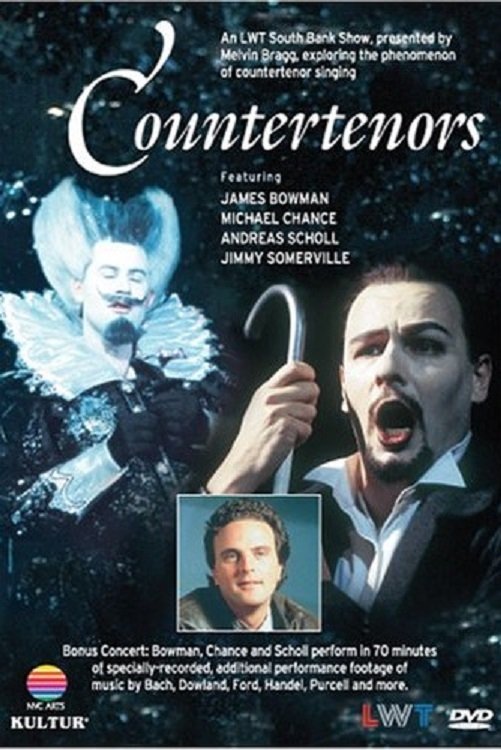
Countertenors
An LWT South Bank Show, presented by Melvyn Bragg, exploring the phenomenon of countertenor singing. With its unique, soaring beauty, the high male voice is today enjoying a huge resurgence in popularity. Heirs to the celebrated castrati of the sixteenth and seventeenth centuries, today's countertenors produce their voices by wholly natural means. In this programme international stars Michael Chance, Andreas Scholl and James Bowman, as well as popstar Jimmy Somerville, shed light on the appeal of the male falsetto. Meanwhile, experts such as Michael White place today's countertenors in their historical context. What emerges is a compelling portrayal of an unmistakable vocal style, rooted in church and operatic tradition, yet completely up-to-date, resonating louder today than at any time in the last two hundred years.
Insights
Plot Summary
This documentary explores the unique and often misunderstood world of countertenors, male singers who perform in a range typically associated with female voices. It delves into the history of this vocal fach, its resurgence in modern opera and classical music, and features interviews and performances by prominent countertenors.
Critical Reception
Countertenors received positive attention for its informative and engaging approach to a niche subject. Critics lauded its ability to demystify the countertenor voice and showcase the talent of its featured artists, making it accessible to both classical music aficionados and a broader audience.
What Reviewers Say
Praised for its educational value and insight into a specialized vocal technique.
Appreciated for featuring compelling performances by renowned countertenors.
Considered a well-produced and accessible documentary on classical vocal music.
Google audience: Audience reception information for this specific documentary is limited.
Fun Fact
The countertenor voice has historical roots dating back to the Renaissance and Baroque periods, where it was common in church music and early opera before falling out of favor for centuries until its revival in the 20th century.
AI-generated overview · Verify ratings on official sources