
Insights
Plot Summary
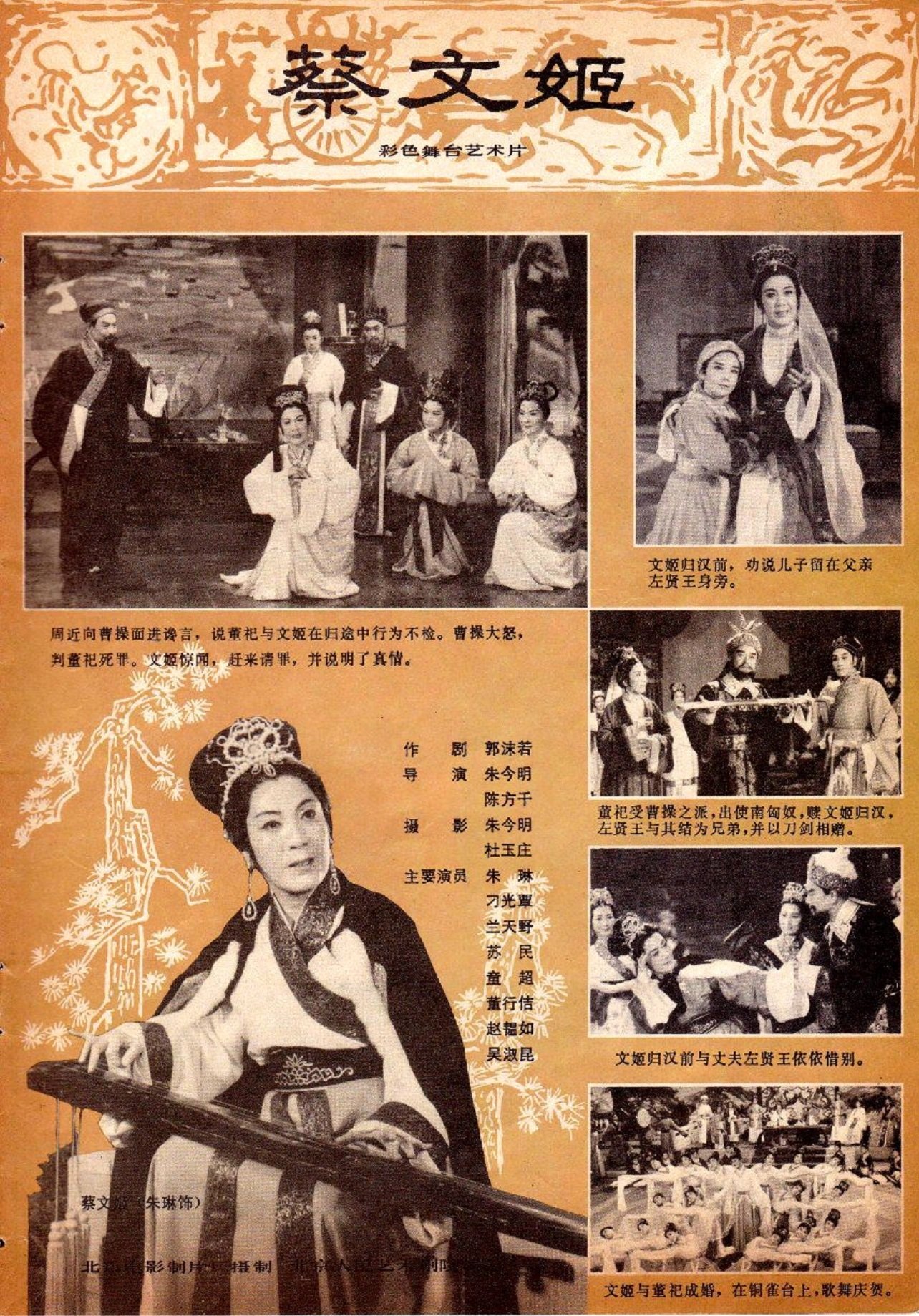
The film chronicles the tumultuous life of Cai Wenji, a brilliant poet and musician during the late Han Dynasty and the subsequent Three Kingdoms period. Facing political upheaval and personal tragedy, she is captured by nomadic forces and forced to live among them for twelve years, during which she composes her famous "Eighteen Verses of a Nomad Flute." Eventually, she is ransomed back to Han territory, but her reunion with her children is tragically short-lived due to political intrigue. The narrative highlights her resilience, artistic genius, and enduring sorrow amidst chaos.
Critical Reception
As a historical epic from mainland China, 'Cai Wenji' was produced during a period of cinematic transition. It aimed to adapt classic historical figures and narratives for a modern audience. While praised for its attempt to bring a significant literary and historical figure to the screen and for its visual presentation of historical settings, it received mixed reviews regarding its pacing and dramatic interpretation of the historical events and Cai Wenji's life.
What Reviewers Say
Praises the film's ambition in depicting a renowned historical female figure and her artistic legacy.
Notes the film's visually rich cinematography and set designs that evoke the Han Dynasty era.
Criticizes the pacing as slow at times and finds the dramatic arc less compelling than the historical subject matter might suggest.
Google audience: Audience reception for 'Cai Wenji' is scarce in publicly available English-language reviews, making it difficult to summarize specific likes or dislikes.
Fun Fact
The film is based on the life of Cai Wenji, a real historical figure known for her extraordinary talent in poetry and music, whose life and works have been adapted into various art forms throughout Chinese history.
AI-generated overview · Verify ratings on official sources