
Movie spotlight
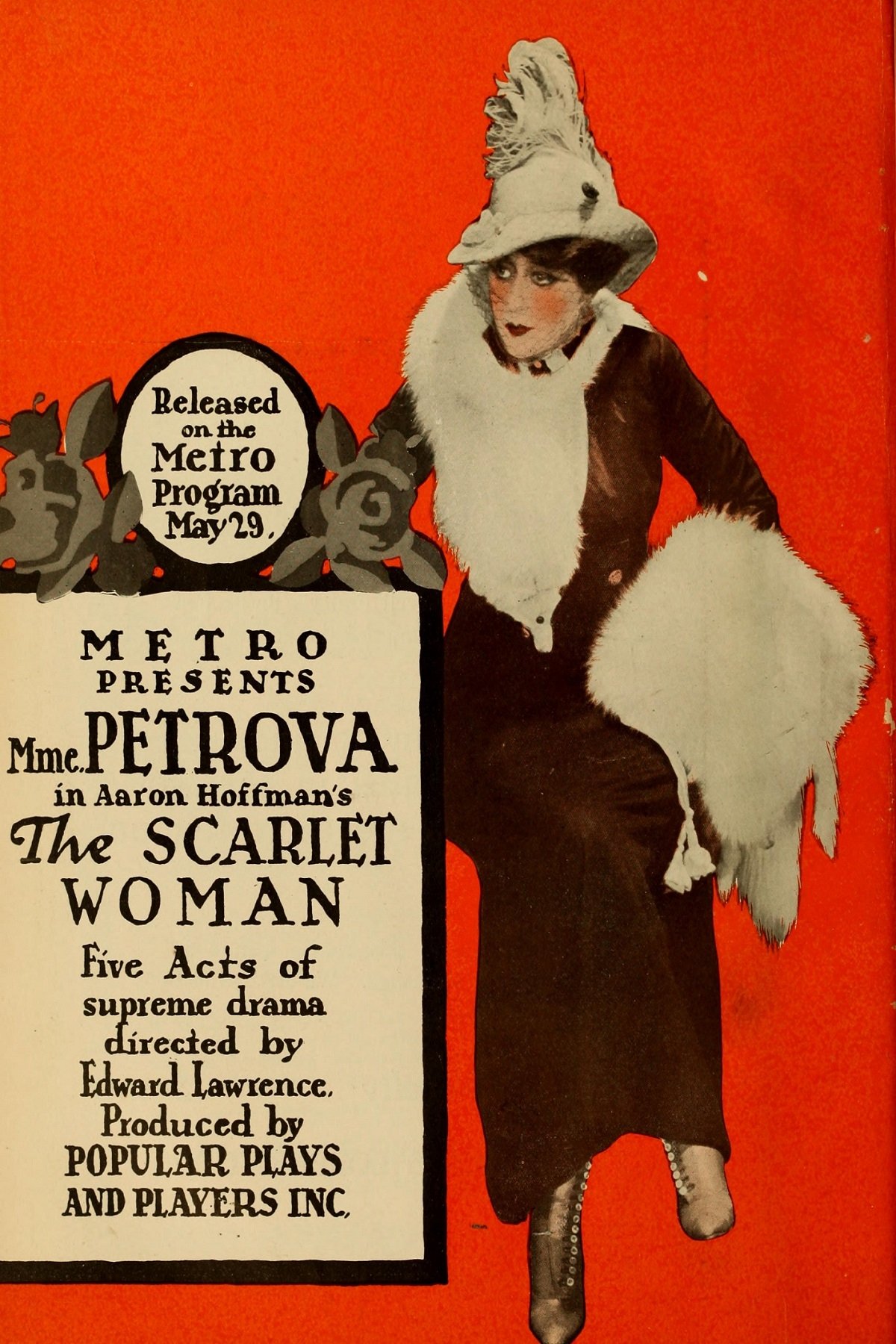
The Scarlet Woman
Bank official Hanlin Davis is ruined in the stock market. Desperate, he fails to rob the bank but kills someone in the attempt. His wife Thora goes to D.A. Hastings to plead for a light sentence which the corrupt Hastings agrees to only if Thora gives herself to him. Upon his release the worthless Davis learning of her sacrifice divorces and turns her into the street. An outcast she becomes "the scarlet woman.” When wealthy crusader Robert Blake institutes an investigation exposing D.A. Hastings he is disbarred and decides to revenge himself upon Thora, considering her the cause of his downfall. Blackmailing unscrupulous society woman, Paula Gordon, he forces her to introduce Thora to Blake as a naïve woman while deceiving Thora that he knows about her past. After they marry Hastings denounces Thora, she flees, returning to her old life, but Blake, seeing her worth seeks her and they reunite.
Insights
Plot Summary
This silent melodrama follows the tumultuous life of a young woman entangled in a web of deceit and passion. As she navigates societal expectations and her own desires, her choices lead to unforeseen consequences, testing her resilience and her relationships. The narrative unfolds with dramatic twists and turns, exploring themes of love, betrayal, and redemption.
Critical Reception
As a silent film from 1916, contemporary critical reception is difficult to ascertain with precision. However, films of this era often focused on melodramatic storytelling and moral lessons, which were generally well-received by audiences of the time. Its availability is limited, making broad critical assessment challenging today.
What Reviewers Say
Explores themes of romance and societal pressures common in early cinema.
Silent film melodrama with a focus on dramatic storytelling.
Characterized by its mysterious and intricate plot developments.
Google audience: Due to the age and limited availability of this silent film, specific audience reviews are not readily accessible. General sentiments for films of this era often praised engaging narratives and emotional performances.
Fun Fact
Rupert Julian, the director, would go on to direct the 1925 version of 'The Phantom of the Opera' and the 1931 version of 'Dracula', though his contributions to the latter were heavily re-shot by others.
AI-generated overview · Verify ratings on official sources