
Movie spotlight
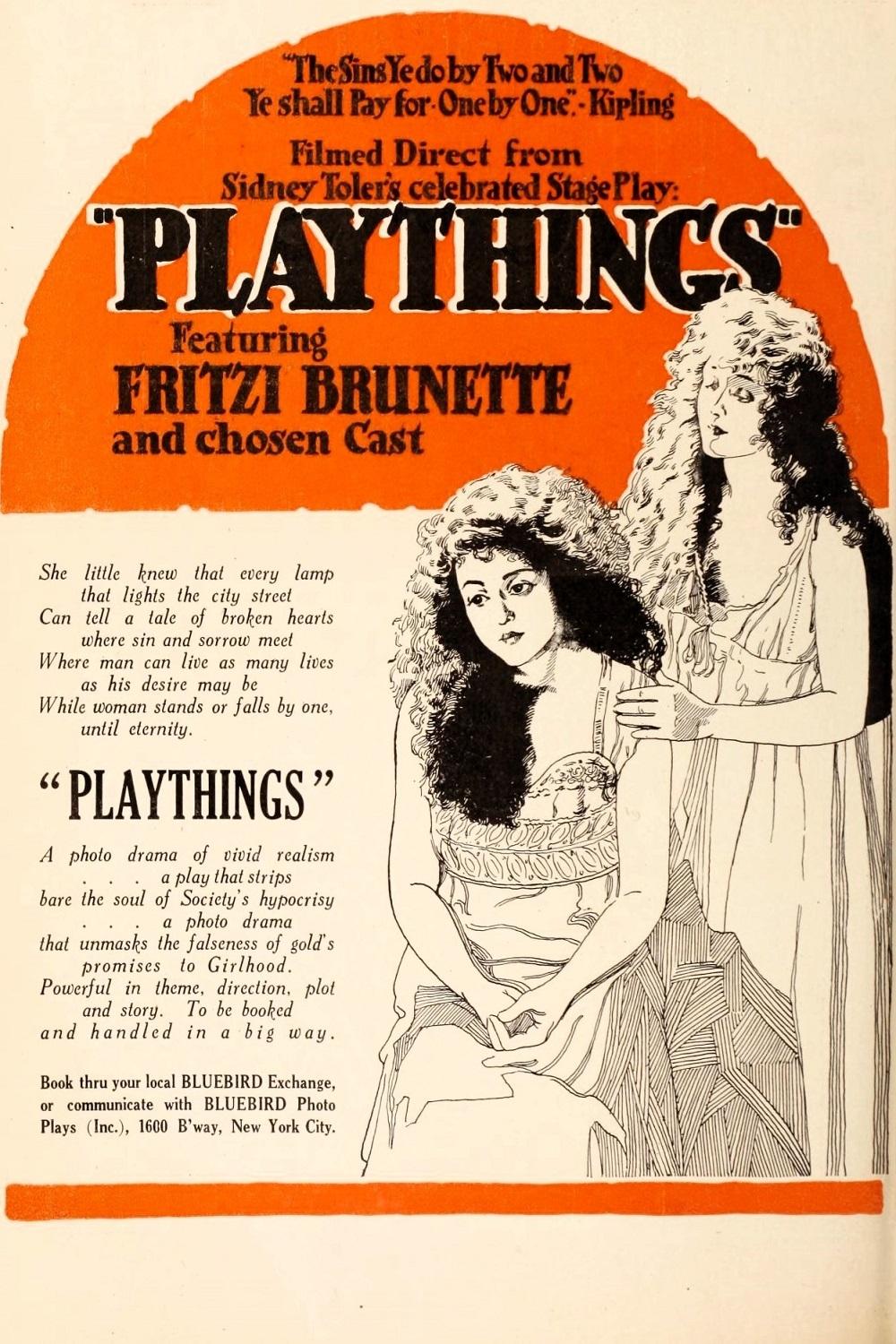
Playthings
Marjorie North, a department store clerk, falls in love and has an affair with the store owner's son, Gordon Trenwith, but realizes when her baby is born without a name that he meant only to use her as a plaything.
Insights
Plot Summary
A young woman, ostracized for her social standing, finds herself drawn into a tumultuous romance with a wealthy man who is already married. Their forbidden love affair leads to scandal and difficult choices as they navigate societal expectations and personal desires. The film explores themes of class, love, and the consequences of passion.
Critical Reception
As a silent film from 1918, contemporary reviews are scarce and difficult to access. However, historical context suggests that melodramas of this era, often focusing on romantic entanglements and societal pressures, were generally popular with audiences. The film likely received moderate attention for its performances and dramatic storyline.
What Reviewers Say
Praised for its emotional performances, particularly from Mae Murray.
Acknowledged for its depiction of societal constraints on romance.
Seen as a typical, albeit engaging, melodrama of the silent film era.
Google audience: As 'Playthings' is a silent film from 1918, there are no available Google user reviews or ratings for this specific title.
Fun Fact
Mae Murray, who starred in 'Playthings,' was one of the silent film era's most popular stars, known for her distinctive beauty and persona, often referred to as 'The most beautiful girl in the world.'
AI-generated overview · Verify ratings on official sources