
Movie spotlight
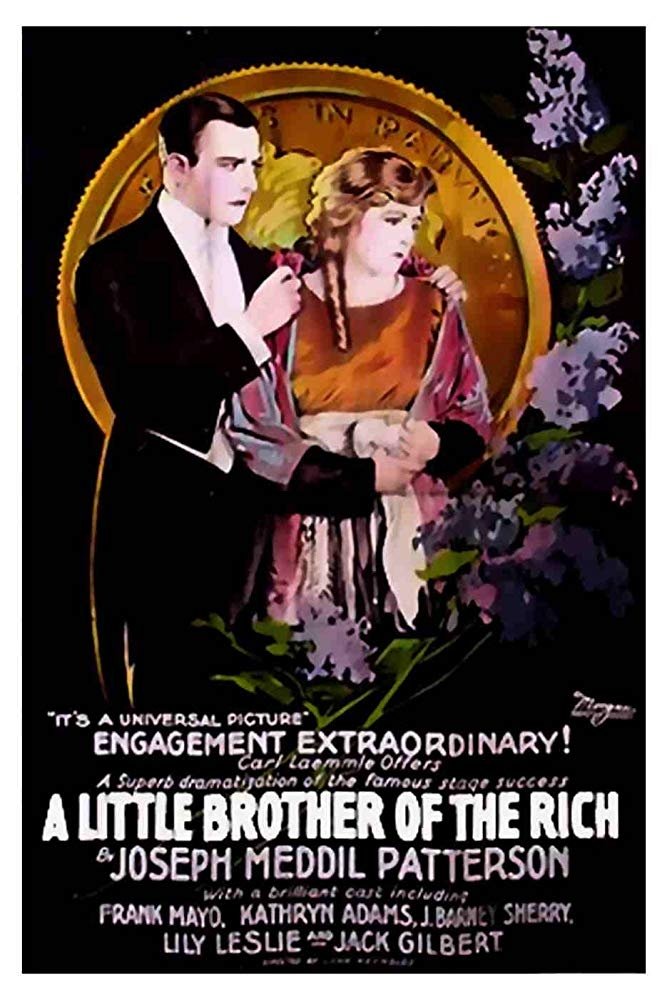
A Little Brother of the Rich
Captain of the Yale football team, Paul Potter becomes engaged to his small-town Indiana sweetheart Sylvia Castle but once in the big city he becomes involved with married society girl Muriel Evers and finds Sylvia too provincial, ending their engagement. In time Sylvia meets alcoholic actor, Henry Leamington, who encourages her to become an actress while she helps him get sober. In New York she finds success and becomes reacquainted with Paul for whom she still has feelings, but comes to realize he is a lout and returns to Henry.
Insights
Plot Summary
The film tells the story of a wealthy young man who faces the consequences of his indulgent lifestyle. He becomes entangled in a world of excess and moral compromise, leading to a dramatic confrontation with his own conscience and the expectations of society. The narrative explores themes of wealth, responsibility, and the corrupting influence of privilege.
Critical Reception
As a silent film from 1919, specific critical reception is scarce. However, films of this era often aimed to reflect societal anxieties and moral lessons, and 'A Little Brother of the Rich' likely followed suit, potentially being viewed as a cautionary tale for its time. Its reception would have been shaped by the prevailing moral standards and cinematic tastes of the early 20th century.
What Reviewers Say
The film likely served as a moralistic drama for its contemporary audience.
Depicts the potential pitfalls of unchecked wealth and societal expectations.
Offers a glimpse into the dramatic storytelling conventions of early cinema.
Google audience: Audience reception for this silent film is not readily available through modern platforms. Its impact would have been measured by contemporary theater reviews and word-of-mouth.
Fun Fact
The film is based on a 1902 novel of the same name by Frederick Palmer, which itself was a critique of the Gilded Age and its wealthy elite.
AI-generated overview · Verify ratings on official sources