
Movie spotlight
Hibari no komoriuta
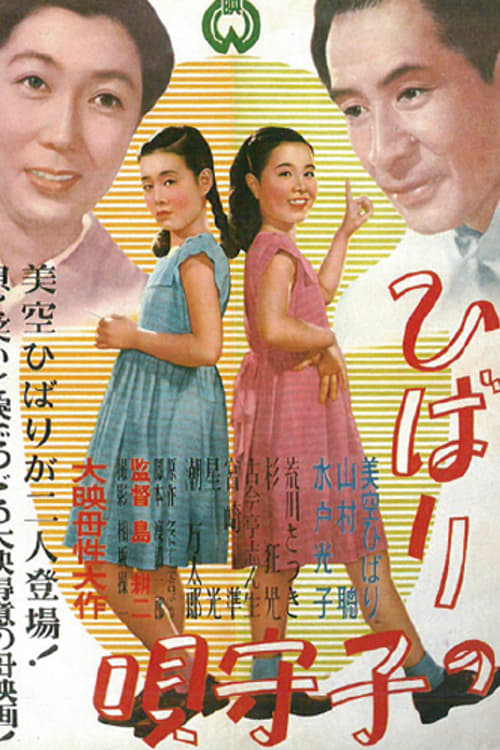
Hibari no komoriuta (ひばりの子守唄, literally "Hibari's Lullaby") is a 1951 black-and-white Japanese film directed by Koji Shima. The movie is based on Das doppelte Lottchen, a novel later adapted as The Parent Trap.
Insights
Plot Summary
A young orphan girl, abandoned by her parents, is taken in by a kind innkeeper. Despite her hardships and the prejudice she faces, she holds onto her dream of becoming a singer. Her talent eventually gets noticed, offering her a chance at a brighter future, but past troubles threaten to resurface.
Critical Reception
While specific critical reviews from 1951 are scarce, 'Hibari no komoriuta' is primarily remembered as a vehicle for its star, Hibari Misora, who was already a burgeoning singing sensation in Japan. The film was a popular success, celebrated for its musical numbers and Misora's heartfelt performance, solidifying her status as a national icon.
What Reviewers Say
A touching melodrama bolstered by the incredible singing talent of Hibari Misora.
The film effectively captures the struggle of an orphan striving for a better life through music.
A classic showcase for one of Japan's most beloved vocalists.
Google audience: Audience reception, where available, typically praises Hibari Misora's performance and the film's emotional resonance. Many viewers recall it fondly as a nostalgic piece of Japanese cinema that highlights Misora's early stardom.
Fun Fact
This film was one of Hibari Misora's earliest major starring roles, helping to cement her as the 'Queen of Enka' and a beloved national treasure in Japan.
AI-generated overview · Verify ratings on official sources