
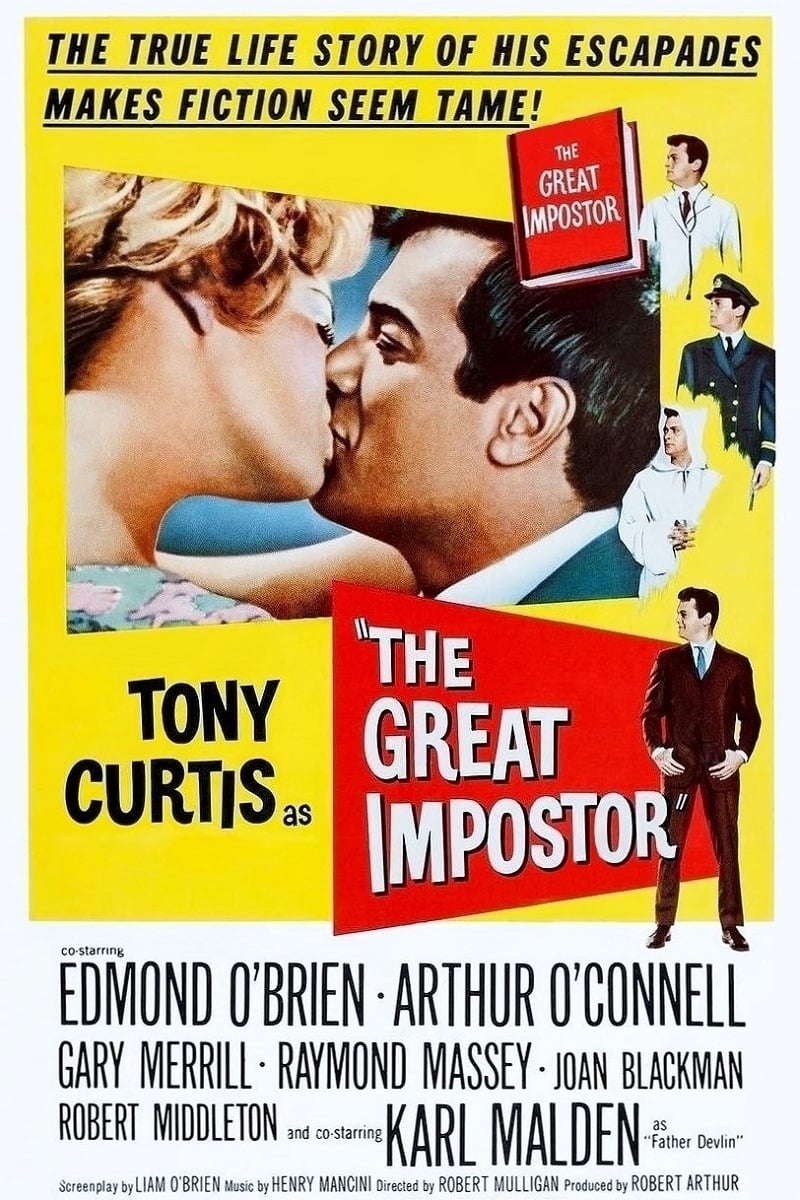
Movie spotlight
The Great Impostor
Fictionalized account of Ferdinand Waldo Demara Jr., who stole or created fictional identities and worked in a variety of occupations, most quite successfully.
Insights
Plot Summary
Based on a true story, Ferdinand Demara was a charming con artist who successfully impersonated a variety of individuals, including a U.S. Navy lieutenant commander, a hospital orderly, and a prison chaplain. Despite his fraudulent activities, Demara often managed to do good deeds and even save lives during his escapades. The film chronicles his most audacious impersonations and the often-humorous situations that arise from his elaborate deceptions.
Critical Reception
The Great Impostor was generally well-received by critics for its entertaining portrayal of a notorious con artist and Tony Curtis's charismatic performance. Audiences enjoyed the lighthearted, adventurous tone of the film, which balanced the potentially serious nature of the subject matter with comedic elements.
What Reviewers Say
Praise for Tony Curtis's energetic and captivating performance.
Appreciation for the film's adventurous and often humorous tone.
Critics noted the film's lighthearted take on a complex true story.
Google audience: Audience reviews often highlight the fun and engaging nature of the film, with many praising Tony Curtis for bringing the larger-than-life character of Ferdinand Demara to life.
Fun Fact
Ferdinand Demara, the subject of the film, was known for his ability to convincingly impersonate people from various professions, and he even taught psychology at a college under one of his assumed identities.
AI-generated overview · Verify ratings on official sources