
Movie spotlight
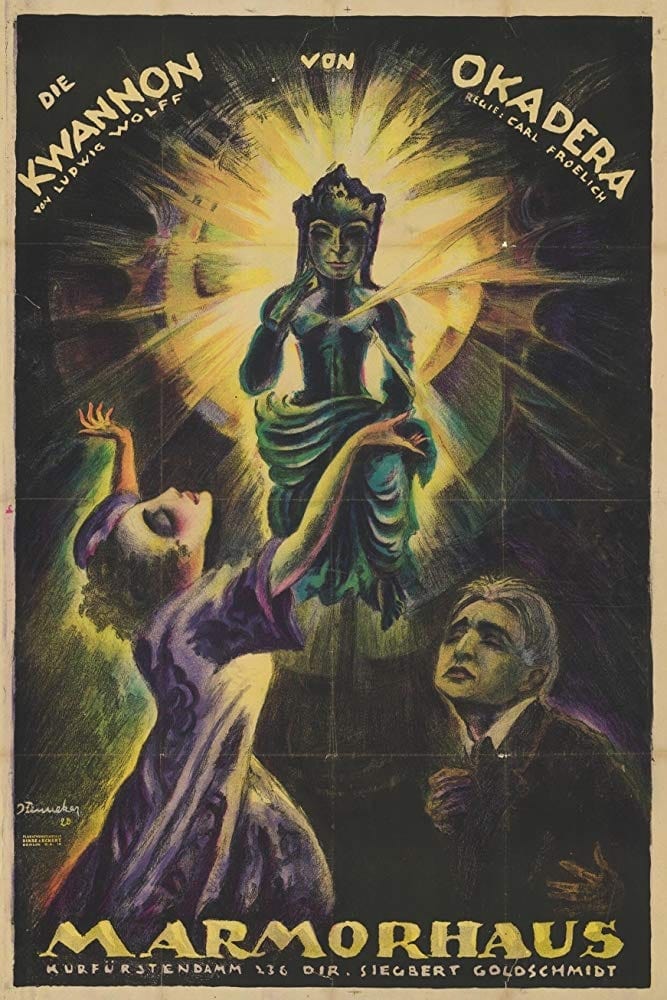
Die Kwannon von Okadera
Harlander, a media mogul and war profiteer, has been told that he has six months before his sanity will leave him completely. He hires a young nurse, and decides to spend all his money before his six months are up.
Insights
Plot Summary
In this silent mystery horror film, a young woman inherits a Japanese artifact, the Kwannon statue, which is said to carry a curse. Strange occurrences and a sense of dread begin to plague her life, hinting at supernatural forces tied to the artifact. The film explores themes of fate, superstition, and the psychological impact of fear. As the mystery deepens, the protagonist must confront the potential malevolent power of the Kwannon.
Critical Reception
As a silent film from 1920, contemporary critical reception is difficult to ascertain with certainty through modern metrics. However, films of this era, particularly those dealing with mystery and horror, were often noted for their atmospheric qualities and suspense. Oskar Messter was a significant producer of early German cinema, suggesting a certain level of production value and ambition.
What Reviewers Say
The film likely relied heavily on visual storytelling and suspense typical of early horror.
Its exploration of a cursed artifact aligns with common tropes in the genre during the silent era.
The production by Oskar Messter suggests an intent to create a compelling cinematic experience for its time.
Google audience: Due to the age and obscurity of the film, specific Google user reviews are not available. However, audience reception for such genre films in the 1920s would have been based on the novelty of cinematic storytelling and the impact of its suspenseful narrative.
Fun Fact
This film is considered a lost film, meaning no known copies exist today, making it a subject of interest for film historians and preservationists.
AI-generated overview · Verify ratings on official sources