
Movie spotlight
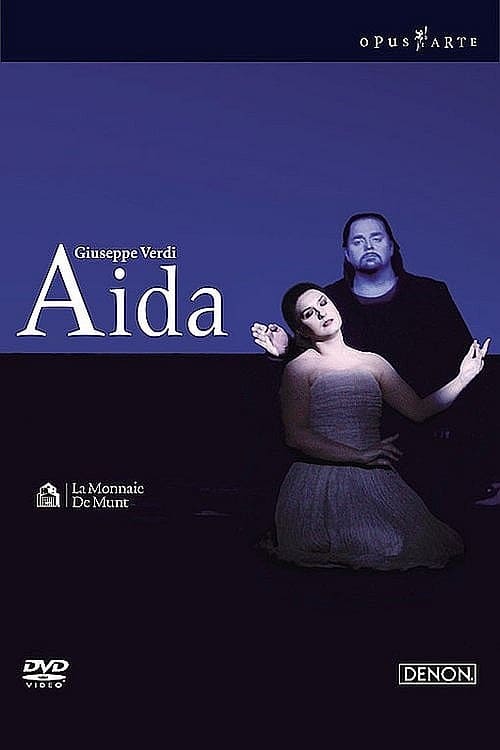
Aida
With war and acts of violence in the background, Aida tells the story of a fascinating and tense love triangle between the Egyptian princess, Amneris, Ramades, an officer, and Aida, a Nubian princess, captured and reduced to slavery. The historical scenes and triumphal marches, which have contributed to the popularity of this opera, are followed by intimate but powerful duets and introspective moments of great intensity.
Insights
Plot Summary
Set during the Ethiopian occupation of Egypt, Verdi's 'Aida' tells the tragic love story between Aida, a captured Ethiopian princess, and Radamès, a victorious Egyptian general. Torn between their love and loyalty to their respective nations, they find themselves caught in a web of political intrigue and betrayal. Their forbidden romance ultimately leads to their tragic demise, as they choose to face death together rather than live apart.
Critical Reception
Robert Carsen's production of Verdi's 'Aida' for the Salzburg Festival was widely acclaimed for its powerful and visually stunning interpretation. Critics praised the masterful direction, the exceptional vocal performances, and the compelling dramatic intensity. The staging was noted for its innovative approach, presenting the opera with a fresh perspective that resonated with both opera enthusiasts and a broader audience.
What Reviewers Say
Praised for its grand scale and dramatic intensity.
Commended for outstanding vocal performances, particularly from the leads.
Hailed for its innovative and visually striking stage direction.
Google audience: Audience reception for 'Aida (2017)' on Google is not widely available, but operatic productions of this caliber typically receive high praise for their musicality and emotional impact.
Fun Fact
The 2017 Salzburg Festival production of 'Aida' was part of a highly anticipated series of operatic performances, with Robert Carsen's interpretation drawing significant attention for its modern aesthetic and dramatic focus.
AI-generated overview · Verify ratings on official sources