
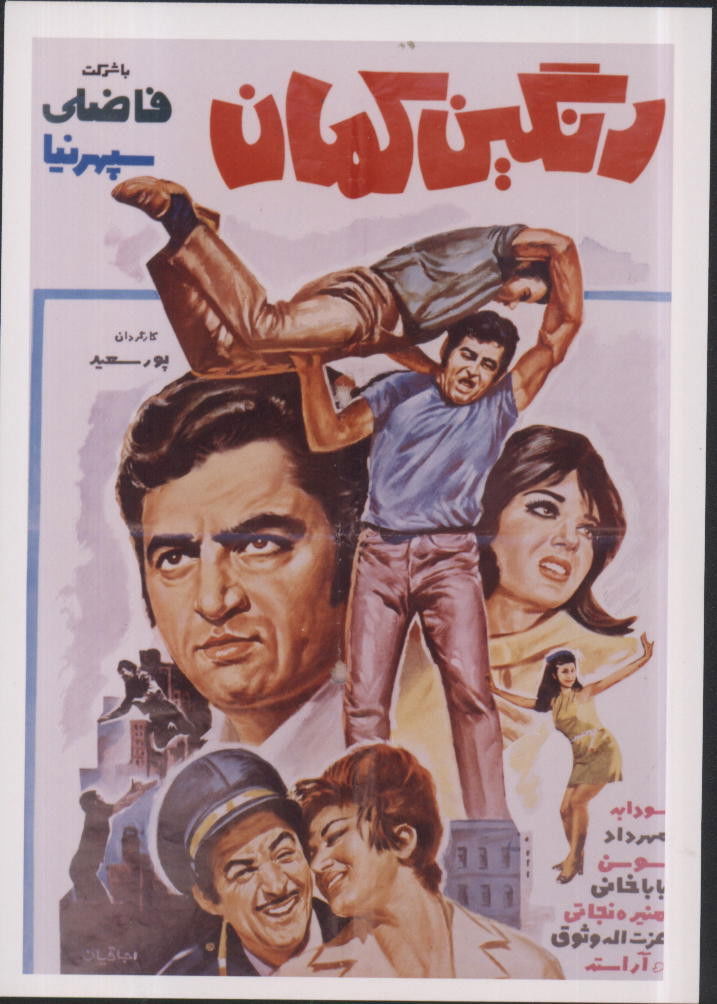
Insights
Plot Summary
A surreal and allegorical tale, Ranginkaman follows a protagonist who seeks to escape the confines of his desolate, monotonous reality. He embarks on a journey through a dreamlike landscape, encountering symbolic characters and situations that reflect themes of freedom, illusion, and the search for meaning in a seemingly predetermined world. The narrative unfolds as a visual poem, challenging conventional storytelling with its abstract imagery and philosophical undertones.
Critical Reception
Ranginkaman is considered a landmark of Iranian New Wave cinema, praised for its artistic vision and experimental approach. While its abstract nature can be challenging for some viewers, critics have lauded its poetic cinematography, evocative symbolism, and Aslani's bold direction. It is often cited as a work that pushed the boundaries of filmmaking in its era, though its critical reception has primarily been within art-house and academic circles.
What Reviewers Say
Praised for its unique visual style and poetic symbolism.
Appreciated as an avant-garde and thought-provoking cinematic experience.
Acknowledged for its challenging and surreal narrative.
Google audience: Information on Google user reviews for Ranginkaman is not readily available.
Fun Fact
Mohammad Reza Aslani, the director, also acted in the film and was a significant poet and intellectual in Iran, bringing a unique artistic perspective to his cinematic work.
AI-generated overview · Verify ratings on official sources