James
I

Movie spotlight
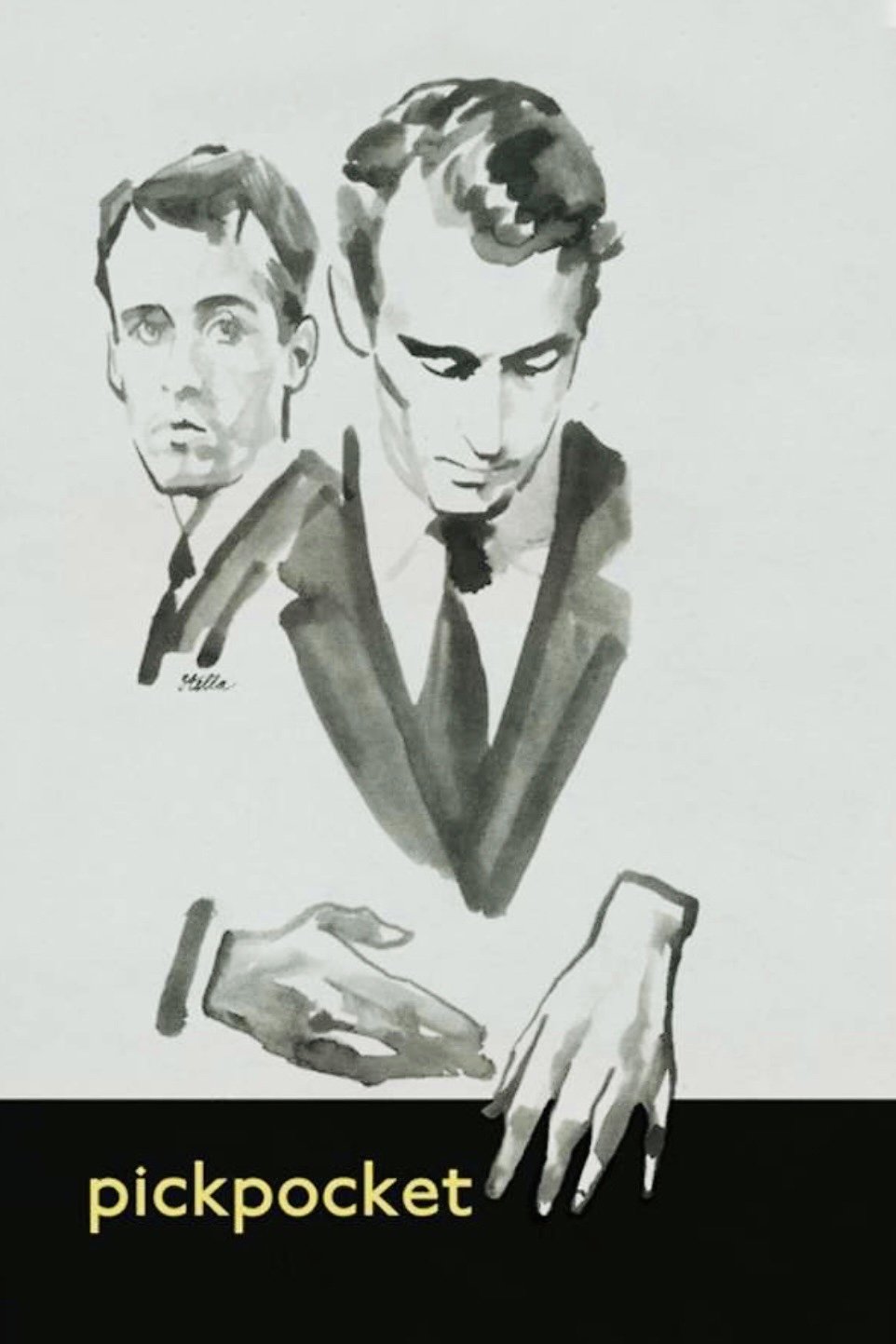
Michel takes up pickpocketing on a lark and is arrested soon after. His mother dies shortly after his release, and despite the objections of his only friend, Jacques, and his mother's neighbor Jeanne, Michel teams up with a couple of petty thieves in order to improve his craft. With a police inspector keeping an eye on him, Michel also tries to get a straight job, but the temptation to steal is hard to resist.
A young man, Michel, lives by stealing, navigating a life of petty crime in Paris. He develops a philosophy of justifying his actions by his supposed superiority and detachment from societal norms. As his activities escalate, he becomes entangled with the police and the people around him, including a woman he cares for, leading to a confrontation with his own conscience and the consequences of his choices.
Robert Bresson's 'Pickpocket' is widely regarded as a masterpiece of minimalist filmmaking and a profound exploration of existential themes. Critics lauded its stripped-down aesthetic, precise editing, and Bresson's signature use of non-professional actors and voice-over narration. It is often cited as a significant influence on later filmmakers, particularly those associated with the French New Wave.
Praised for its austere beauty and philosophical depth.
Lauded for its innovative cinematic techniques and portrayal of human psychology.
Considered a pivotal work in the career of Robert Bresson and French cinema.
Google audience: Audiences frequently highlight the film's compelling narrative despite its minimal dialogue, the captivating central performance, and its thought-provoking themes of morality and fate. Many appreciate its unique, observational style.
The iconic scene where the protagonist drops and then retrieves a wallet was inspired by a real-life pickpocketing incident that happened to Bresson himself.
AI-generated overview · Verify ratings on official sources
I
I
Martin LaSalle is really quite effective here as the small time pickpocket ("Michel"), who just about manages to get by, from day to day, wearing the same suit and living in his one room garret where even the door doesn't lock. He spends hi...