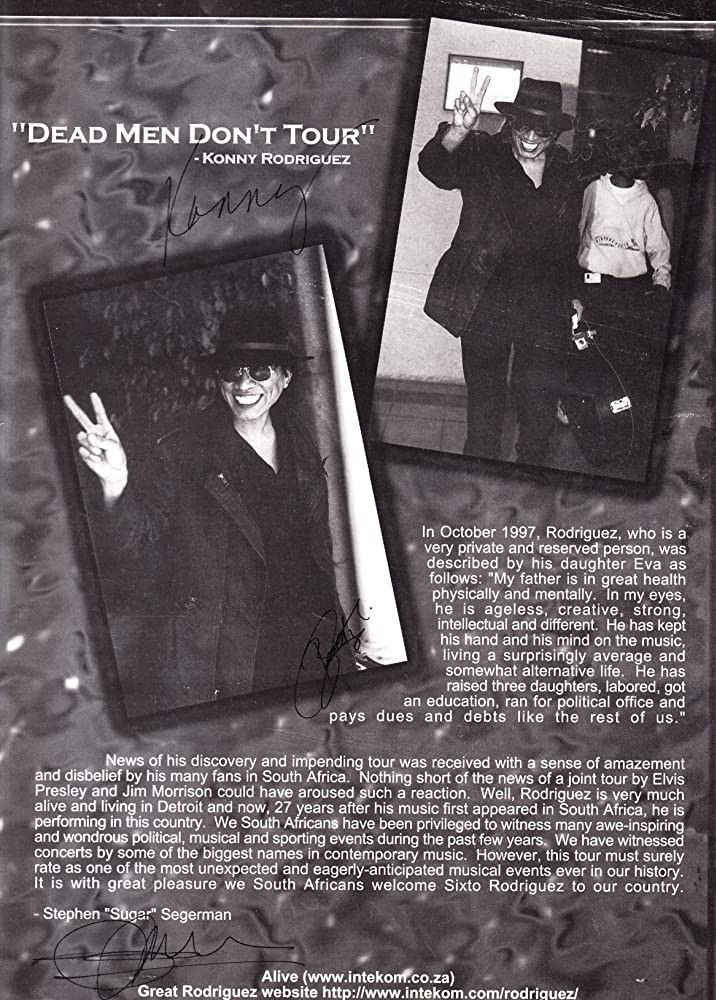
Dead Men Don't Tour: Rodríguez in South Africa
Directed by Tonia Selley, Dead Men Don't Tour was first broadcast on SABC 3 at 9.30pm on the 5th July 2001 just after 'Ripley's Believe Or Not'. This film features wonderful concert footage, backstage antics, interviews with Craig Bartholomew Strydom and Stephen "Sugar" Segerman, Rodriguez and his family, the promoters, the fans and the musicians. All live footage was filmed at the concerts in Pretoria, Durban and the Blues Room in Johannesburg.
Insights
Plot Summary
This documentary chronicles the incredible story of Sixto Rodriguez, an American musician who was largely unknown in his home country but became a massive star in South Africa during the apartheid era. It explores how his music, filled with social and political commentary, resonated deeply with anti-apartheid activists and became the soundtrack to a generation's struggle. The film details the mystery surrounding his disappearance from the music scene and the eventual search for him by devoted South African fans.
Critical Reception
While specific critical reviews for this documentary are scarce as it was not widely released in traditional cinematic channels, its subject matter, the story of Sixto Rodriguez, has been overwhelmingly praised for its inspirational and heartwarming narrative. The documentary itself is often cited as a key piece in understanding Rodriguez's unique cultural impact.
What Reviewers Say
- Highlights the profound and unexpected impact of Rodriguez's music on South African society.
- Explores the fascinating mystery of a musician's rise to superstardom in a foreign land while remaining unknown at home.
- A testament to the power of music to inspire social change and connect people across borders.
Google audience: Information regarding specific Google user reviews for this particular documentary is not readily available, as it was not a mainstream commercial release.
Fun Fact
The documentary's title, 'Dead Men Don't Tour,' alludes to the persistent rumors in South Africa that Rodriguez had died, a belief fueled by his obscurity and the dramatic themes in his music.
AI-generated overview · Verify ratings on official sources