
Movie spotlight
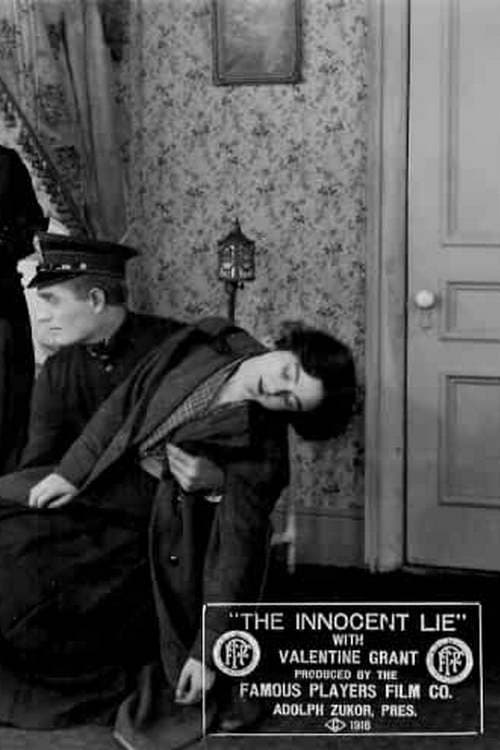
The Innocent Lie
Nora O'Brien leaves Ireland to visit her brother in America. On the trip she suffers a concussion, and soon is mistaken for another Irish girl named Nora who is on her way to visit her aunt in the US, Mrs. Watson, who has not seen her niece in many years. Nora, still somewhat dazed from her injury, is taken to the Watsons' home, and when Mrs. Watson's son Jack returns from college, he falls in love with her but cannot express it to her because he believes she is his cousin. Complications ensue.
Insights
Plot Summary
This silent film explores themes of societal judgment and the consequences of perceived transgressions. It delves into the emotional turmoil of an individual facing a difficult moral dilemma and the impact it has on their life and relationships. The narrative likely unfolds through visual storytelling, common for the era, highlighting the internal struggles of its characters.
Critical Reception
As a silent film from 1916, specific critical reviews and audience reception data from that era are not widely available or easily accessible. Films from this period are often evaluated retrospectively by film historians based on their historical significance and contribution to cinematic development.
What Reviewers Say
Lack of accessible historical reviews makes consensus difficult to ascertain.
Silent film era evaluations often focus on narrative innovation and technical aspects of filmmaking at the time.
Assumed to be a melodramatic piece reflecting common themes of morality and social pressures of the early 20th century.
Google audience: Information on Google user reviews for this film is not available due to its age and the era in which it was released.
Fun Fact
Alice Guy-Blaché, the director, was a pioneering filmmaker and one of the very first to direct a narrative film, predating many of her male contemporaries.
AI-generated overview · Verify ratings on official sources