
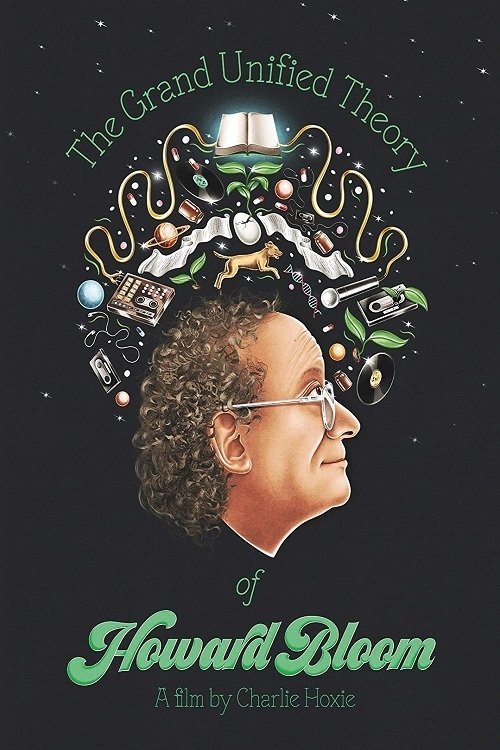
The Grand Unified Theory of Howard Bloom
Howard Bloom spent much of the 1970s and 80s as the publicist for iconic musicians like Michael Jackson, Prince, Joan Jett, Run-DMC, and Aerosmith. When a rare disease left him housebound for 15 years, Bloom reinvented himself as an author, publishing several books on evolutionary psychology and humanity’s role in the cosmos. Now in his 70s, the eccentric philosopher readies an unfathomably long masterwork that will unify all of his unorthodox theories, and makes plans for his legacy.
Insights
Plot Summary
This documentary explores the life and work of Howard Bloom, a cultural theorist, evolutionary biologist, and author. It delves into his unconventional theories about the nature of human society, self-organization, and the underlying forces that shape civilization. The film examines his journey from the music industry to academia, showcasing his radical ideas that challenge conventional thinking.
Critical Reception
The documentary received a generally positive reception, with critics appreciating its unique subject matter and Bloom's provocative insights. Some reviewers found the film's exploration of complex theories to be engaging, while others noted that it might be challenging for viewers unfamiliar with Bloom's work. Overall, it was seen as a compelling portrait of a singular intellectual.
What Reviewers Say
- An intellectually stimulating exploration of Howard Bloom's far-reaching theories.
- The film successfully captures the unconventional and groundbreaking nature of Bloom's ideas.
- An engaging documentary for those interested in sociology, biology, and cultural studies.
Google audience: Information regarding Google user reviews for this specific documentary is not readily available in public records.
Fun Fact
Howard Bloom's theories, often referred to as the 'Grand Unified Theory of Human Nature,' suggest that the drive for group belonging and status is a fundamental evolutionary force shaping human behavior.
AI-generated overview · Verify ratings on official sources